The Earth offers an enormous catalog of places that seem to transport us to fairy-tale lands. One such spot on the map is a Turkish region whose moonlike landscape mesmerizes anyone who steps within its borders.
Cappadocia is a historical region located in the central part of Anatolia. However, you won’t find an area by this name on a map, as it does not constitute an official administrative unit, and its exact boundaries are still a matter of debate. Nonetheless, it’s definitely worth seeking out, even without the help of a map, because such fantastic views and magical atmosphere are hard to find anywhere else on Earth. It’s a land full of history, flavors, colors, and local traditions. And thanks to its natural and cultural values, Cappadocia has earned a well-deserved spot on the UNESCO World Heritage List.
💰 Shoestring Cave House Hotel - Budget guesthouse in rock-cut rooms.
🏨 Kelebek Cave Hotel - Cave hotel with rock-cut rooms in Göreme.
💎 Museum Hotel Uçhisar - Luxury cave hotel beneath Uçhisar Castle.
Cappadocia - A Creation of Nature and Man
Millions of years ago, eruptions from the volcanic mountains Erciyes, Hasandağ, and Güllüdağ covered a vast area of central Anatolia with lava and volcanic ash. But it was water, wind, ice, and temperature fluctuations acting upon the soft layers of the formed rocks over time that were the true architects of the extraordinary, moonlike landscape that today attracts hundreds of thousands of tourists annually. The basalt rock formations left by erosion created the iconic cone-shaped structures known locally as “fairy chimneys.”
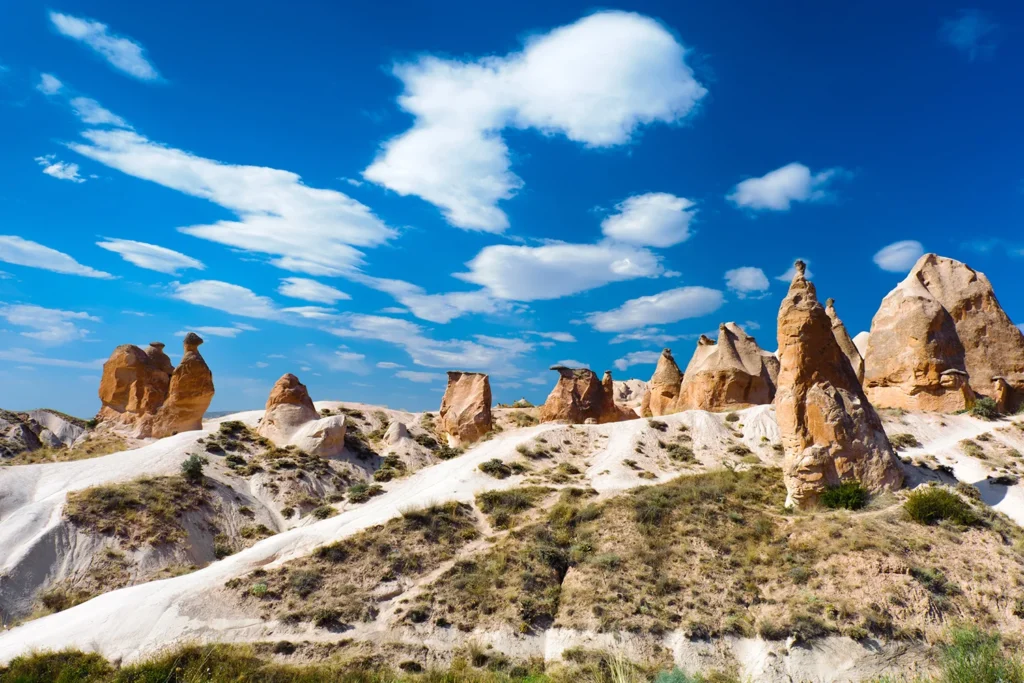
While nature is credited with being the original creator, humans also contributed to the shaping of this place. These lands have been inhabited since the Copper Age, with the earliest known civilization to use the rock formations as shelters being the Assyrians. They were the first, but certainly not the last, as they were followed by the Hittites, and centuries later, Christians. For the latter, Cappadocia provided a perfect refuge during times of religious persecution. The efforts of these various populations transformed the chaotic natural formations, caves, and corridors into homes, castles, and even underground cities.
Why “Cappadocia”?
The name “Cappadocia” comes from the ancient Persian word Katpatuka, meaning “the land of beautiful horses.” So, what do horses have to do with this region? As it turns out, quite a lot. Horse riding was the most common way to navigate the area, and the horses themselves were held in a certain degree of reverence. The peoples of Cappadocia were known for their speed, confidence, and skill in riding during battle. In modern Cappadocia, horses remain an integral part of the landscape. Fortunately, they now serve a much more peaceful purpose, carrying locals and tourists alike across the scenic terrain.
Cappadocia and Its Most Beautiful Corners
The Cappadocia region includes several cities, the most famous of which are Aksaray, Nevşehir, Uçhisar, Göreme, and Avanos. However, it’s not these cities that draw most tourists to the area (at least, not the ones above ground). The region’s greatest attractions are the cave churches adorned with frescoes, rock formations that reach heights of up to 45 meters, and even stone sculptures resembling male genitalia.
During a visit to Cappadocia, it’s easy to find iconic landmarks like Saruhan Kervansaray, a medieval caravanserai now used for whirling dervish performances. You also won’t miss the famous Sunset View Point in Göreme or the nearby tree, whose branches bend under the weight of Nazar charms (the “evil eye” talismans). But what else is there to explore? Here are some must-see places you shouldn’t miss.
Uçhisar Castle
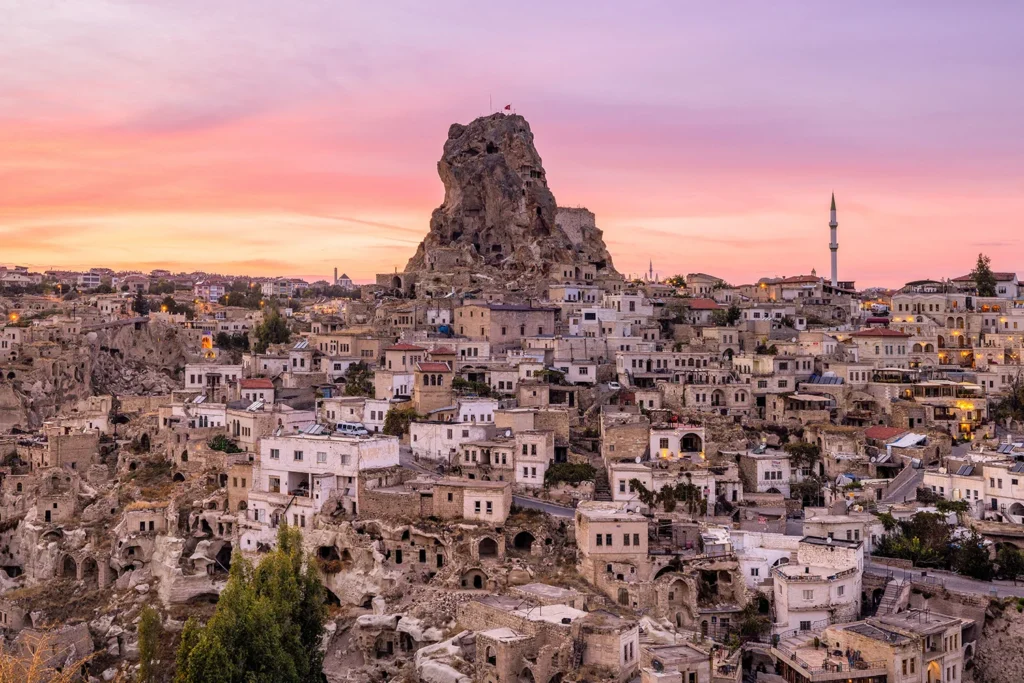
Cappadocia is often described as a fairytale land, and what would such a land be without its own castle? Fitting perfectly with the otherworldly atmosphere of the region, Uçhisar Castle, located in the town of the same name, is an impressive natural rock formation resembling a fortress. Situated at an altitude of 1,400 meters, it’s the highest point in all of Cappadocia. Originally, it served as a lookout to warn locals of approaching invaders. Today, while not all areas of the castle are accessible, many of its rooms, connected by tunnels, now serve as unique lofts available for rent.
Underground Cities
The underground cities of Cappadocia are equally popular among tourists. The most spectacular examples are undoubtedly Kaymakli and Derinkuyu, located near the city of Nevşehir, though underground settlements are scattered across the entire region. These subterranean cities were primarily used for defense, as their inhabitants sought refuge from enemy attacks. As you might imagine, living underground also provided protection from the scorching heat. These unique settlements were fully livable, allowing people to remain hidden for months at a time. Within the narrow corridors, you can still see remnants of storerooms, churches, kitchens, and even stables.
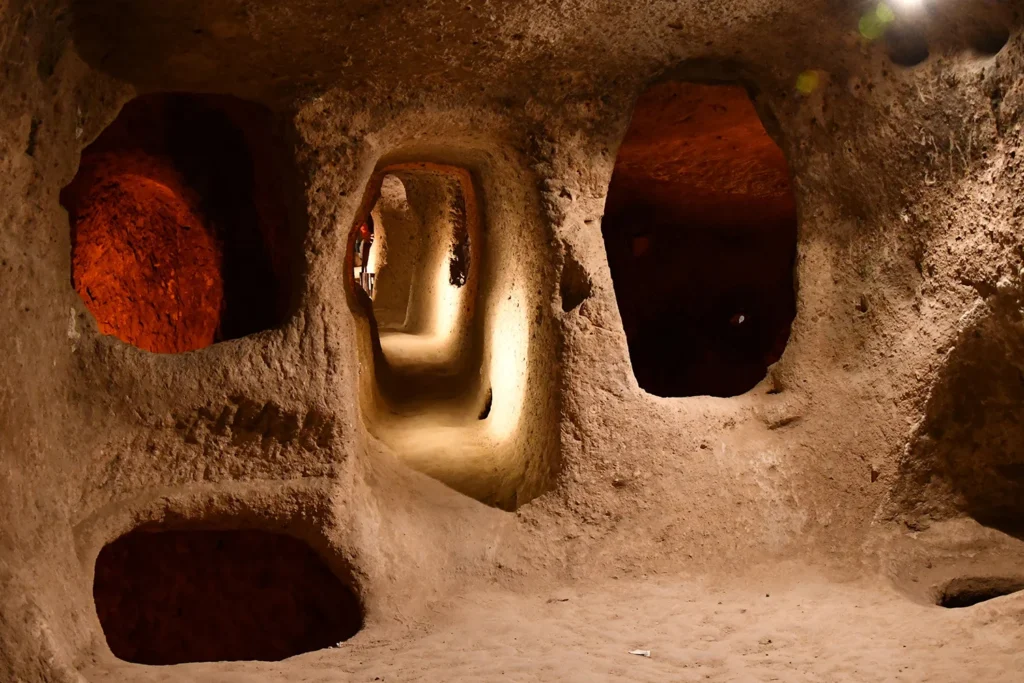
Kaymakli, the widest of all the underground cities, stretches over nine levels deep and could accommodate several thousand people living there for extended periods. A nearly 9 km-long tunnel connects Kaymakli to the underground city of Derinkuyu, which is considered the deepest in the region. Just imagine - its 20 underground levels could shelter up to 10,000 people during times of danger.
Göreme National Park
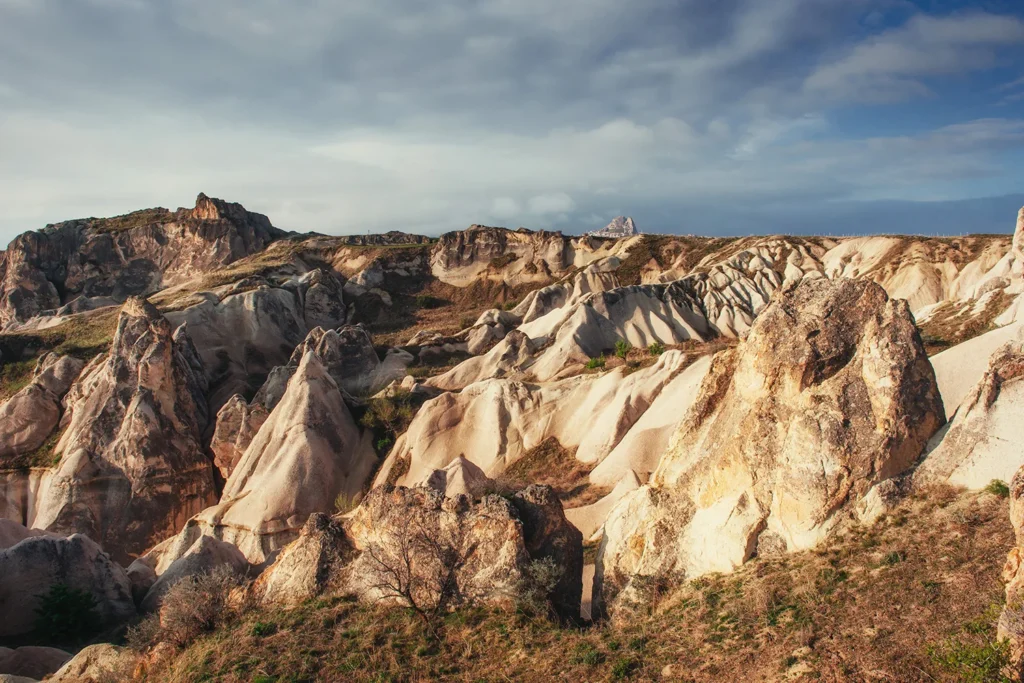
Göreme National Park is essentially an open-air museum that was inscribed as a UNESCO World Heritage Site in 1985. Since then, it has continued to captivate the hearts of all who visit. Its most alluring feature is the preserved frescoes found inside the ancient rock churches. Several of these churches are open for exploration, with some of the most famous being St. Barbara’s Church, adorned with geometric and animal motifs; the Snake Church, featuring a fresco of a dragon; and the Tokalı Church, known for its decorations of imported lapis lazuli stone.
The star of this area, however, is the so-called Dark Church. As the name suggests, it refers to the very limited amount of light that enters its interior. This lack of exposure to light has allowed the frescoes to remain incredibly well-preserved to this day. It’s hard to believe that the vivid, impressive biblical scenes on its walls are nearly a thousand years old.
Zelve
Zelve is another open-air museum and an area renowned for its rock churches, though these are devoid of any frescoes. It is believed that the inhabitants of this valley, who opposed the use of icons, were responsible for the minimalist design. Unfortunately, the preservation of the churches and dwellings in this area does not quite match the condition of other parts of Cappadocia. However, the terrain of Zelve Valley itself is much more impressive. This makes it an ideal spot for admiring the untamed nature and the astonishing, almost Martian-like landscape.
Imagination Valley
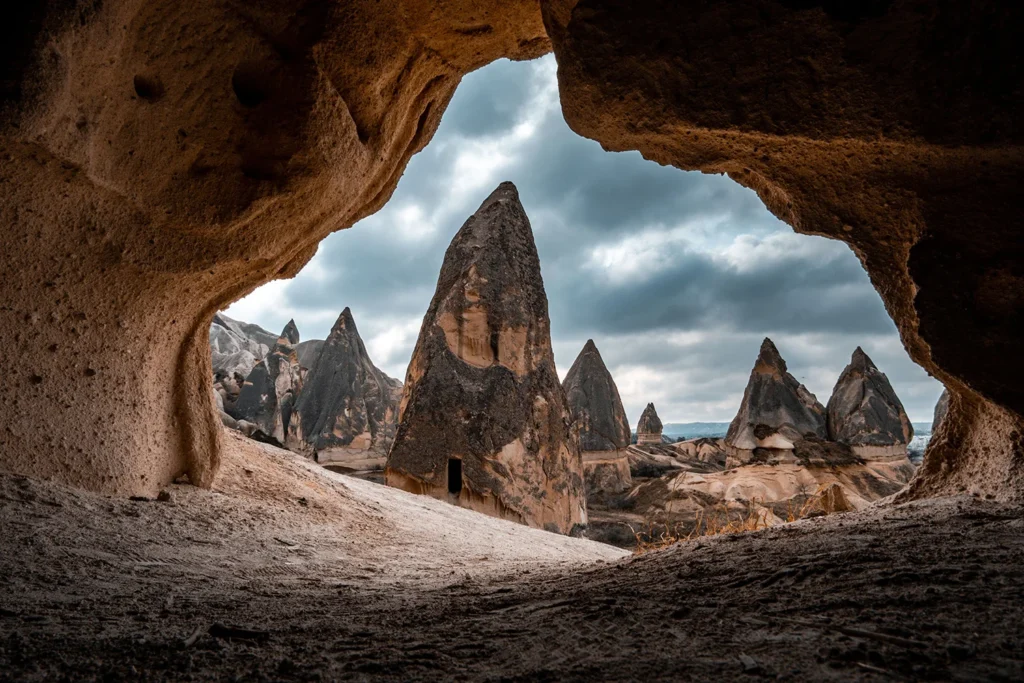
Devrent Valley, also known as Imagination Valley, is a barren area famous not for cave dwellings or rock churches but for its incredibly imaginative rock formations. At times, it’s hard to believe that the cone-shaped structures scattered throughout the valley are a product of nature rather than man-made sculptures. Some resemble animals, while others depict entire scenes, but the most famous of these formations are the “Three Beauties” - chimneys that are said to represent a father, mother, and child.
Other Valleys of Cappadocia
In addition to Imagination Valley, there are several other valleys that are equally popular among visitors, albeit for different reasons. Pigeon Valley is considered one of the most beautiful and well-known hiking trails in Cappadocia. The 4-km-long trail runs from the town of Uçhisar to Göreme, passing through an area named after the countless pigeon houses carved into the soft tuff rock since ancient times. Walking through tunnels and gorges with the sound of pigeons fluttering around is an experience well worth your time.
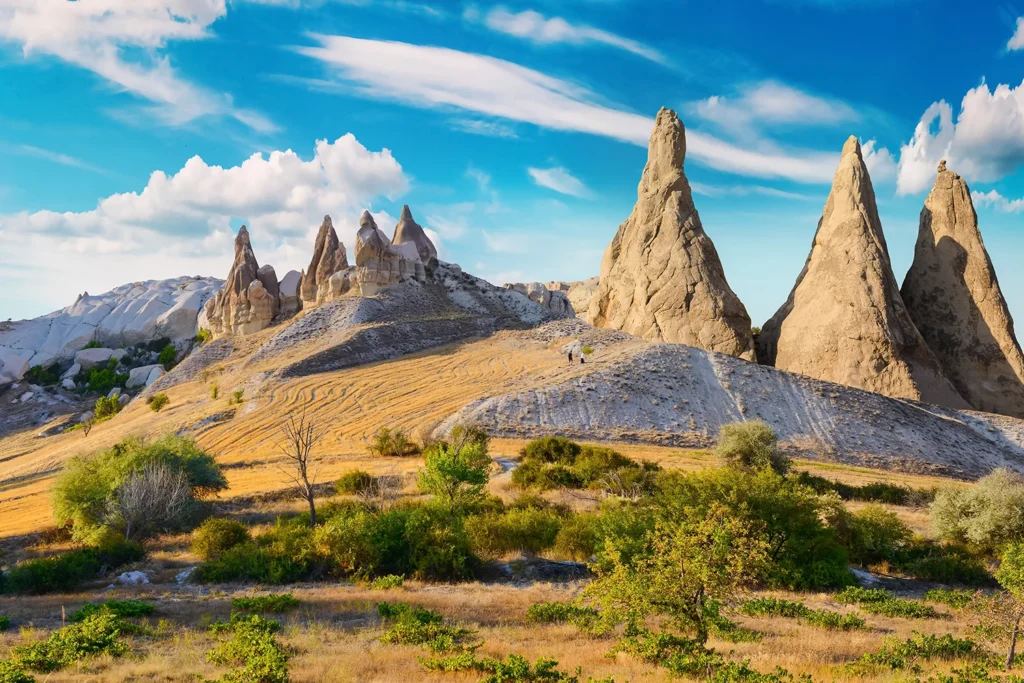
Despite its name, Rose Valley is not a place where you’ll find blooming flowers. Instead, this picturesque lowland surprises visitors with something else - a mysterious pink glow that envelops the area during sunrise and sunset. It is connected to another surprising region, Red Valley, which mostly consists of reddish-brown and brick-colored rocks.
And if you want to return from Cappadocia with the most controversial photos, the Valley of Love must be on your itinerary. In addition to the stunning beauty of nature and significant cultural importance, it is best known for its naturally shaped rock formations that resemble phallic symbols, surprising many visitors.
Hot Air Balloon Ride Over Cappadocia
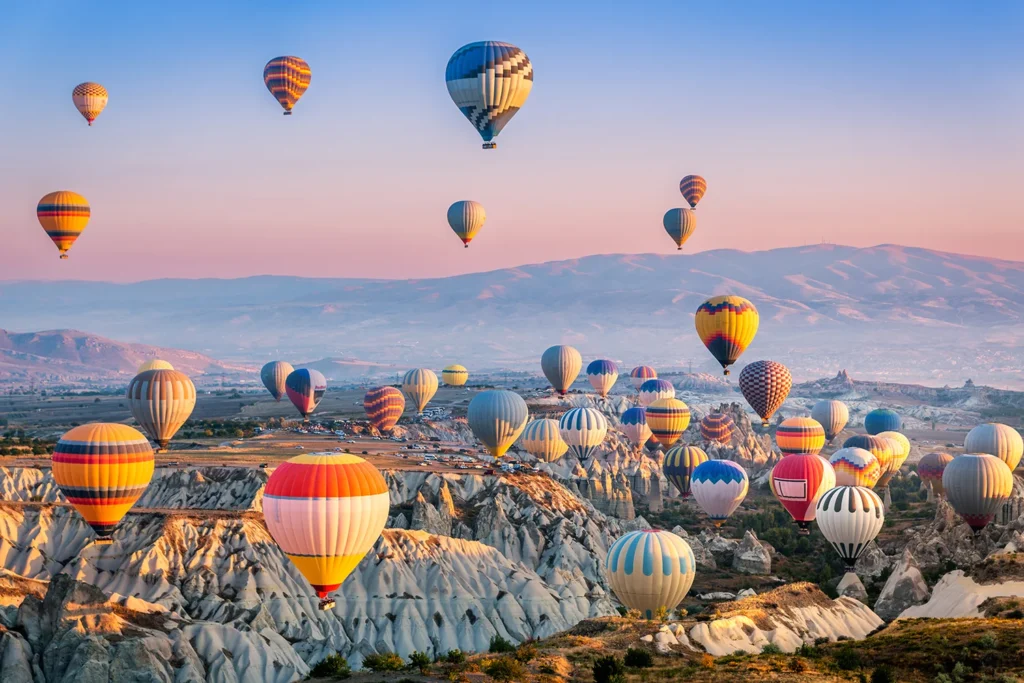
We can talk about the most popular rock formations, temples, or caves, but all of these pale in comparison to the iconic image of colorful hot air balloons rising over the rocky city. A hot air balloon ride, offering a completely different perspective on the stunning landscape, is a dream for many visiting the fairytale-like Cappadocia. Fortunately, it’s a dream that’s easy to fulfill, as long as you remember a few key points.
All hot air balloon flights take place at sunrise when the typically warm landscape is still cool. This means that whether you want to see this magical region from a bird’s eye view or capture dozens of balloons with your camera, you’ll need to be on-site between 5 and 7 a.m., depending on the season. Waking up that early might not sound appealing, especially while on vacation, but trust me, the atmosphere created by the rising sun is worth even a sleepless night.
GOOD TO KNOW: When booking a balloon ride, always be prepared for the possibility of cancellation due to weather conditions. This is beyond the control of both participants and organizers, and unfortunately, it does happen occasionally.
Wondering about the cost of a hot air balloon ride in Cappadocia? Prices can range from as low as €80 to over €300, depending on the time of year and the package you choose. It’s best to book your ride in advance online (you can do so through services like GetYourGuide). Booking ahead often results in better prices and, more importantly, guarantees your spot. If you arrive without a reservation, you can try to find last-minute availability, but it can be challenging. When booking, make sure to consider the flight duration, the number of people on board, insurance, and whether you need hotel transfer services.
How to experience Cappadocia?
Besides the breathtaking balloon rides and otherworldly views, Cappadocia offers many more surprises. One of the most popular activities among tourists is the “Turkish Night” or “Cappadocian Night.” This evening spectacle takes place at dusk, inside caves carved out of volcanic rock. It’s a perfect opportunity to enjoy local delicacies while watching traditional dances performed by professional dancers.
In Cappadocia, you can also witness mesmerizing belly dancing performances or embark on a thrilling jeep safari through the region’s valleys. If you’re looking for something more unique, consider spending a night in a cave hotel and enjoying breakfast with a view of the floating hot air balloons. You can find original accommodations on platforms like the one linked here.
GOOD TO KNOW: While you’re in the area, make sure to visit the town of Avanos, famous for its pottery-making tradition. Not only can you purchase valuable souvenirs, but you can also try your hand at crafting pottery yourself!
Exploring Cappadocia
Cappadocia is undoubtedly a must-see destination on most tourists’ lists when visiting Turkey. However, it’s more than just a visual delight - it’s an immersive cultural experience. You can reach this unique region by plane (via Nevşehir Kapadokya Airport or Kayseri Erkilet Airport), by car - renting one through services like DiscoverCars (which is ideal if you dream of discovering Cappadocia’s hidden gems at your own pace) - or, if you’re on an organized holiday, you’ll likely have the option to book an excursion to the rock formations.
During the summer months, it gets extremely hot across Turkey, with the heat being even more intense in inland areas like Cappadocia, which lack large bodies of water. When planning your trip, make sure to consider not only comfortable footwear but also appropriate clothing, sunscreen, a hat, and plenty of water. And if you’re going on a hot air balloon ride, don’t forget to pack long pants. Temperatures drop dramatically at night, especially outside of the summer season.
Hotels in Cappadocia
The best way to experience Cappadocia is to sleep in a real cave hotel - a room carved straight into the rock, often with views over the valleys or even the morning balloons. It’s worth booking ahead, especially in the high season from April to October. Here are three handpicked options for different budgets.
💰 Shoestring Cave House Hotel
Small, family-run guesthouse in the very centre of Göreme, a few minutes’ walk from the bus stop and the balloon launch sites. Rooms are simple but carved into the natural rock, with an atmosphere that’s hard to find elsewhere at this level. There’s a terrace overlooking the valley, where the owners serve a home-made breakfast. A good choice for travellers who value atmosphere over amenities and want to save more of their budget for excursions.
🏨 Kelebek Cave Hotel
One of the most recognisable cave hotels in Göreme, set on a hillside with panoramic views over the town and valleys. It has pools, a spa with a hammam and several room categories, from classic rooms to suites with a private terrace. A great pick for couples and families who want the authentic feel of rock-cut interiors with real comfort after a full day of sightseeing.
💎 Museum Hotel Uçhisar
Luxury boutique hotel built into the rock just below Uçhisar Castle, a member of Small Luxury Hotels of the World. The interiors combine ancient artefacts with modern design, and the pool overlooking the valleys and fairy chimneys is one of the most photographed spots in Cappadocia. A place for travellers who see their stay as part of the experience, not just somewhere to sleep.

