People call it a tourist trap. Then they float through the steam with a mud mask on and quietly change their minds.
The Blue Lagoon in Iceland is the country’s most famous geothermal spa and, for many travelers, the very first or the very last stop of an Iceland trip. It sits in a black lava field on the Reykjanes Peninsula, about 20 minutes from Keflavik Airport, and its milky blue water stays warm even when snow is falling around you. In this article, you’ll find out how a power plant created the lagoon, what’s included in each ticket, how to get there from Reykjavik and how to avoid the larger crowds.
The Blue Lagoon gets mixed reviews online, and that’s fair. It’s busy, it’s not cheap and it’s not a natural hot spring. Still, few places let you sit in water this warm and this blue, surrounded by moss-covered lava. If you plan your Blue Lagoon visit well, it’s one of the most relaxing afternoons you can have in Iceland.
💰 Konvin Hotel by Reykjavik Keflavik Airport - Good-value airport base, about 20 minutes from the lagoon.
🏨 Silica Hotel at Blue Lagoon Iceland - Calm lava-field hotel with its own private lagoon.
💎 The Retreat at Blue Lagoon Iceland - Luxury suites and a subterranean spa right by the lagoon.
What is the Blue Lagoon in Iceland?
The Blue Lagoon is a man-made geothermal spa filled with geothermal seawater. The water comes from the neighboring Svartsengi power plant, which drills down to around 6,500 feet (2,000 m). Deep underground, the fluid is a blend of about 70% seawater and 30% fresh water, and it’s rich in silica, algae and minerals. Once it has been used to make electricity and heat local homes, it flows into the lagoon.
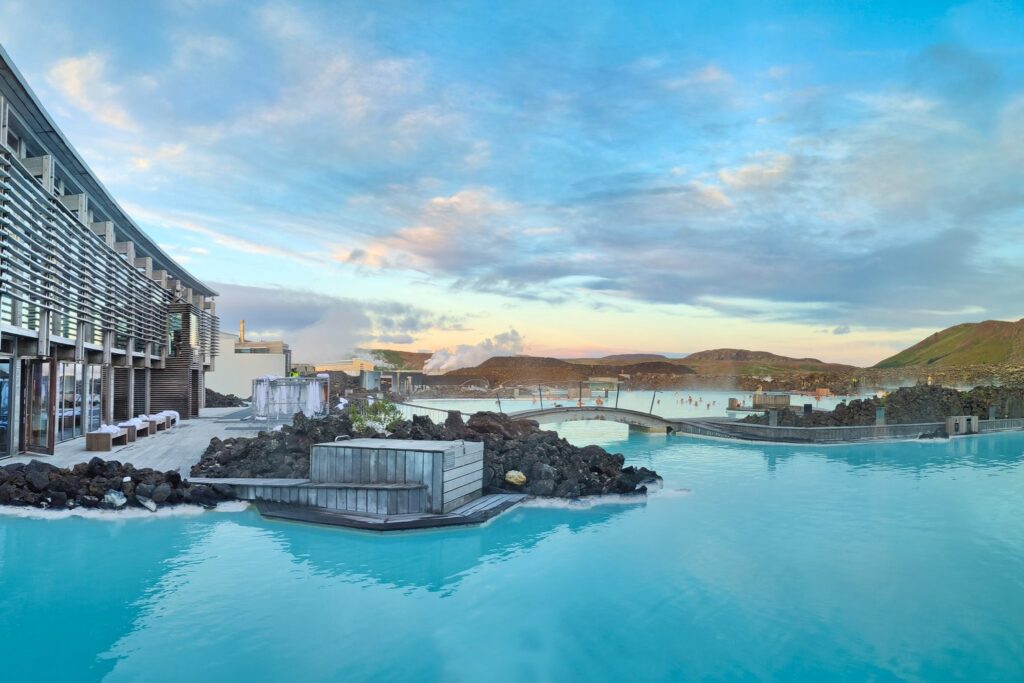
The lagoon covers roughly 94,000 square feet (8,700 square meters) and is less than 4.3 feet (1.3 m) deep, so you can stand almost everywhere. The water temperature usually stays between 98 and 104°F (37 and 40°C), with a few warmer corners. National Geographic once listed it among its 25 wonders of the world, and it’s easily one of Iceland’s most popular attractions.
Why is the water milky blue?
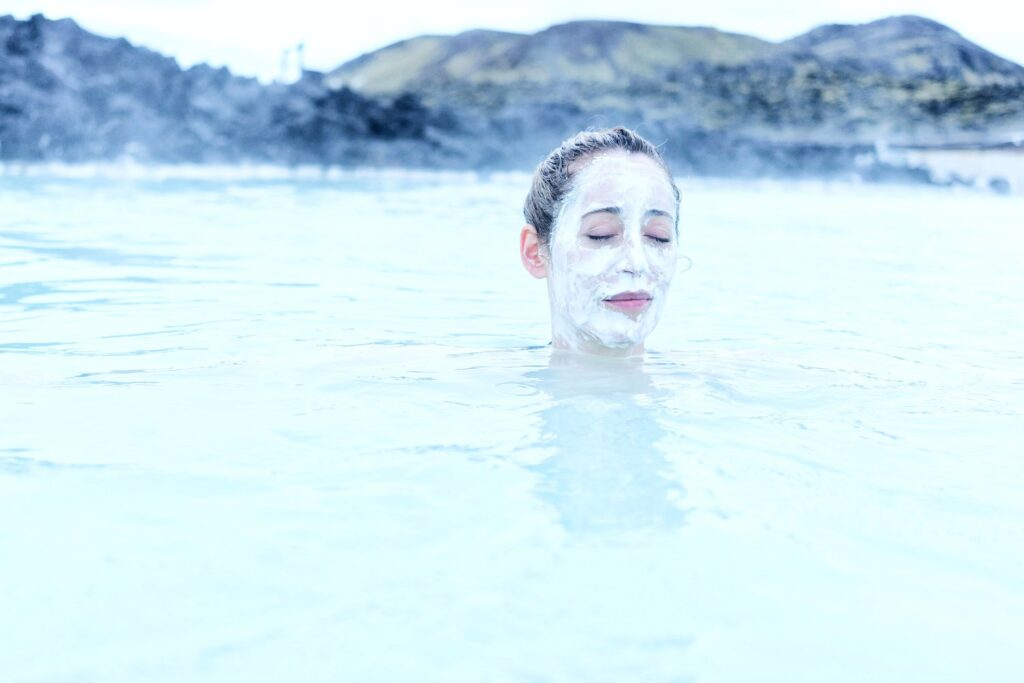
The water isn’t actually blue. It’s full of tiny silica particles that reflect blue light from the sun, which gives the lagoon its milky blue color. On a cloudy day it looks pale and almost white, while in strong sunlight it turns bright turquoise. The white mud on the edges of the pools is silica, too, and that’s what goes into the famous silica mud mask.
FUN FACT: The lagoon never needs draining, because all of its water renews itself naturally in about 40 hours.
The fascinating history of the Blue Lagoon
The Blue Lagoon has a fascinating history that starts with an accident. The Svartsengi power plant began operating in 1976, and its runoff water collected in the nearby lava field. Instead of draining away, the silica sealed the porous rock, and a pool started to form. As the lagoon grew, locals began to bathe in it in the early 1980s.
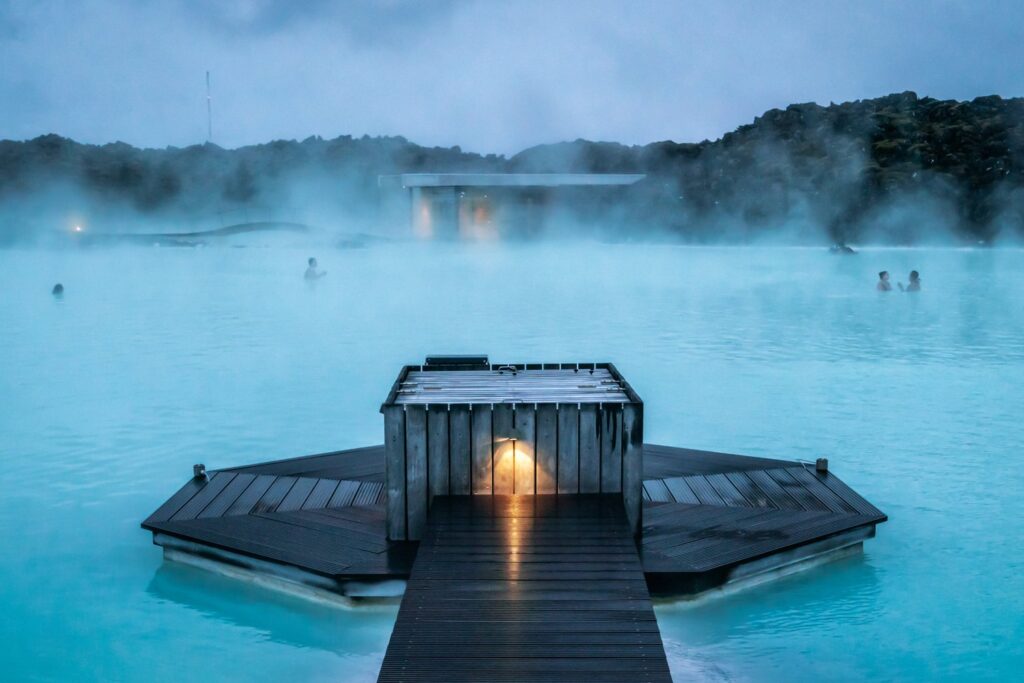
People with psoriasis soon noticed that their skin improved after soaking in the mineral rich waters. That led to research, a clinic and later the Blue Lagoon skincare line. The first public bathing facility opened in 1987, and the lagoon moved to its current spot, a short walk from the original pool, in 1999. Today the site has a spa, two hotels and two restaurants, but the black lava around it still sets the mood.
Blue Lagoon tickets - What each package includes
You can’t just turn up and pay at the door. Blue Lagoon tickets are timed entry tickets, so you choose a date and an arrival slot, and on busy days the best slots sell out weeks ahead. Book your lagoon entry as soon as your flight dates are fixed. Once you’re in, you get unlimited access to the lagoon until closing time, so you don’t have to rush.
Blue Lagoon Iceland offers three main day packages:
- Comfort - lagoon entry, a silica mud mask, a towel and one drink of your choice, including beer, wine or one non-alcoholic drink.
- Premium - everything in Comfort, plus a second drink, two additional masks and a bathrobe to wear on the terraces.
- Signature - everything in Premium, plus full-size Blue Lagoon skincare masks to take home.
For most visitors, Comfort is enough. The free drink and the silica mask are already included, and towel use is covered, too. The premium package makes sense if you plan to spend the whole afternoon there and want a bathrobe for the walk between the pools and the café. Prices change with the season and time of day, so check current prices when you book. You’ll also find packages that combine admission with bus transfers from Reykjavik or from the airport.
The Blue Lagoon experience - What to expect inside
Your Blue Lagoon experience starts at the reception, where you get an electronic wristband. It opens your locker and works as a tab for drinks and treatments, so you don’t need to carry a wallet. From there, you head to the changing room.
Changing rooms and showers
The changing facilities are modern and clean, with lockers and hair dryers. Iceland has strict rules here: you must shower without your swimsuit before entering the lagoon. Most showers are communal showers, but there are a few private cubicles if you feel shy. A private changing room is part of the Retreat Spa, not the regular day visit, so expect a standard locker room. Leave jewelry in your locker, because silver and gold can tarnish in the water.
Should you get your hair wet?
Try not to get your hair wet. The silica water leaves hair dry and stiff, sometimes for a few days. Before you go in, put plenty of the free conditioner in your hair and leave it there. If your hair is long, tie it up in a bun and keep your head above the warm water. Afterward, wash it twice and use conditioner again.
The mask bar and the in-water bar
The mask bar is one of the highlights. Staff hand you a scoop of white silica mud, and you smooth it on your face and leave it for about ten minutes. The mud mask feels slightly gritty and leaves your skin soft. If your package includes additional masks, you can also try the algae mask afterward.
The in-water bar is a real swim-up bar inside the lagoon, where you order smoothies, juices, beer or sparkling wine. You pay with your wristband, so keep track of what you order. Holding a cold drink in 100°F water is usually the moment people finally get what the fuss is about.
Steam cave, sauna and the quiet zone
Beyond the main pool, look for the steam cave carved into the lava, a steam room, a dry sauna and a small waterfall that works like a massage on your shoulders. On a cold day, the steam rises so thickly that you can lose sight of people just a few feet away. There’s also a quiet zone where phones aren’t allowed, which is the best spot to simply float.
In-water massage and float therapy
For an extra fee, you can book an in-water massage. You lie on a floating mat, covered with a warm blanket, while a therapist works on your back in the water. Float therapy is a guided session where you drift in the water with support under your head and legs. Both treatments are popular and sell out early, so add them when you buy your ticket.
Lava Restaurant, Moss Restaurant and the Retreat Spa
If you want more than a quick snack at the café, Lava Restaurant serves Icelandic dishes like lamb, cod and Arctic char. Its glass wall looks out over the lagoon, and you can eat there in your bathrobe. Moss Restaurant, at the Retreat hotel, is a fine-dining option with tasting menus and gourmet meals made from local produce.
The Retreat Spa is a separate world. It has subterranean treatment rooms built into the lava, a private lagoon and its own changing suites. A visit there costs much more than a regular ticket, but it’s quieter and feels far less like a busy attraction. If this is a special trip, it’s worth looking at.
How to get to the Blue Lagoon from Reykjavik and Keflavik Airport
The Blue Lagoon is about 31 miles (50 km) from Reykjavik, roughly a 45-minute drive, and about 13 miles (20 km) from Keflavik Airport. That location makes it easy to visit on your arrival day or on your way back to the airport. Many travelers make it the final stop before a late flight home.
The easiest option is a rental car. There’s a large free parking lot next to the entrance, and the drive through the lava field is part of the experience. Without a car, you can book bus transfers from Reykjavik or from the airport, timed to match your entry slot. Some packages bundle admission and transport, which saves you from planning the details.
Volcanic activity on the Reykjanes Peninsula
The Blue Lagoon sits in one of Iceland’s most volcanically active areas. Since late 2023, a series of eruptions near the town of Grindavik has forced the lagoon to close temporarily several times. Large protective barriers were built around the area to guide lava away from the power plant, the lagoon and the road.
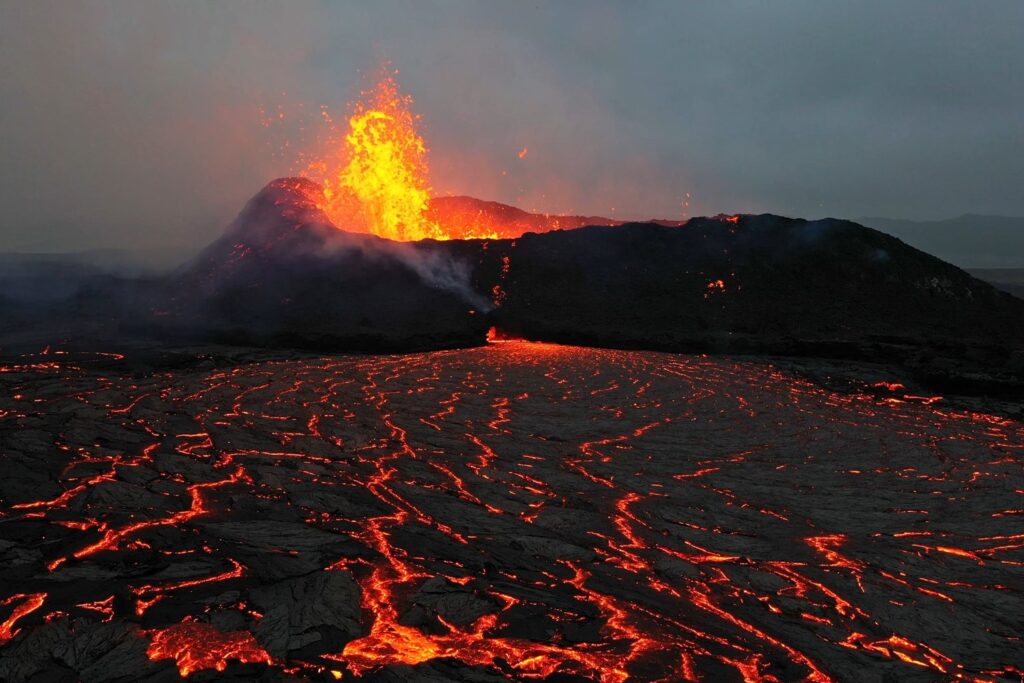
When there’s volcanic activity, the lagoon follows the guidance of Iceland’s civil protection authorities. Closures usually last only for a short time, but they can happen with little warning. Check the lagoon’s status a day or two before your visit, and choose a ticket with flexible conditions if you can. Read the cancellation terms carefully before you book.
Best time to visit the Blue Lagoon
The best time of day is early morning, right after opening, when the lagoon is calmer and the light is soft. Late afternoon brings larger crowds, especially when tour buses arrive. Evening visits are quieter again, and in summer you can watch the low sun over the lava field late into the night.
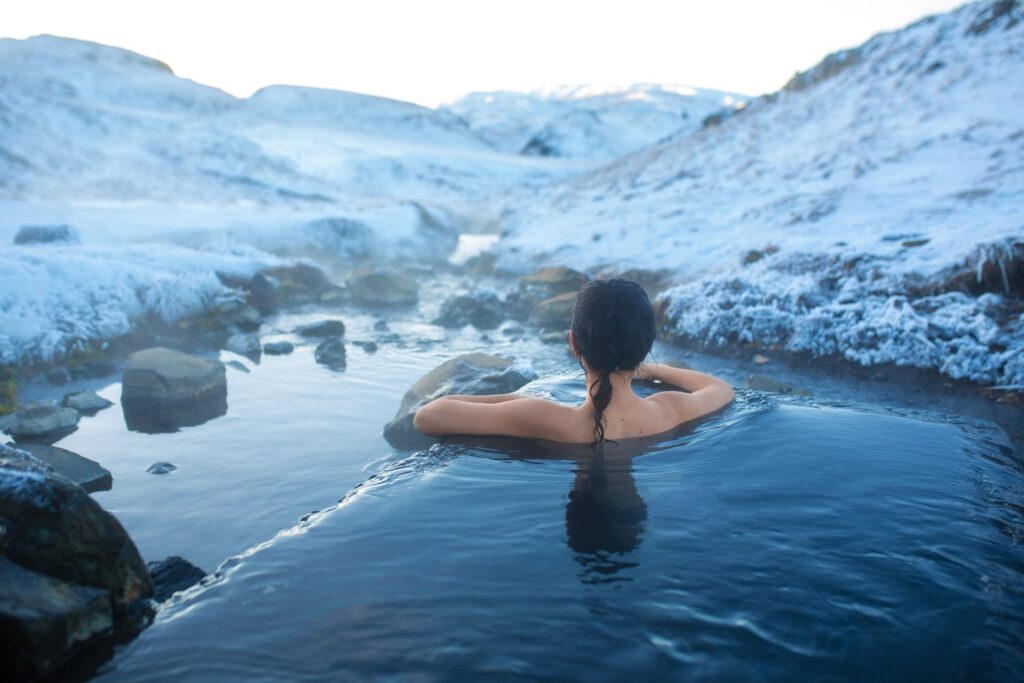
Winter has its own magic. Snow on the lava, steam everywhere and darkness that falls in the middle of the afternoon make the lagoon feel otherworldly. If you’re lucky, you might even see the northern lights from the water. If you’re chasing auroras on a longer trip, take a look at our guide to the northern lights in Finland, too.
Is the Blue Lagoon worth visiting?
Is the Blue Lagoon worth visiting? For most first-time visitors, yes. Locals tend to prefer smaller public pools, and some travelers find it too busy and too pricey. But no other spa in Iceland combines this color, this size and this setting. Floating in warm water in the middle of a lava field is something you’ll remember long after the trip.
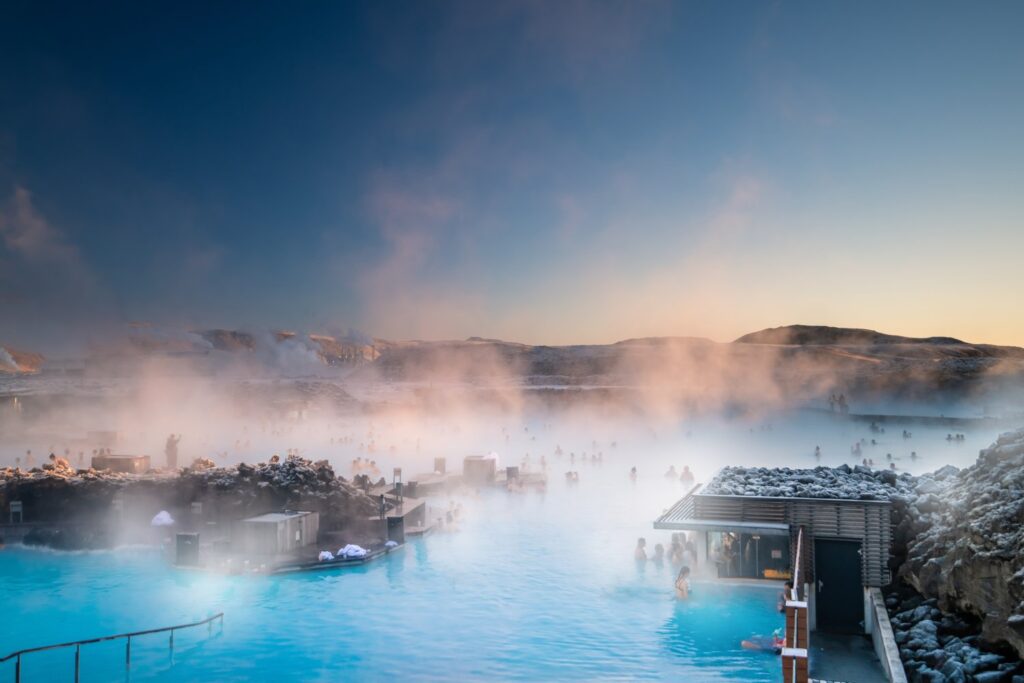
It works best if you go with the right expectations. Think of it as a polished geothermal spa, not a wild hot spring. Book an early slot, keep your hair out of the water and give yourself at least two or three hours. That’s enough time to try the masks, the steam cave and a drink at the bar without feeling rushed.
Blue Lagoon vs Sky Lagoon
Sky Lagoon is the main alternative, and it’s just outside Reykjavik, about 15 minutes from downtown. It has an infinity edge that looks out over the ocean, plus a seven-step ritual with a cold plunge, sauna and body scrub. It’s smaller and has a calmer, more local feel.
The Blue Lagoon is larger, has its famous milky blue water and sits in a dramatic lava field. It’s also more convenient if you’re arriving at or leaving from Keflavik Airport. If you can only choose one and this is your first Iceland trip, go for the Blue Lagoon. If you’re staying in Reykjavik and want an evening soak, Sky Lagoon is easier.
Combine your visit with the Golden Circle and Reykjanes
A day at the lagoon combines well with other sights. Many tours pair the Blue Lagoon with the Golden Circle, the classic loop with Thingvellir National Park, the Geysir area and Gullfoss waterfall. It makes for a long day, but it ends with a warm soak, which feels great after hours of sightseeing.
If you have a car, explore the Reykjanes Peninsula itself. Nearby you’ll find the bubbling mud pools of Gunnuhver, the Bridge Between Continents over the gap between the North American and Eurasian plates, and wild cliffs near the Reykjanesviti lighthouse. These spots offer stunning views and fewer people than the lagoon.
Blue Lagoon tips before you go
Pack only a swimsuit and a waterproof phone case. Towels come with every package, and a bathrobe comes with Premium. The minimum age is two years, and children up to eight must wear armbands, which the staff provide. With its shallow water, the lagoon is family friendly, though parents should keep little ones close because the water is hot.
Drink plenty of water, as the heat can make you dizzy. There are freshwater taps around the lagoon, so you don’t need to buy bottled water. Bring flip-flops if you have them, because the walk from the changing room can be cold in winter. Finally, plan for strong winds outside the water and keep your shoulders under the surface on colder days.
Practical information
- Blue Lagoon tickets are best booked in advance. You’ll skip the line at the entrance and avoid the risk of finding your preferred time slot sold out.
- Address: Norðurljósavegur 9, 240 Grindavík, Iceland
- Buy tickets on GetYourGuide
Hotels near the Blue Lagoon
You can visit the lagoon as a day trip from Reykjavik, but staying nearby lets you enjoy it at the quietest hours. Here are three options for different budgets, from an airport hotel to a luxury spa retreat.
💰 Konvin Hotel by Reykjavik Keflavik Airport
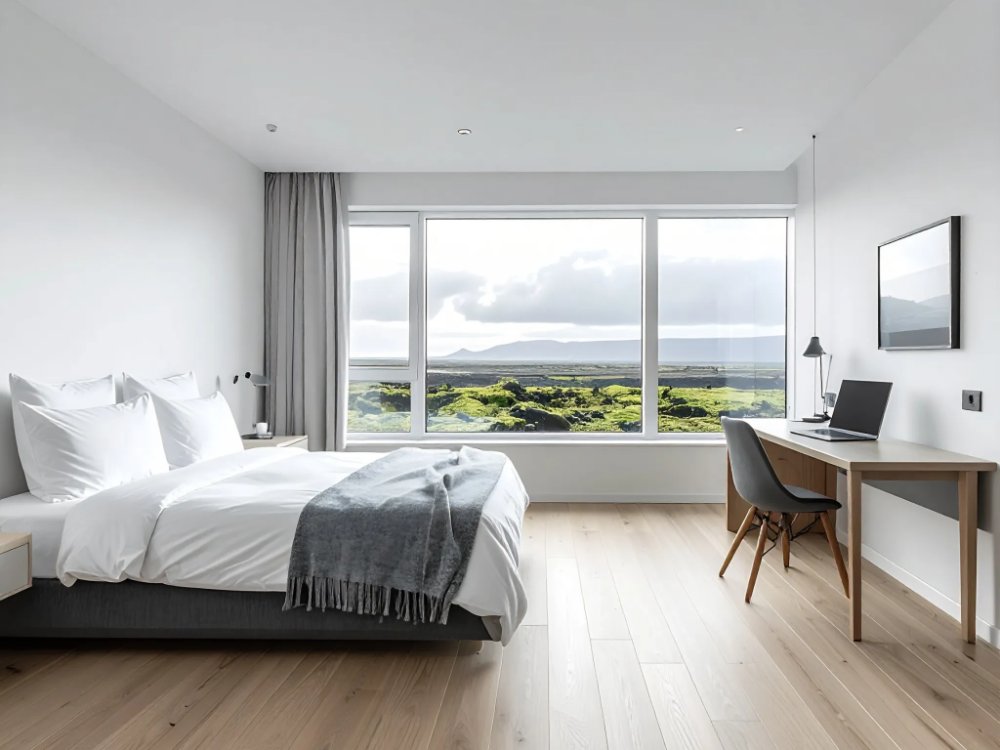
A practical, good-value base right next to Keflavik Airport, about a 20-minute drive from the lagoon. Rooms are simple and comfortable, with free Wi-Fi and free parking. Breakfast is served from 4 a.m., and the hotel runs an early-morning airport shuttle. It’s ideal if you land late, want to soak in the lagoon the next morning or need a bed before an early flight.
🏨 Silica Hotel at Blue Lagoon Iceland
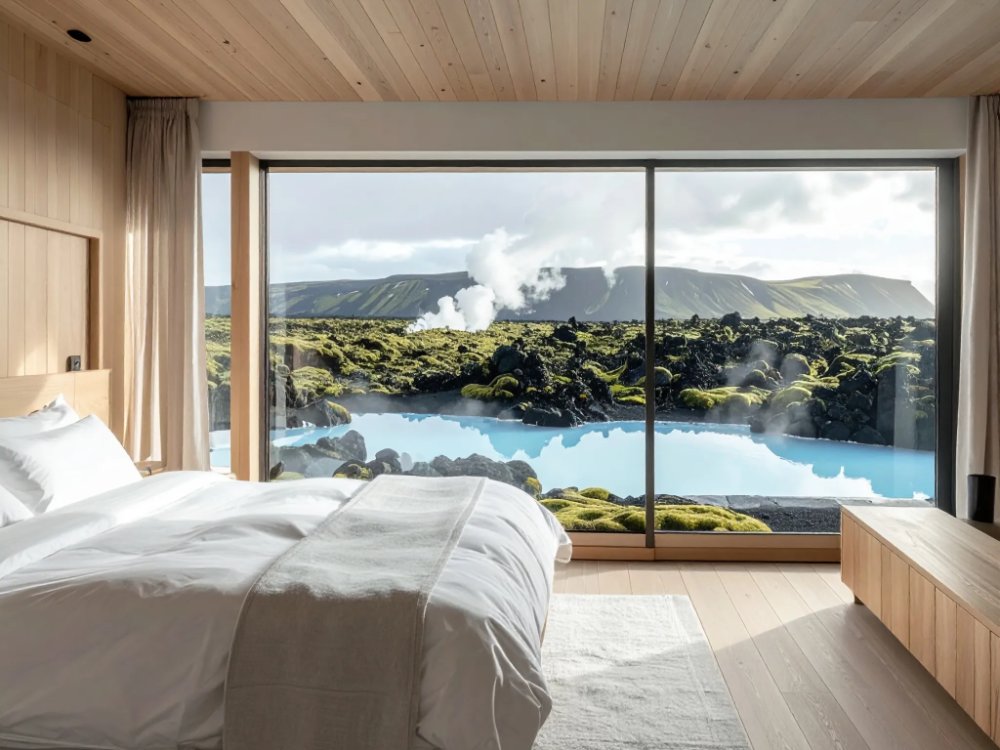
A calm, modern hotel set in the lava field, about 1,600 feet (500 m) from the Blue Lagoon. Guests have access to the Silica lagoon, a private lagoon filled with the same geothermal water, which is far quieter than the main one. The rooms are minimalist, with big windows framing moss and lava. It suits couples who want the lagoon experience without day-trip crowds, and it’s worth checking what’s included in your rate.
💎 The Retreat at Blue Lagoon Iceland
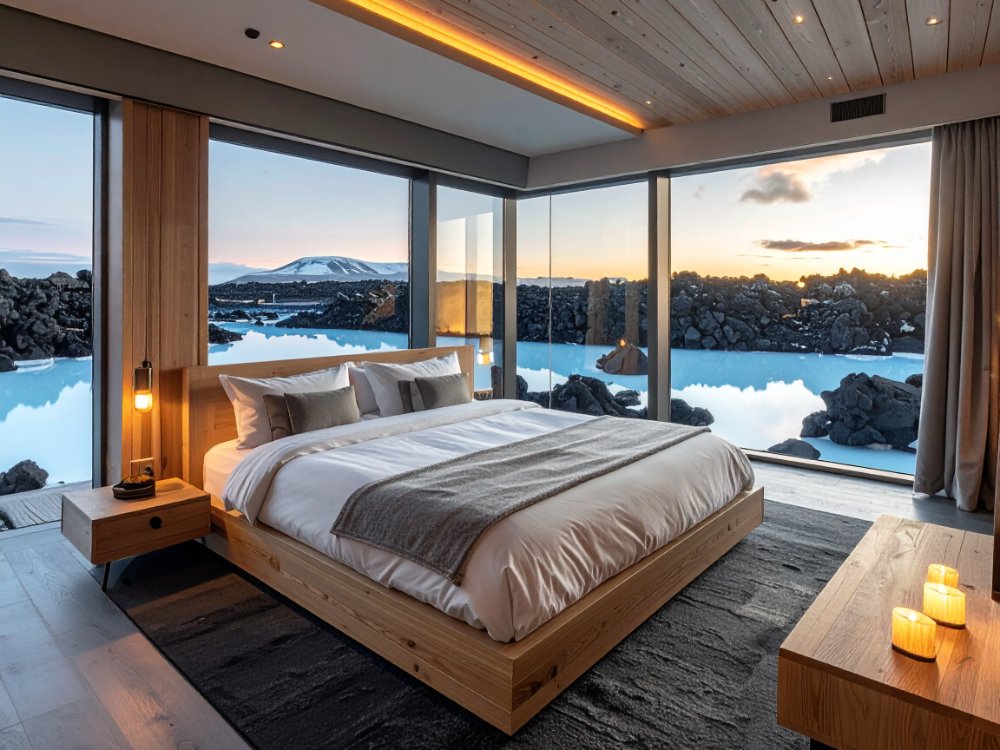
A luxury hotel with 60 suites built right into the lava flow, surrounded by the lagoon’s water. Guests can use the Retreat Spa with its subterranean treatment rooms, the Retreat Lagoon and the hotel’s own section of the lagoon. Moss Restaurant serves tasting menus on site, and many suites have lagoon views from the bed. It’s the place for a honeymoon, a milestone birthday or simply the most relaxing end to your Iceland trip.
Blue Lagoon FAQ
How long should you spend at the Blue Lagoon?
Two to three hours is ideal for most visitors. That gives you time to shower, try the silica mask, have a drink at the in-water bar and explore the steam cave. If you add a massage or a meal at Lava Restaurant, plan for four hours or more.
Is the Blue Lagoon a natural hot spring?
No, it’s a man-made lagoon filled with runoff water from the Svartsengi geothermal power plant. The water is still natural geothermal seawater from deep underground, rich in silica, algae and minerals. It’s renewed regularly, so it stays clean.
Can you visit the Blue Lagoon on the way to the airport?
Yes, and many people do. The lagoon is only about 20 minutes from Keflavik Airport, and there’s a luggage storage area at the entrance. Leave at least a few hours between your visit to the Blue Lagoon and your flight.
Is the Blue Lagoon suitable for kids?
Yes, children aged two and older can visit, and kids up to eight must wear armbands provided by the staff. The water is shallow, but it’s hot, so keep an eye on young children and take regular breaks.
Is the Blue Lagoon open during volcanic eruptions?
Not always. The lagoon has closed temporarily several times since late 2023 because of eruptions on the Reykjanes Peninsula. Check its status shortly before your visit and keep an eye on local news.

