In June 1944, landing craft ground onto this sand under fire. Today, kids build sandcastles a few steps from the old German bunkers.
The Normandy beaches stretch for about 50 miles (80 km) along the coast of northern France, between the Cotentin Peninsula and the port of Ouistreham. On June 6, 1944, more than 150,000 Allied troops landed here by sea and air in the largest seaborne invasion in history. In this article, you’ll find out what happened on each of the five D-Day beaches, which sites and museums are worth your time and how to plan a visit from Paris or Bayeux.
Visiting the D-Day beaches is a moving experience, even if you’re not a history buff. The wide sands, quiet villages and green cliffs look peaceful now, but bunkers, craters and military cemeteries remind you of what happened here. In July 2026, the beaches of the D-Day landings were added to the UNESCO World Heritage List, which makes this stretch of the Normandy coast one of the most important memorial sites in Western Europe.
💰 La Renaissance - Collection La 21ème Planche - Good-value guesthouse with a garden in Bayeux.
🏨 Churchill Hotel Bayeux Centre - Classic hotel on a quiet street in historic Bayeux.
💎 Ferme de la Rançonnière - Hôtel & Restaurant - Fortified Norman farmhouse near Gold Beach.
Where is Normandy beach?
When people ask “where is Normandy beach”, they usually mean the D-Day landing beaches on the English Channel, in the region of Normandy in northern France. There isn’t one single Normandy beach. The Allies divided the coast into five landing sites with code names: Utah, Omaha, Gold, Juno and Sword, from west to east.
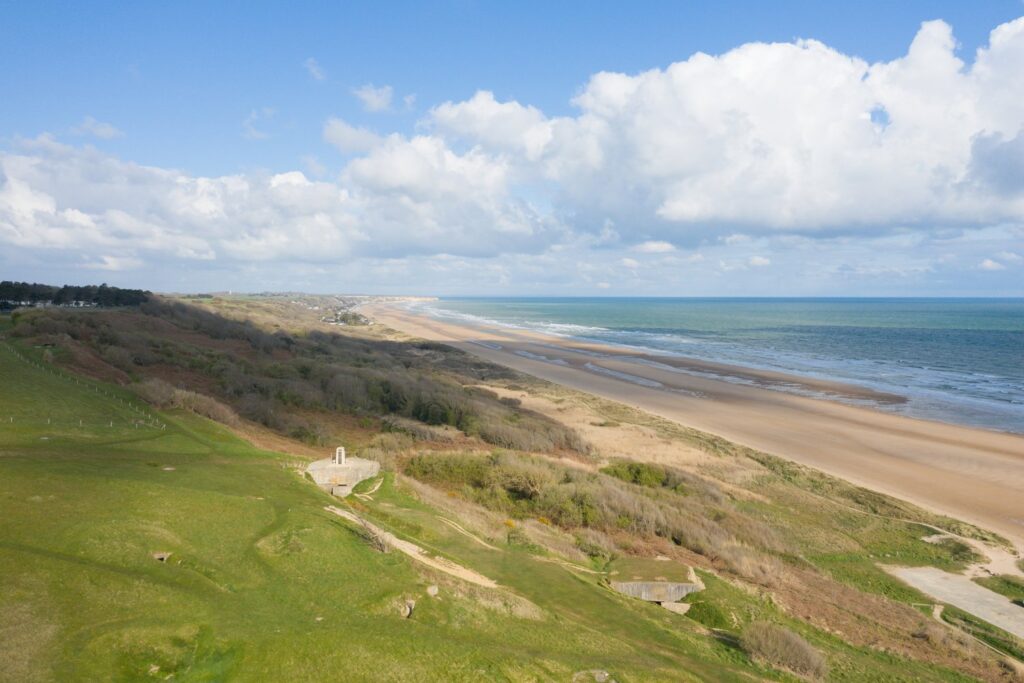
The nearest towns are Bayeux, about 6 miles (10 km) inland from Gold Beach, and Caen, a bigger city near Sword Beach. Both make good bases. From Paris, the drive to Bayeux takes about three hours, and the coast is about an hour from the port of Cherbourg.
D-Day and the Normandy landings in a nutshell
D-Day was the opening of Operation Overlord, the Allied plan to free Western Europe from Nazi occupation. The naval part of the plan, Operation Neptune, brought nearly 7,000 ships and landing craft across the Channel. In the early hours of June 6, paratroopers landed behind enemy lines, while warships began a heavy naval bombardment of the coast.
The German forces had spent years building the Atlantic Wall, a chain of bunkers, guns and beach obstacles along the Atlantic coast. The Allies planned to land at low tide, so troops could see and avoid the obstacles before the rising tide covered them. Rough seas and stormy weather delayed the invasion by a day and pushed many landing craft off course.
The Western Task Force, made up mostly of American troops, landed at Utah and Omaha. The Eastern Task Force brought British forces to Gold and Sword and Canadian forces to Juno. By nightfall, all five beaches were in Allied hands, though at a terrible price. Allied casualties on D-Day were at least 10,000, including more than 4,000 dead, and German casualties were also heavy.
The landings opened a new front in the west. Together with the advance of Soviet forces in the east, they forced Germany to fight a two-front war. The Normandy campaign lasted until late August 1944, when Allied troops reached the Seine and Paris was liberated.
The five D-Day landing beaches - What to see on each
You can see the highlights of the landing beaches in one long day, but two or three days let you slow down and take in the museums and memorials. Here’s what to expect at each beach, from west to east.
Utah Beach
Utah Beach was the westernmost landing zone and the least defended of the five. Strong currents pushed the first wave about a mile south of the planned spot, which turned out to be a lucky mistake, because German defenses there were weaker. The US 4th Infantry Division got ashore with far fewer losses than on Omaha, and thousands of men were moving inland by the end of the day.
The Utah Beach Landing Museum stands right on the sand at Sainte-Marie-du-Mont, where the first troops came ashore. It’s built around an original B-26 bomber and tells the story of the Utah landings through films, vehicles and personal objects. A few miles inland, the village of Sainte-Mère-Église is where American paratroopers dropped during the night. A dummy paratrooper still hangs from the church tower, recalling a soldier whose parachute caught on the steeple.
Pointe du Hoc
Between Utah and Omaha, Pointe du Hoc is a rocky headland where around 225 US Rangers climbed 100-foot (30 m) cliffs with ropes and ladders under fire. Their target was a battery of German artillery that could hit both beaches. When they reached the top, they found that the guns had been moved, and they tracked them down inland.
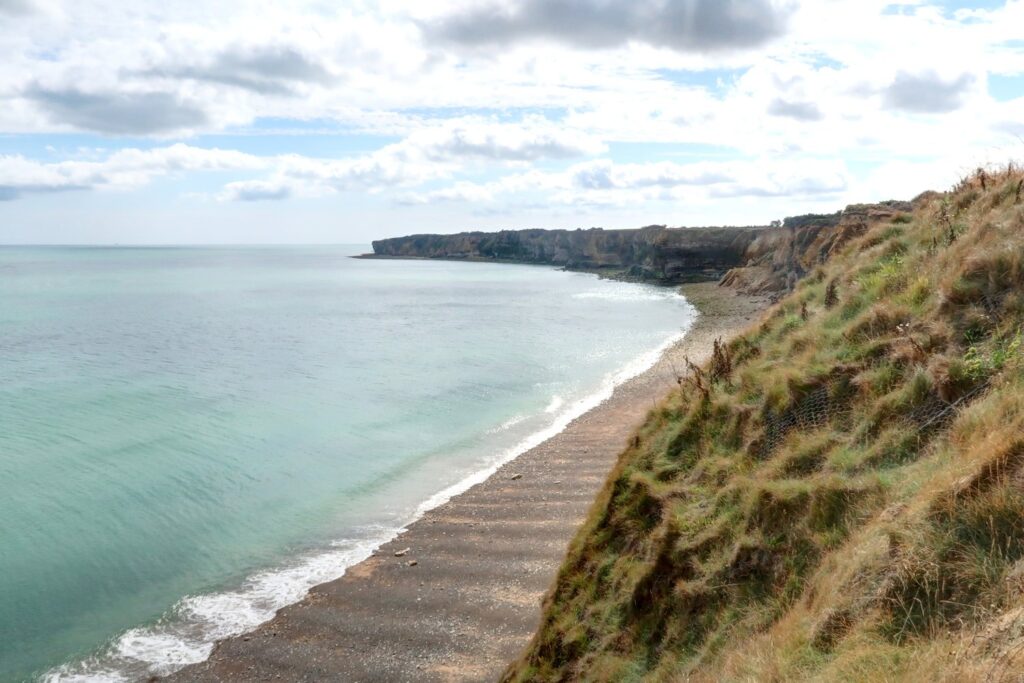
Today the site is left almost as it was in 1944. You walk among huge bomb craters and broken concrete bunkers, with the sea crashing below. It’s one of the most powerful places on the coast, so give yourself at least an hour here.
Omaha Beach
Omaha Beach is the most famous of the D-Day beaches and the deadliest. It was heavily defended, with German positions on the bluffs above a wide, open beach. The naval bombardment and air attacks largely missed their targets, and many men in the first wave were hit as soon as the ramps of their landing craft went down. American casualties on Omaha were around 2,400 on D-Day alone.
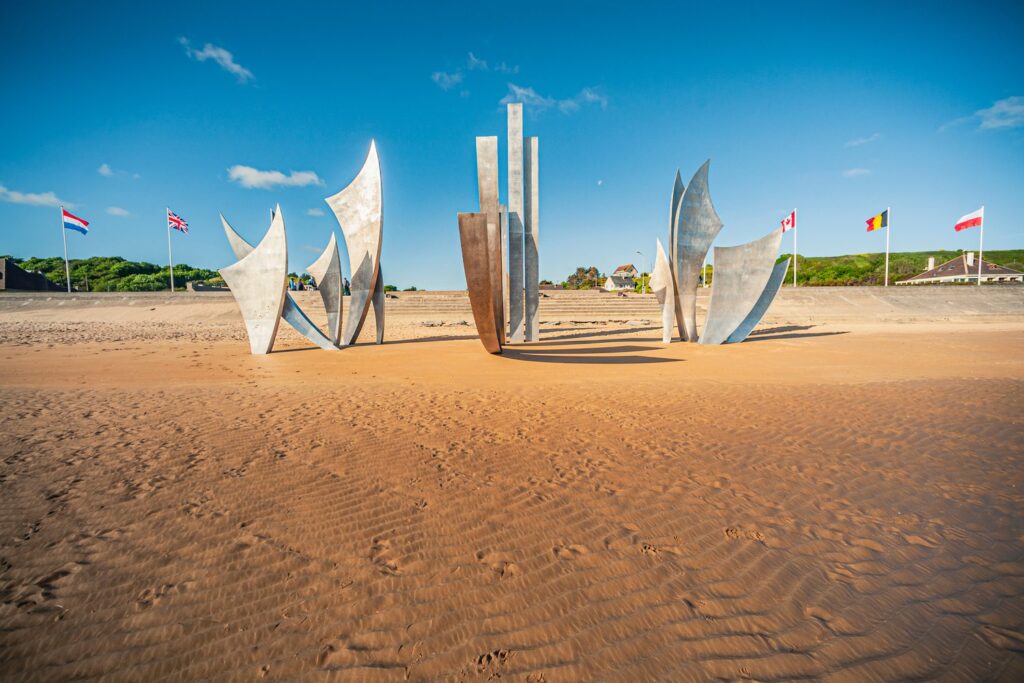
Despite everything, small groups of soldiers fought their way up the bluffs and opened the exits from the beach. Today Omaha Beach is a long, quiet stretch of golden sand with summer homes behind it. The stainless steel sculpture Les Braves stands on the sand at Saint-Laurent-sur-Mer, and the Overlord Museum and a memorial museum near the beach tell the story of that day.
Normandy American Cemetery
Above Omaha Beach, at Colleville-sur-Mer, the Normandy American Cemetery is the final resting place of nearly 9,400 American service members. Rows of white marble crosses and Stars of David stretch toward the sea, and a memorial lists the names of more than 1,500 missing. The visitor center explains the story of the Normandy invasion through the lives of individual soldiers.
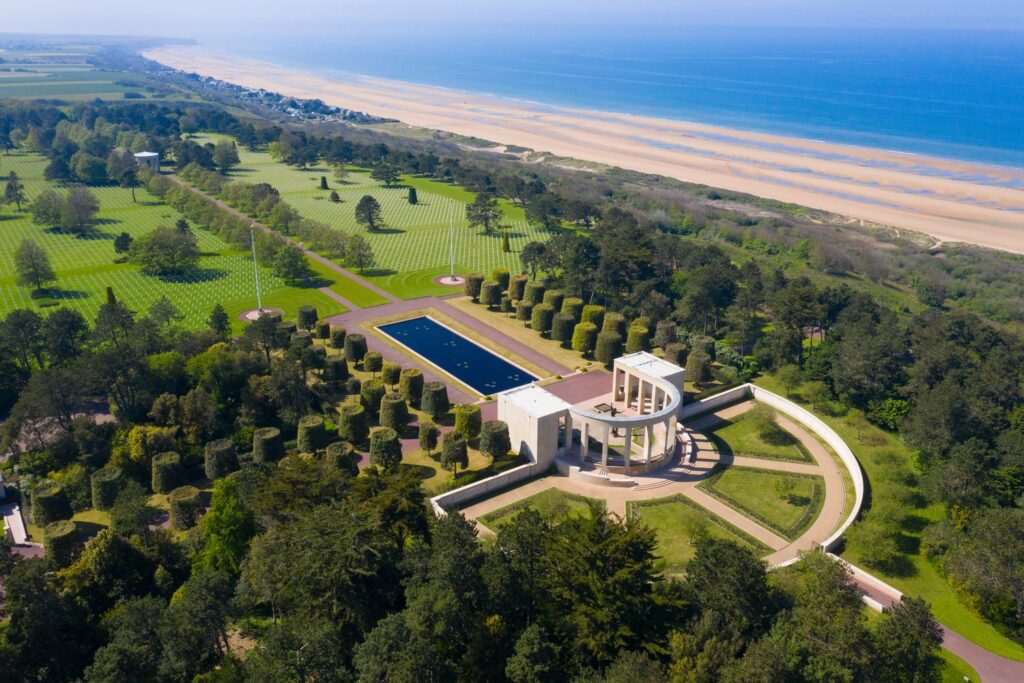
Try to be there late in the afternoon, when the flag is lowered and taps is played. It’s a quiet ceremony that many visitors remember as the most emotional moment of their trip. Dress modestly and keep your voice down, because this is a working cemetery and a place of mourning.
Gold Beach and Arromanches
Gold Beach was the central landing zone, attacked by British troops of the 50th Division. Nearly 25,000 men came ashore here on D-Day and pushed inland toward Bayeux. The most striking sight today is at Arromanches-les-Bains, where the remains of a Mulberry harbor still rise from the water.
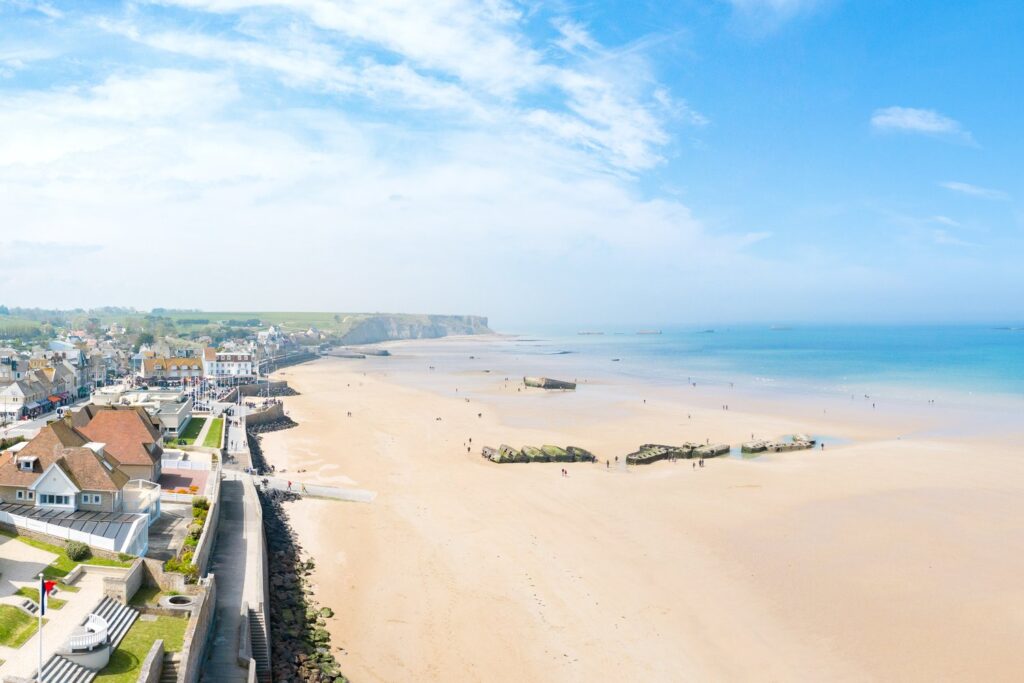
The Allies built these artificial ports in Britain and towed them across the Channel in pieces. Within weeks, they were unloading troops, vehicles and supplies straight onto the beach. At low tide you can see the huge concrete caissons up close. The Arromanches museum and the clifftop 360-degree cinema above the town explain how it all worked.
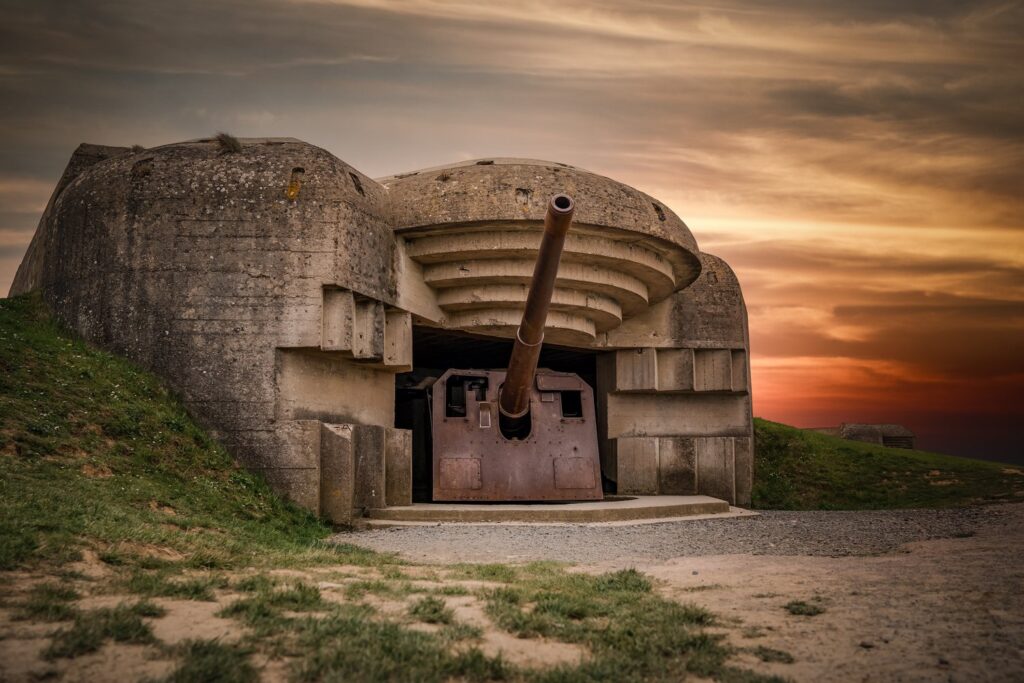
Just west of Gold, the Longues-sur-Mer battery is the only German coastal battery in Normandy that still has its original guns in place. Nearby, at Ver-sur-Mer, the British Normandy Memorial opened in 2021. It records the names of more than 22,000 people who died under British command on D-Day and during the Battle of Normandy.
Juno Beach
Juno Beach was assigned to Canadian forces, supported by British troops. Rough seas delayed the landing, and the rising tide hid many beach obstacles, so the first wave suffered heavy losses. Still, the Canadians pushed further inland than any other Allied troops on D-Day.
The Juno Beach Centre at Courseulles-sur-Mer opened in 2003 and is the Canadian museum of the landings. Its guides, often young Canadians, lead tours of the German bunkers in front of the museum. Juno is one of the best beaches for families, because the museum explains the war in a way that teenagers can relate to.
Sword Beach and Pegasus Bridge
Sword Beach was the easternmost landing beach, near Ouistreham. British troops landed here alongside 177 French commandos, the only French unit to land on D-Day. Their goal was to reach Caen on the first day, but strong German resistance held them back for weeks.
Just inland, Pegasus Bridge was captured by British glider troops a few minutes after midnight, in one of the first actions of D-Day. The Memorial Pegasus Museum keeps the original bridge in its grounds, along with a full-size replica of a Horsa glider. It’s a short, fascinating stop if you’re driving between Sword Beach and Caen.
The best D-Day museum in Normandy
Normandy has dozens of museums about the Second World War, so it helps to choose a few. If you only have time for one D-Day museum, make it the Caen Memorial Museum. It covers the whole of World War II, from the rise of fascism to the Cold War, and gives the Normandy landings their full context. Plan at least three hours.
The Utah Beach Landing Museum is the best museum right on a beach, and it’s ideal if you’re following the American side of the story. The Overlord Museum near Omaha Beach has a large collection of tanks, vehicles and artillery in realistic scenes. The Juno Beach Centre is the place to go for the Canadian story, and the Memorial Pegasus Museum covers the airborne landings.
In Bayeux, the Museum of the Battle of Normandy explains the summer campaign after D-Day. Across the road lies the Bayeux War Cemetery, the largest British cemetery from the Second World War in France. It holds more than 4,600 war graves.
Other memorial sites and military cemeteries
Military cemeteries are scattered all along the coast, and each one feels different. The German cemetery at La Cambe, near Omaha Beach, is a quiet, dark place with low stone crosses and the graves of more than 21,000 German soldiers. The Canadian cemetery at Bény-sur-Mer and the British cemeteries at Ryes and Hermanville are smaller and very peaceful.
Visiting the war graves of several nations helps you understand the human cost of the battle. Many visitors also come to look for relatives. If that’s your plan, search the online records of the American Battle Monuments Commission or the Commonwealth War Graves Commission before you travel.
Normandy beach today - Can you walk and swim there?
Yes, you’re allowed on all the Normandy beaches, and they’re public, open beaches. In summer, families come here to swim, sail and walk their dogs, just like on any other part of the French coast. Swimming is common in July and August, though the water is cool, usually in the 60s °F (around 16-19°C).
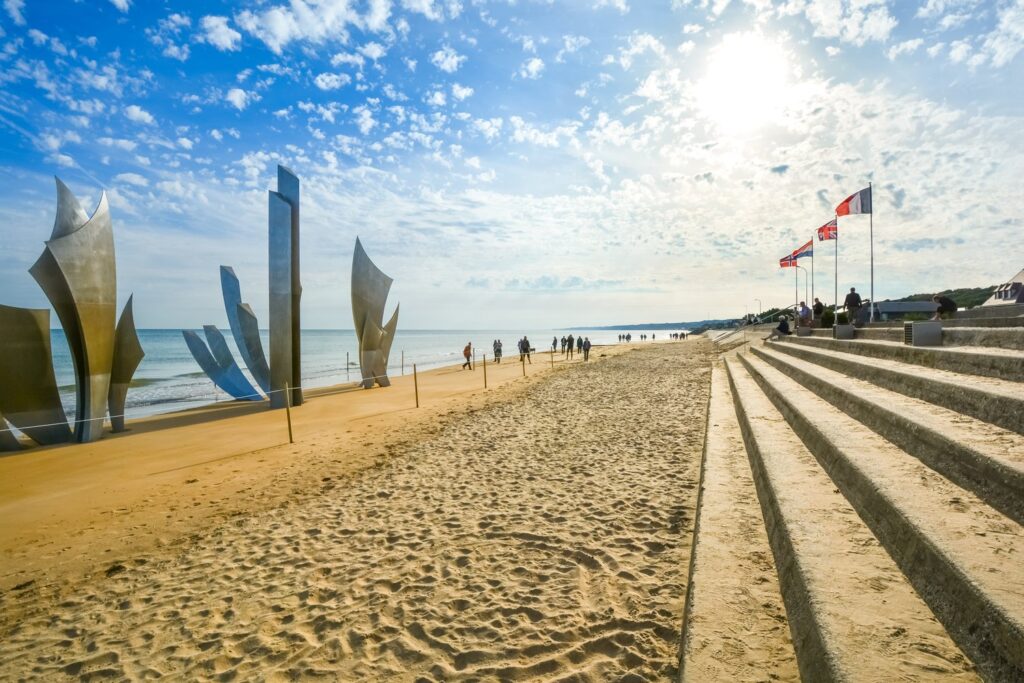
Normandy beach today looks surprisingly ordinary at first. There are seaside villages, cafés and beach huts. But walk a little and you’ll find bunkers in the dunes, monuments on the promenades and remains of the Mulberry harbor at Arromanches. Please treat these places with respect and don’t climb on monuments or take anything from the sites.
FUN FACT: “D-Day” is simply military shorthand for the day an operation starts, so the “D” just means “day”.
How to visit the D-Day beaches
Getting there from Paris
The easiest way to reach the coast from Paris is by train. Direct trains run from Paris Saint-Lazare to Caen in about two hours and to Bayeux in about two and a half. Book your train tickets to Caen or Bayeux in advance for the best fares. If you’d rather drive, the trip takes about three hours.
A day trip from Paris is possible with a guided tour, but it makes for a very long day of 13 or 14 hours. If you can, spend at least one night in Normandy, so you have time for both the beaches and the museums.
Car or guided tour?
The landing beaches are spread over about 50 miles, and public transport between them is limited. A rental car gives you the most freedom. Driving distances are short, and the roads are easy, so you can visit three or four sites in a day. Parking at the main memorials is usually free.
A guided tour is worth it if you want the stories behind the places. Local guides know where individual units landed and can bring Omaha, Utah or Juno to life in a way that signs can’t. Many tours start in Bayeux or Caen and focus either on the American sector or on the British and Canadian beaches.
Best time to visit
The best time to visit is from April to October, when museums have longer hours and the weather is milder. Early June is special, with ceremonies, parades and the D-Day Festival Normandy, but it’s also the busiest time, and hotels fill up months ahead. Book your stay in Bayeux early if you’re coming around June 6.
Fall and winter are quieter and more reflective. Some smaller museums close for a few weeks in winter, so check opening times before you go. Whatever the season, bring layers and a rain jacket, because the wind on the cliffs can be strong.
How much time do you need?
One full day is enough to see Omaha Beach, the Normandy American Cemetery, Pointe du Hoc and Arromanches. With two days, you can add Utah Beach and Sainte-Mère-Église on one side and Juno, Sword and Pegasus Bridge on the other. A third day leaves time for the Caen Memorial Museum and the famous Bayeux Tapestry, which tells the story of another invasion across the Channel in 1066.
Hotels near the Normandy beaches
Bayeux is the best base for visiting the Normandy beaches. It’s close to Omaha, Gold and Juno, has a medieval center, good restaurants and train links to Paris. Here are three places to stay for different budgets.
💰 La Renaissance - Collection La 21ème Planche
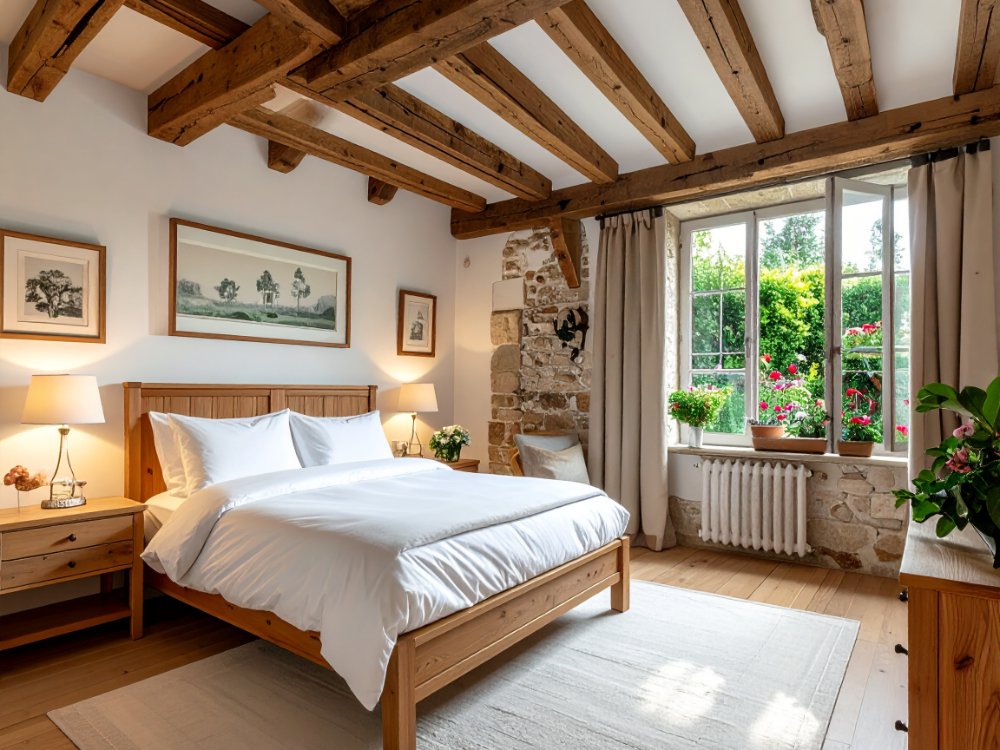
A good-value guesthouse with a garden, less than a mile from Bayeux Cathedral and the Bayeux Tapestry Museum. It’s a quiet place to sleep after a long day on the beaches, with a concierge who can help with plans. The German battery at Longues-sur-Mer is only about 6 miles away. It suits travelers who want a simple, comfortable room without paying downtown prices.
🏨 Churchill Hotel Bayeux Centre
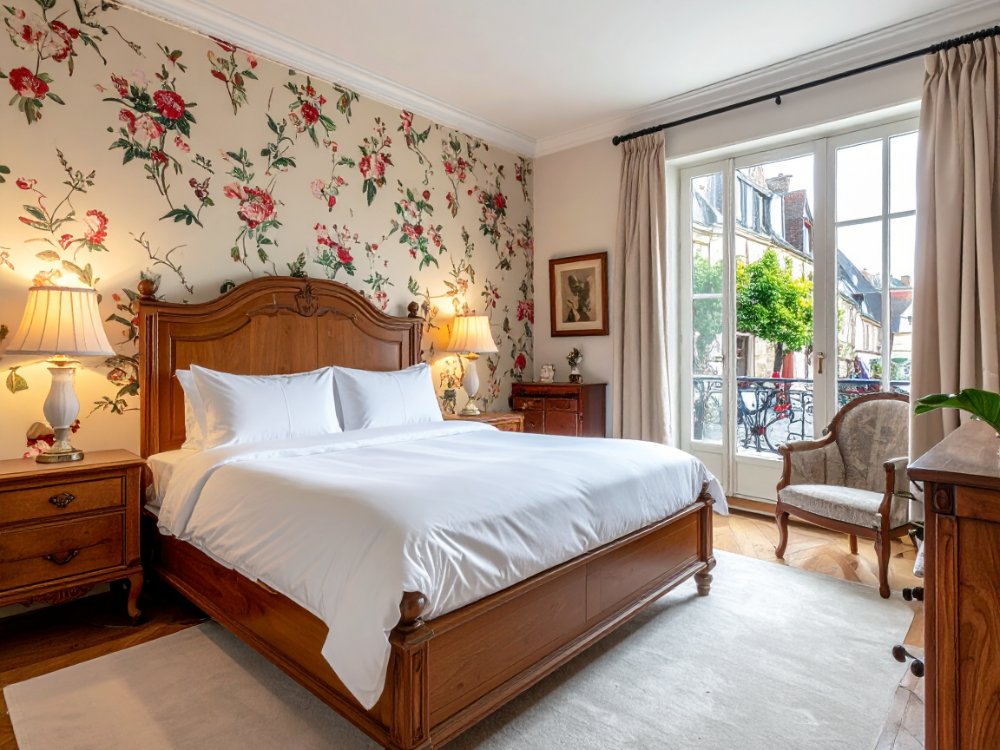
A classic hotel on a quiet pedestrian street in the historic center of Bayeux, about 1,300 feet (400 m) from the Bayeux Tapestry Museum. The rooms are elegant and traditional, and there’s a bar and a 24-hour front desk. You can walk to restaurants and the cathedral in the evening and drive to Omaha Beach in about 20 minutes. It’s a great choice for first-time visitors and history lovers who want everything close by.
💎 Ferme de la Rançonnière - Hôtel & Restaurant

A charming hotel in an old fortified farmhouse in the village of Crépon, about 2 miles (3 km) from the coast near Gold Beach. Stone walls, wooden beams and a courtyard give it real Norman character. The restaurant serves regional dishes, and Arromanches and the British Normandy Memorial are just a short drive away. It’s perfect for couples who want a rural setting in the middle of the landing beaches.
Normandy beaches FAQ
Are Normandy and Omaha Beach the same?
No. Normandy is a region of northern France, while Omaha Beach is one of the five D-Day landing beaches on its coast. The others are Utah, Gold, Juno and Sword.
Which D-Day beach is best to visit?
If you can only see one, choose Omaha Beach. It’s the most famous of the landing beaches, and you can combine it with the Normandy American Cemetery and Pointe du Hoc in half a day.
Is there still wreckage on the Normandy beaches?
Yes, some. The best-known remains are the concrete caissons of the Mulberry harbor at Arromanches, visible at low tide. You’ll also find German bunkers, gun batteries and bomb craters along the coast.
Can you visit the D-Day beaches without a tour?
Yes. With a car and a little planning, it’s easy to visit the beaches, cemeteries and museums on your own. A guide adds stories and context, so many visitors book one for at least half a day.
How many soldiers died on D-Day?
Allied casualties on June 6, 1944, were at least 10,000, including more than 4,000 dead. Omaha Beach saw the heaviest American losses, with around 2,400 casualties.

