The turquoise in these lakes isn’t a trick of the light. It’s rock flour, ground so fine by glaciers that it hangs in the water and bounces back the blue-green part of the sunlight.
Banff National Park is the place most people picture when they think of the Canadian Rockies: jagged limestone peaks, glacier-fed lakes, elk wandering past the edge of town and a highway that seems to run straight into a postcard. Founded in 1885, it’s Canada’s oldest national park and one of the most visited parks in North America, with more than four million visitors a year. In this article, you’ll find where Banff National Park is, the best things to do in Banff from Lake Louise to the Banff Gondola, a few easy hikes, the scenic drives worth your time and the best time to visit Banff for the trip you have in mind.
This is a big park, roughly 2,564 square miles (6,641 km²) of mountains, rivers and forest. You won’t see it all in one trip, and you don’t need to. With a smart plan, three or four days give you the highlights without spending every hour in the car.
💰 HI Banff Alpine Centre - Hostel - A friendly hostel on Tunnel Mountain with dorms, private rooms and a guest kitchen.
🏨 Banff Aspen Lodge - A comfortable lodge on Banff Avenue with balconies, a hot tub and breakfast included.
💎 Fairmont Banff Springs - The famous castle hotel from 1888, with a huge spa and views over the Bow River.
Where is Banff National Park?
Banff National Park sits in the province of Alberta, in western Canada, on the eastern slopes of the Rocky Mountains. The town of Banff is about 80 miles (128 km) west of Calgary by road, which takes around 90 minutes on the Trans-Canada Highway. Calgary International Airport (YYC) is the closest airport with direct flights from many US cities, so most American visitors fly there and pick up a rental car for the drive west.
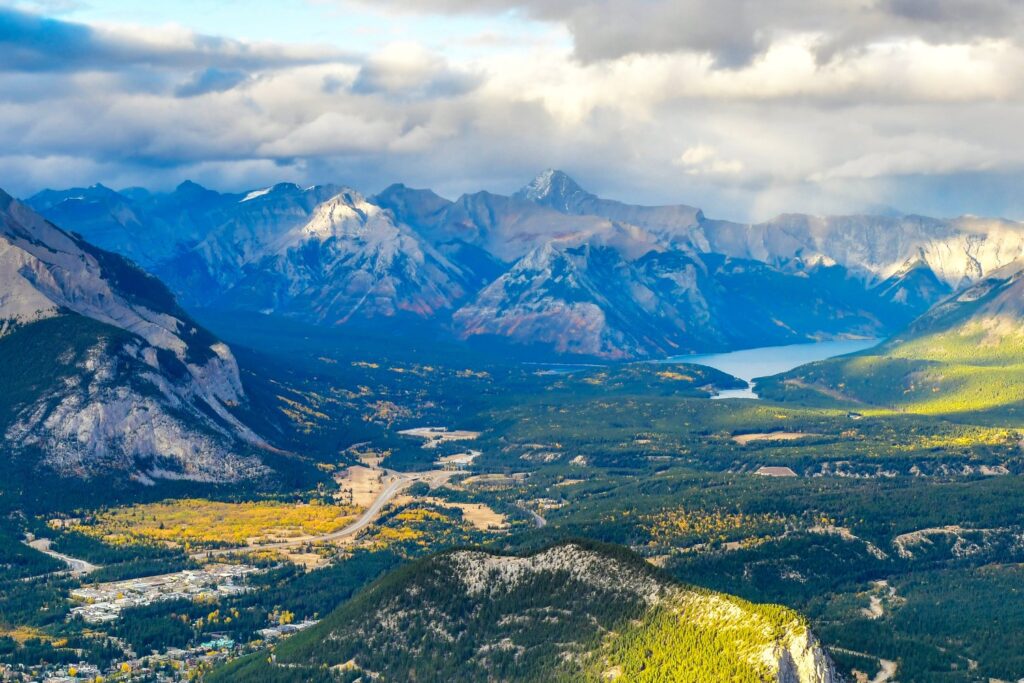
The park stretches along the Continental Divide, the line that also marks the border between Alberta and British Columbia. To the north, the Icefields Parkway links it with Jasper National Park. To the west lie Yoho National Park and Kootenay National Park, both in British Columbia. Together with a few provincial parks, they form the Canadian Rocky Mountain Parks, a UNESCO World Heritage Site since 1984. Vancouver is a long day’s drive away (about 530 miles / 850 km), while Edmonton, the capital of Alberta, is roughly four hours by car.
Inside Banff National Park there are two communities. The town of Banff is the main base, with hotels, restaurants and shops along Banff Avenue. The much smaller village of Lake Louise lies about 35 miles (57 km) to the northwest and puts you right next to the most famous lakes.
The Canadian Rockies in a nutshell - why this park is so special
The Canadian Rockies run for hundreds of miles through Alberta and British Columbia, but Banff is where they become easy to reach. You can drive a paved road past glaciers, walk five minutes from the parking lot to a turquoise lake or ride a gondola to a mountain ridge before lunch. That mix of wild scenery and easy access is what makes Banff National Park so popular.
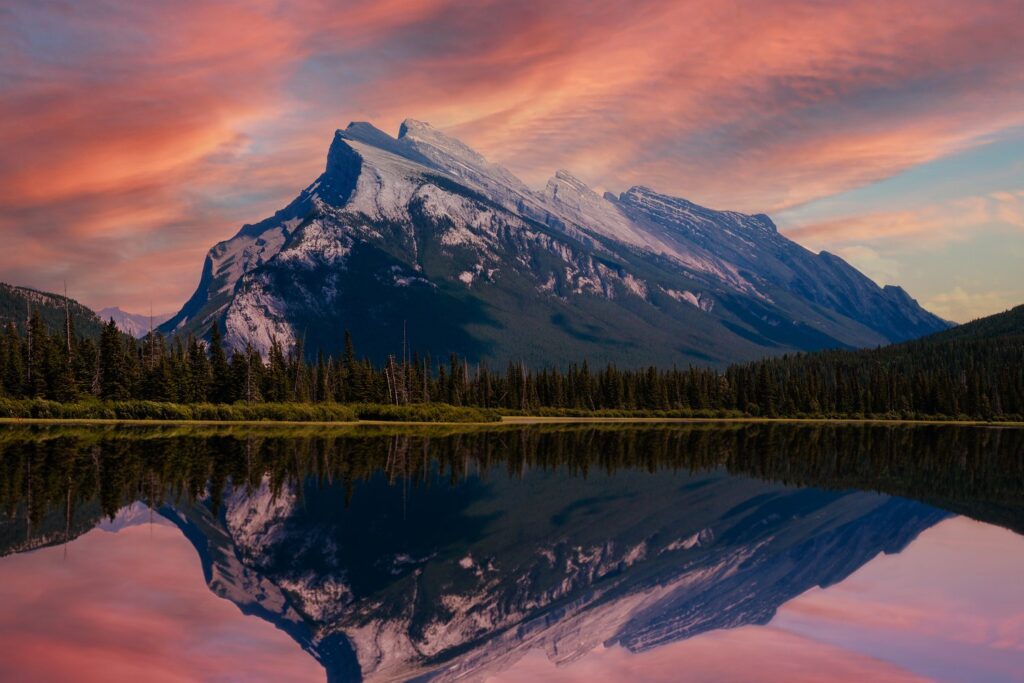
The mountains here are mostly layered limestone and shale, pushed up and tilted over millions of years. That’s why peaks like Cascade Mountain and Mount Rundle look like giant slabs leaning over the valley. The tallest peak entirely inside the park is Mount Forbes, at 11,850 feet (3,612 m). Glaciers still cling to the higher ranges, and their meltwater feeds the lakes and rivers that give Banff its famous colors.
Banff National Park is also a protected area with strict rules. Parks Canada manages the park boundaries, campgrounds and trails, and every visitor needs a valid park pass, even if you’re only driving through and stopping for photos. You can buy a daily pass or the annual Discovery Pass online or at the park gates. If you plan to visit several Canadian national parks in a year, the annual pass usually makes more sense.
Things to do in Banff National Park - the highlights
There are endless things to do in Banff, but most first trips focus on the same handful of places. Here they are in a logical order, starting with the lakes that put Banff on the map.
Lake Louise
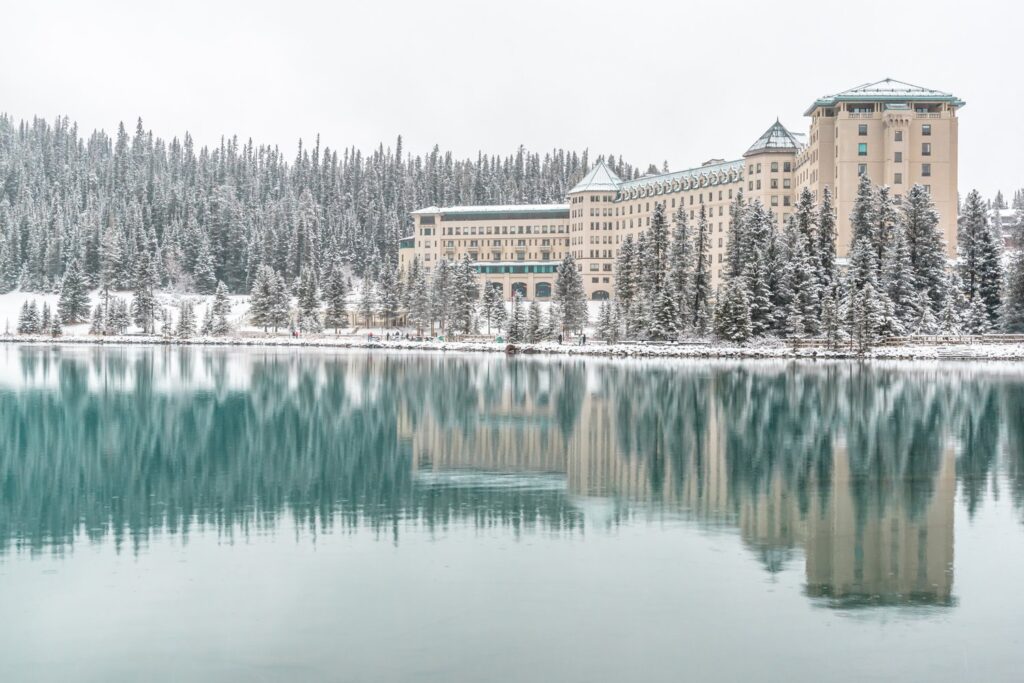
Lake Louise is the image on half the postcards in Canada. The lake sits at the foot of Victoria Glacier, framed by steep peaks, with the grand Fairmont Chateau Lake Louise at the other end. In summer, the water turns a milky turquoise. In winter, it freezes solid and becomes one of the prettiest skating rinks you’ll ever see.
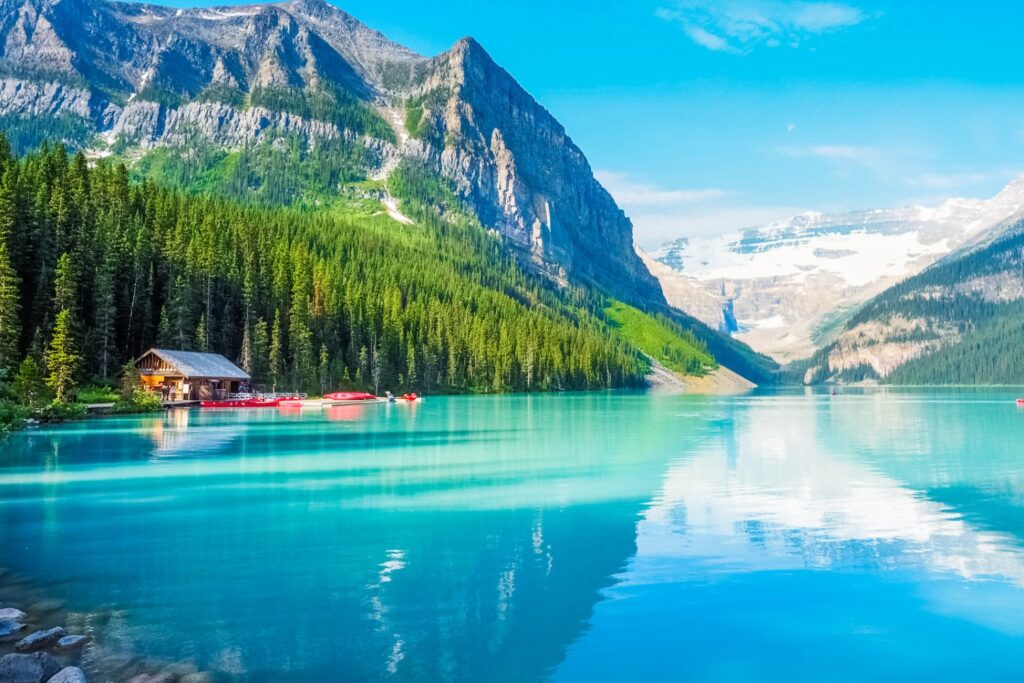
The lakeshore path is flat and easy, so even a short visit is worth it. If you have half a day, hike up to the Lake Agnes Tea House, a historic log teahouse above the lake, or continue along the Plain of the Six Glaciers Trail toward Victoria Glacier. Both routes give you views over Lake Louise that most visitors never see.
Parking at the Lake Louise lakeshore is very limited and often fills before sunrise in summer. Parks Canada runs shuttles from a Park and Ride lot at the Lake Louise ski resort from mid-May to mid-October, and seats sell out early. Book the shuttle as soon as reservations open, or join a guided tour that includes transport.
Moraine Lake and the Valley of the Ten Peaks
Moraine Lake is Lake Louise’s smaller, wilder neighbor, and many people think it’s even more beautiful. The lake sits in the Valley of the Ten Peaks, with a wall of mountains rising straight behind the water. Climb the short Rockpile Trail next to the parking area for the classic view.
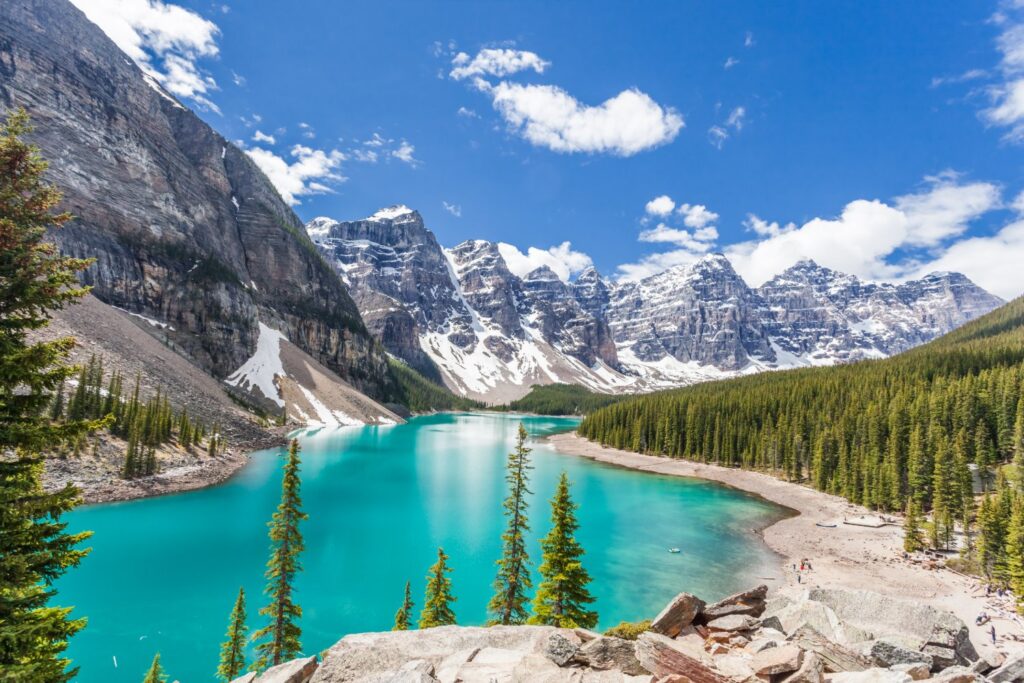
Getting there takes planning. Personal vehicles aren’t allowed on Moraine Lake Road at any time of year. You can reach the lake on a Parks Canada shuttle, on a licensed commercial tour or as a guest of Moraine Lake Lodge. The road is usually open from early June until mid-October, depending on snow. Outside that window, the lake is frozen and hard to reach.
FUN FACT: The bright color of Moraine Lake and Lake Louise usually peaks from late June, once the glacial melt carries enough rock flour into the water.
Banff Gondola and Sulphur Mountain
The Banff Gondola is the easiest way to get above the valley. The ride takes about eight minutes and climbs to the upper terminal on Sulphur Mountain, at 7,486 feet (2,281 m). From there, a boardwalk runs along the ridge for about half a mile (1 km) to Sanson’s Peak and its old weather station. Plan about 15-20 minutes each way and take your time, because the views over the Bow Valley, the town of Banff and the surrounding peaks are sweeping.
The weather station has a good story. Norman Sanson, the park’s meteorologist, climbed Sulphur Mountain more than 1,000 times to take readings, often on snowshoes. His last hike to the top was in 1945, when he was 84. At the summit building, you’ll find restaurants, an observation deck and exhibits about the mountain.
The gondola runs almost all year, including evenings in summer, but it usually closes for a short maintenance break in November. If you’re fit, you can also hike up: the Sulphur Mountain Trail is about 3.4 miles (5.5 km) one way with a steady climb, and many hikers ride the gondola back down. Afterward, walk over to the Banff Upper Hot Springs, a spring-fed hot pool just across the road from the lower terminal.
Johnston Canyon
Johnston Canyon is one of the most popular short hikes in Banff National Park. Steel catwalks bolted to the canyon walls take you above the rushing creek to the Lower Falls, about 0.7 miles (1.2 km) from the trailhead. Keep going to the Upper Falls, about 1.6 miles (2.5 km) from the start, for a taller waterfall and fewer people.
In winter, the falls freeze into columns of blue ice, and guided icewalks with ice cleats are one of the best winter activities in the park. The trailhead is on the Bow Valley Parkway, so it’s easy to combine with a scenic drive. Arrive early in summer, because the parking lot fills by mid-morning.
Lake Minnewanka
Lake Minnewanka is the largest lake in Banff National Park, about 13 miles (21 km) long and only about 15 minutes by car from town. A dam built in 1941 raised the water level by around 100 feet (30 m) and flooded the old resort village of Minnewanka Landing, which divers can still explore today. Boat cruises run in the warmer months, and the shoreline trail is great for an easy walk.
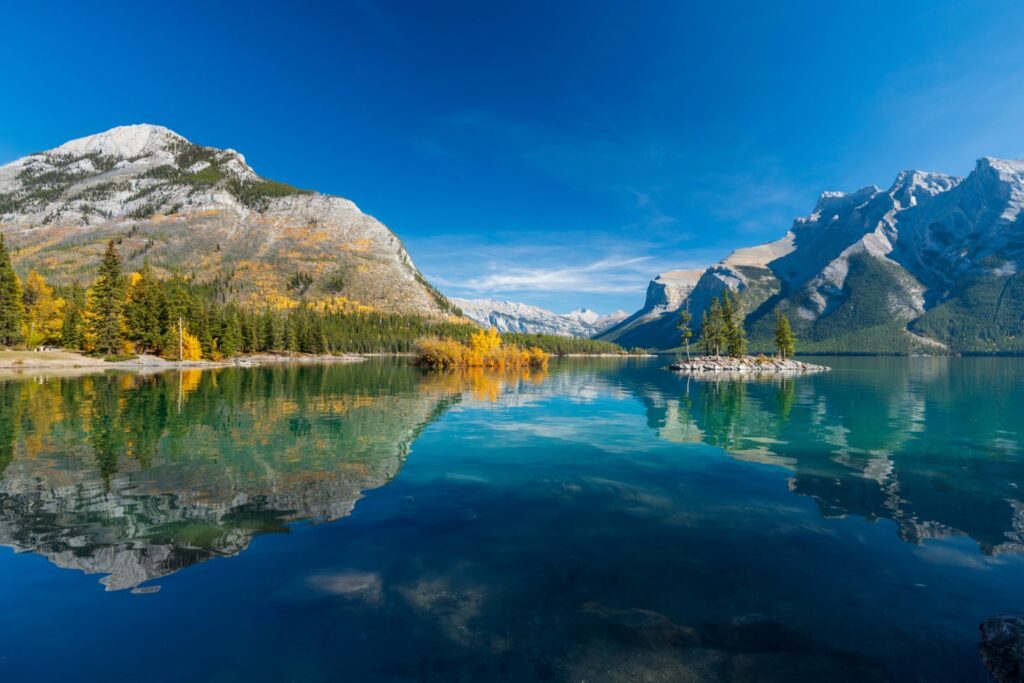
The Lake Minnewanka Scenic Drive also passes Two Jack Lake, one of the best sunrise spots near town, and Cascade Ponds, a favorite picnic area. Bighorn sheep often wander along this road, so drive slowly.
The town of Banff
The town of Banff is more than a place to sleep. Walk Banff Avenue for shops and great food, then visit the Cave and Basin National Historic Site, where railroad workers found hot springs in 1883. That discovery led to the creation of the park. Of course, the valleys weren’t empty before that: Indigenous peoples, including the Stoney Nakoda, Ktunaxa and Blackfoot nations, had traveled, hunted and gathered here for thousands of years. The Banff Park Museum, in a log building from 1903, is a fun stop on a rainy day.
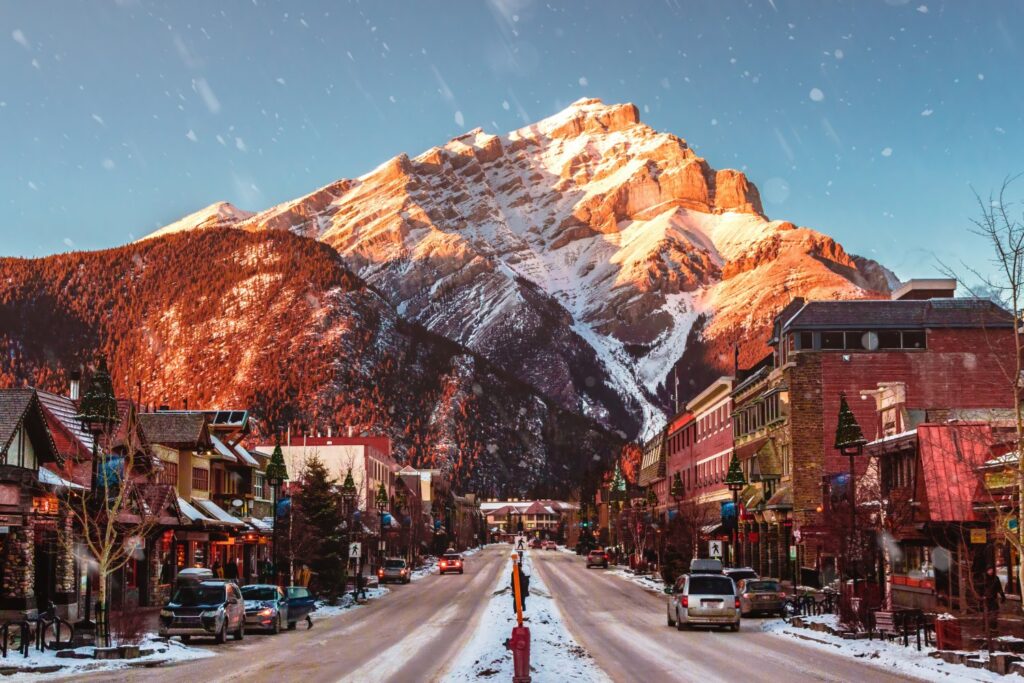
For a short hike right from town, climb Tunnel Mountain (about 1.5 miles / 2.4 km one way) or stroll the flat Fenland Trail by the river. In the evening, head to the Vermilion Lakes, just west of town, where Mount Rundle reflects in the water at sunset. Banff is also a good base for the wider surrounding area, including the town of Canmore just outside the park boundaries.
Scenic drives in Banff National Park
Some of the best views in the park come from the driver’s seat. If you rent a car, these are the drives to plan around.
Icefields Parkway to Jasper National Park
The Icefields Parkway (Highway 93 North) runs about 140 miles (230 km) from Lake Louise to Jasper and is often called one of the most beautiful drives in the world. You pass more than 100 glaciers, waterfalls and lakes. The section inside Banff National Park includes Peyto Lake, famous for its wolf-head shape seen from the Bow Summit viewpoint, and Bow Lake, where the Bow River begins. A little further on, at Saskatchewan Crossing, the road meets the North Saskatchewan River.
Farther north, the road crosses into Jasper National Park and reaches the Columbia Icefield, where you can walk toward the Athabasca Glacier. There are no gas stations for long stretches, so fill up in Lake Louise. In winter, the road can be closed or slippery, and you’ll need winter tires. If you’d rather not drive, a guided day tour covers the main stops.
Bow Valley Parkway along the Bow River
The Bow Valley Parkway (Highway 1A) is a quieter alternative to the Trans-Canada Highway between Banff and Lake Louise. It follows the Bow River through forest and meadows, with stops at Johnston Canyon, Castle Junction below Castle Mountain and the Morant’s Curve viewpoint, where trains bend along the river. Wildlife sightings are common here, especially at dawn and dusk.
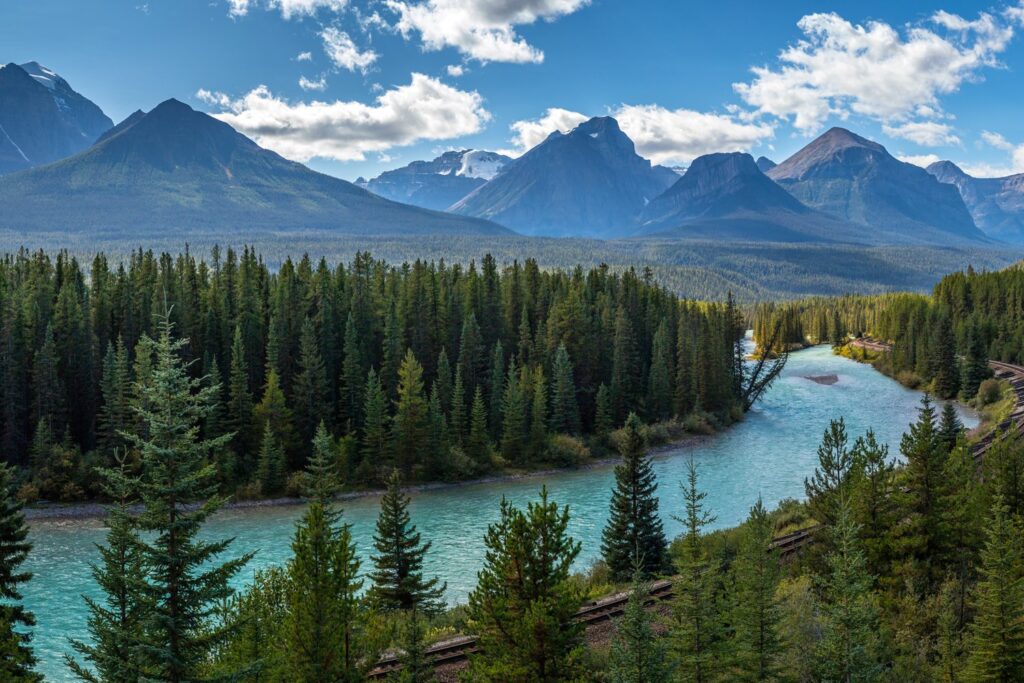
Part of the eastern section has seasonal travel restrictions in spring to protect wildlife, and the speed limit is low on purpose. Check the current Parks Canada conditions before you go, then simply take your time.
Hiking in Banff National Park - favorite trails for every level
Hiking is the best way to escape the crowds. Banff National Park has hundreds of miles of trails, from flat lakeside walks to multi-day backcountry routes. Trails above the tree line are usually snow-free only from July to September, while valley trails open earlier.
- Easy: Fenland Trail, the Lake Louise lakeshore, Johnston Canyon to the Lower Falls, Moraine Lake Rockpile.
- Moderate: Tunnel Mountain, Lake Agnes Tea House, Johnston Canyon to the Upper Falls, Sulphur Mountain.
- Challenging: Plain of the Six Glaciers, Sentinel Pass via Larch Valley, Cory Pass.
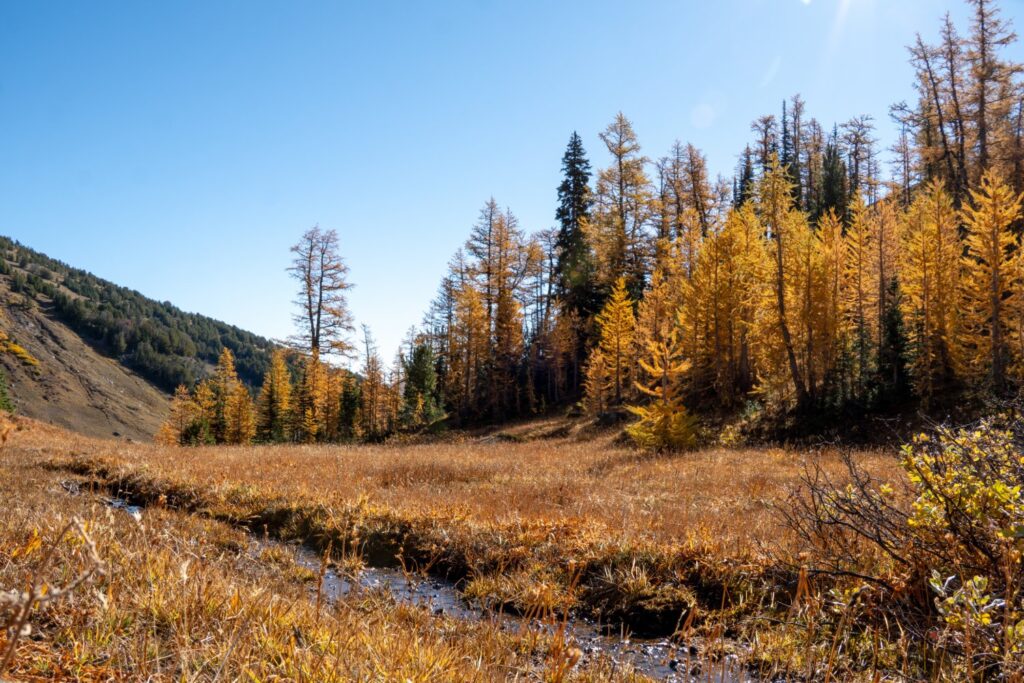
If you’re an avid hiker, time your trip for mid-to-late September. That’s when the larch trees in Larch Valley above Moraine Lake turn bright gold, and the trail becomes a favorite hike for locals. Always carry bear spray, hike in groups and check trail reports, because Parks Canada sometimes restricts trails when bears are feeding nearby.
Wildlife in Banff National Park
Banff National Park is home to 56 mammal species, and you have a real chance of seeing several of them. Elk often graze on the Banff Springs golf course and around town, bighorn sheep and mountain goats roam the rocky slopes, and the Bow Valley has a resident wolf pack. Grizzly bears and black bears live in the forests and meadows, especially in spring when they come down to the valleys after hibernation.
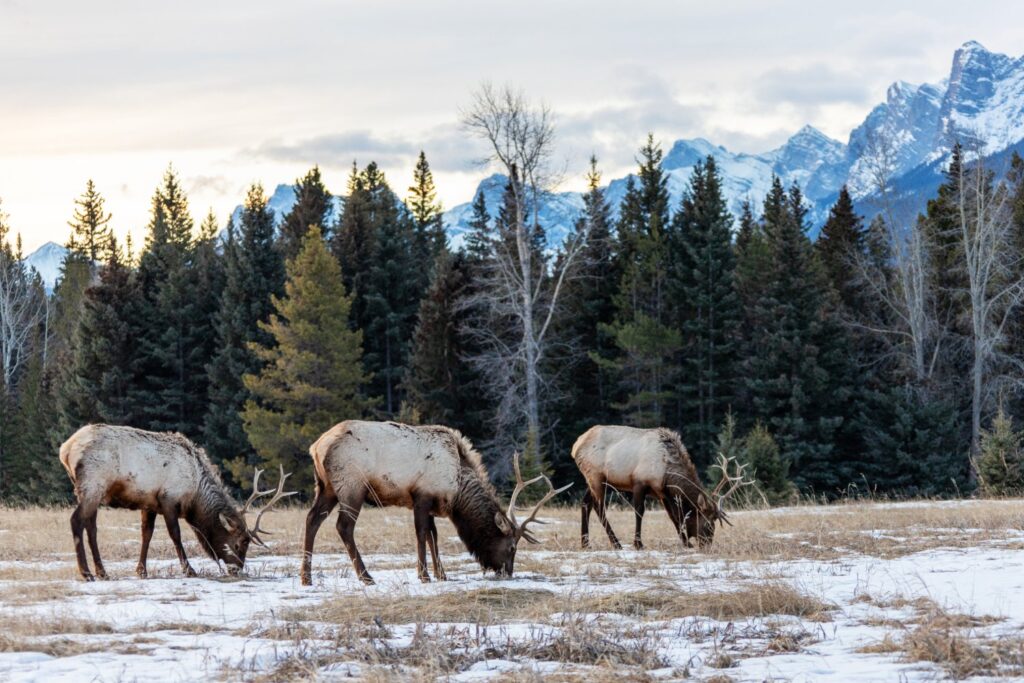
The best times to spot wildlife are early morning and evening. Stay in your car, keep at least 100 feet (30 m) from elk and sheep and much farther from bears, and never feed any animal. The Trans-Canada Highway has six wildlife overpasses and many underpasses, which have cut collisions between animals and vehicles by more than 80 percent.
Best time to visit Banff
The best time to visit Banff depends on what you want to do. Each season has a very different feel, and Banff National Park is open year round.
Summer (June to August)
Summer brings long days, open roads and the brightest lake colors. Average July highs are in the low 70s °F (around 22°C), with cool nights. It’s also peak season, with crowds and higher prices in July and August. Book your hotel early, reserve shuttles and start your days before 8 a.m. to beat the tour buses.
Fall (September to October)
For many visitors, September is the sweet spot. The weather is still pleasant, the crowds thin out and the larches turn golden in the second half of the month. Cooler temperatures also bring elk and bears down into the valleys. By October, snow can arrive at any time, and some trails and roads begin to close.
Winter (November to April)
Winter turns Banff into a snow globe. The park has three ski resorts: Sunshine Village, Mount Norquay and Lake Louise Ski Resort, and the ski season usually runs from November to May. You can skate on Lake Louise, soak in the hot springs, try ice climbing or join a canyon icewalk. Temperatures often drop well below freezing, and winter driving needs care.
Spring (May)
Spring is the quietest season, with lower hotel rates and minimal crowds in town. The lakes are often still frozen until late May or early June, and high trails are snowy, but it’s a good time to see wildlife and enjoy valley walks.
How many days do you need in Banff National Park?
Three to four days is a good amount of time for a first trip. Spend one day around the town of Banff (gondola, hot springs, Lake Minnewanka), one day at Lake Louise and Moraine Lake, and one day on the Icefields Parkway. A fourth day lets you add Johnston Canyon, a longer hike or a trip to Yoho National Park, where Emerald Lake is less than an hour from Lake Louise.
If you only have one day, focus on Lake Louise and Moraine Lake in the morning and the Banff Gondola in the afternoon. With a week, you can combine Banff and Jasper and spend a couple of nights in each. Reserve your hotel and shuttles well in advance, especially for summer.
Practical tips for visiting Banff National Park
A few simple tips will make your trip smoother. First, plan ahead for the busiest spots: shuttle seats to Lake Louise and Moraine Lake, popular campgrounds and summer hotel rooms all sell out. Parks Canada manages more than a dozen campgrounds, and the camping season mostly runs from May to October.
Second, pack layers. Mountain weather changes fast, and even in July you may need a warm jacket at the gondola summit or near a glacier. Third, if you’d rather not drive, guided tours from the town of Banff cover the lakes, Johnston Canyon and the Icefields Parkway in comfortable minibuses. They also solve the parking problem.
Finally, remember that Banff is part of a bigger trip for many travelers. If you’re heading east afterward, our guide to Niagara Falls covers another of Canada’s great natural sights, and in Toronto you can tour the castle-like Casa Loma.
Hotels in Banff
The town of Banff has the widest choice of accommodation options in the park, from hostels to historic castle hotels. Staying in town means restaurants within walking distance and easy access to the gondola, the hot springs and the shuttle to the lakes.
💰 HI Banff Alpine Centre - Hostel
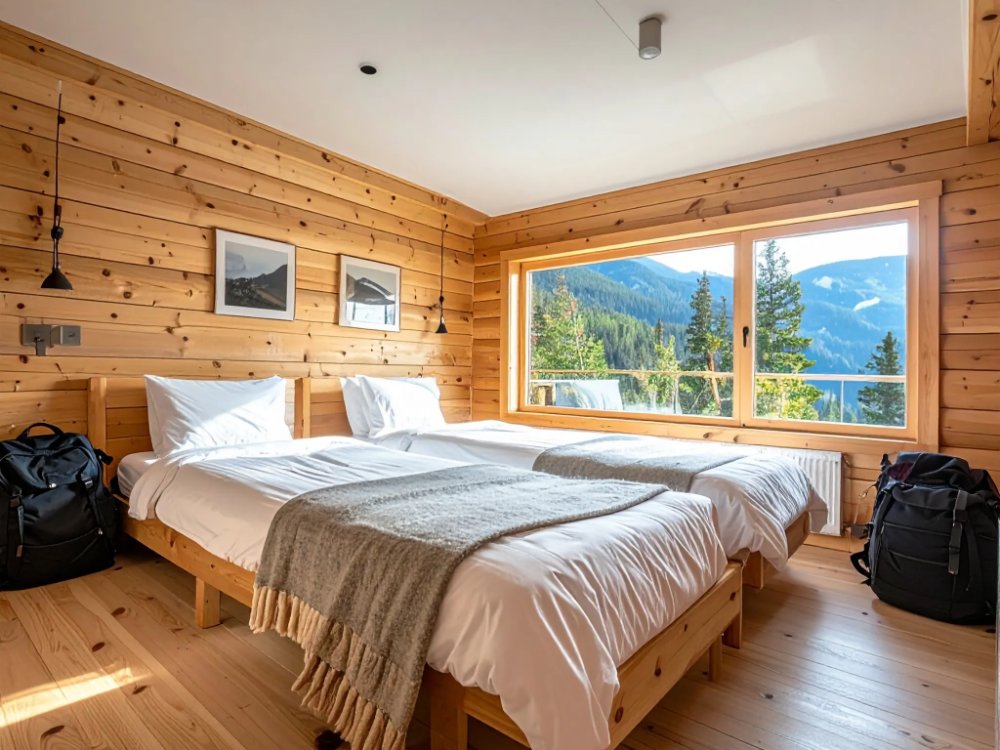
This friendly hostel sits on Tunnel Mountain, a few minutes by car or local bus from downtown Banff, with views of the Rockies from the grounds. You can choose a dorm bed or a private room, and some rooms have their own bathroom. There’s a guest kitchen, free Wi-Fi, a café and a casual restaurant, plus a bar with games. It’s a great pick for solo travelers, hikers and anyone who wants to save on accommodation and spend more on tours.
🏨 Banff Aspen Lodge
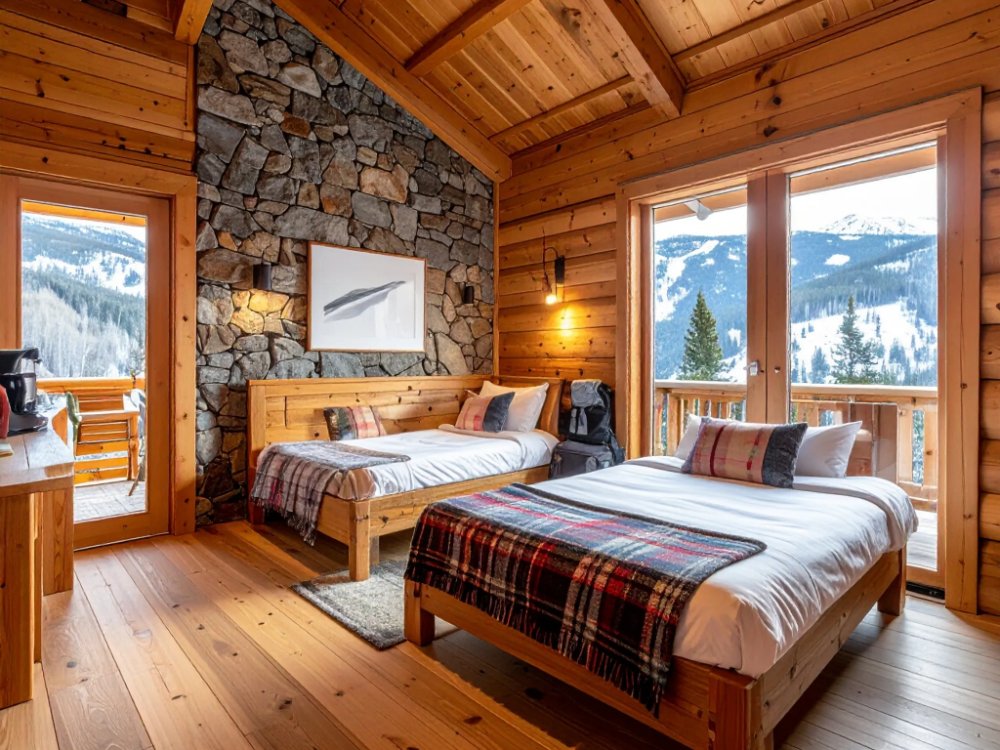
Located on Banff Avenue, this mid-range lodge is about a 10-minute walk from downtown restaurants and the Banff Park Museum. Every room has a balcony or patio, a mini fridge and a coffee maker, and a full breakfast is included. After a day on the trails, you can relax in the hot tub. It’s a comfortable, good-value base for couples and families who want to explore the park by car.
💎 Fairmont Banff Springs
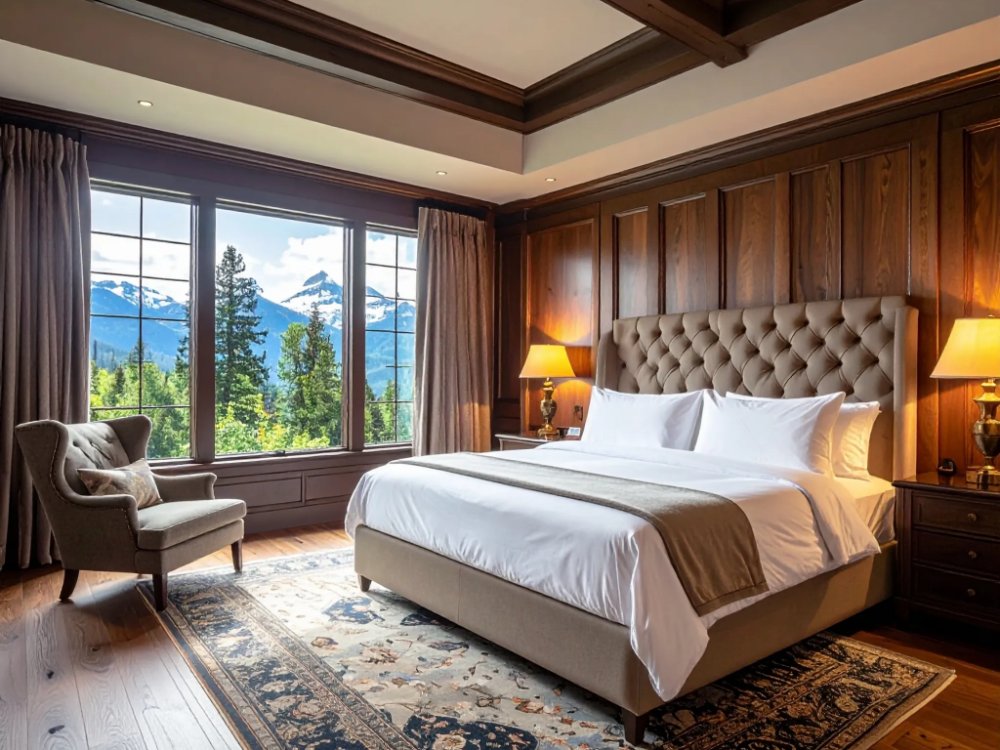
Built in 1888 in the style of a Scottish baronial castle, this landmark hotel is a National Historic Site and the most famous address in Banff National Park. It overlooks the Bow River just south of downtown and has a huge spa, indoor and outdoor pools, many restaurants and its own golf course. Elk often graze on the fairways. It’s the place to stay for a special occasion or a once-in-a-lifetime trip to the Canadian Rockies.
Banff National Park FAQ
Do you need a park pass to visit Banff National Park?
Yes. Every visitor needs a valid Parks Canada pass, even if you’re only driving through and stopping for photos. You can buy a daily pass or the annual Discovery Pass online or at the park gates. Shuttles to Lake Louise and Moraine Lake require a separate reservation.
Can you drive to Moraine Lake?
No, not in your own car. Moraine Lake Road is closed to personal vehicles all year. You can get there on a Parks Canada shuttle, a licensed tour or as a guest of Moraine Lake Lodge, usually from early June to mid-October.
Is Banff worth visiting in winter?
Yes, especially if you love snow. Winter brings skiing at three resorts, skating on Lake Louise, frozen waterfalls in Johnston Canyon and quiet hot springs. Some lakes and high trails aren’t accessible, and roads can be icy, so plan shorter drives.
Is Banff National Park in the US or Canada?
Banff National Park is in Canada, in the province of Alberta. It’s about 80 miles (128 km) west of Calgary. US citizens need a valid passport to enter Canada by air. If you’ve visited Yellowstone National Park, Banff feels similar in scale, but with more glaciers and turquoise lakes.
Is the Banff Gondola worth it?
Yes, for most visitors. In about eight minutes you’re on Sulphur Mountain, with a ridge boardwalk and one of the best views in the park. Go early or late in the day to avoid lines, and pair it with the Banff Upper Hot Springs next door.

