A crack in the ground, a few feet wide, filled with water so clear that divers say it feels like floating in air.
The Golden Circle is Iceland’s most popular road trip, a loop of about 155 miles (250 km) that starts and ends in Reykjavik. In one day it takes you to three famous sights: Thingvellir National Park, the Geysir geothermal area and Gullfoss waterfall. Between them, you’ll find a volcanic crater, steaming hot springs, a greenhouse that serves tomato soup and farms where Icelandic horses graze by the road.
In this article you’ll learn how the Golden Circle route works, how long each stop takes and which extra stops are worth the detour. You’ll also find a one-day Golden Circle itinerary, tips for driving the loop on your own and the best time of year to go. If you’re short on time in Iceland, this is the day trip that shows you the most in the fewest miles.
💰 Héradsskólinn Historic Guesthouse - Great-value rooms in a 1920s former school by Lake Laugarvatn.
🏨 Litli Geysir Hotel - Comfortable rooms a short walk from Strokkur and the Geysir area.
💎 ION Adventure Hotel, Nesjavellir, a Member of Design Hotels - Design hotel near Thingvellir with a panoramic bar for the northern lights.
What is the Golden Circle in Iceland?
The Golden Circle in Iceland isn’t an official road or a national park. It’s a name for a classic sightseeing loop through South Iceland, close enough to Reykjavik to drive in a single day. The three core stops are Thingvellir, where Iceland’s parliament first met, the Geysir geothermal area with its erupting hot springs and Gullfoss, the “Golden Falls” that probably gave the route its name.
The loop became popular in the 20th century, when tour buses started taking visitors from the capital to these three iconic attractions. Today the Golden Circle takes about three hours of pure driving, but most people spend seven to ten hours on the road once they add stops. It’s open year round, and every season gives it a different look, from green summer valleys to frozen waterfalls in January.
Golden Circle route and map - How the loop works
The classic Golden Circle route runs counterclockwise from Reykjavik. You head northeast on Route 36 to Thingvellir National Park, then continue east on Route 365 past Lake Laugarvatn. Route 37 and Route 35 take you to the Geysir geothermal area and on to Gullfoss waterfall. From there, you turn back south on Route 35 toward Selfoss and return to the capital on the Ring Road (Route 1).
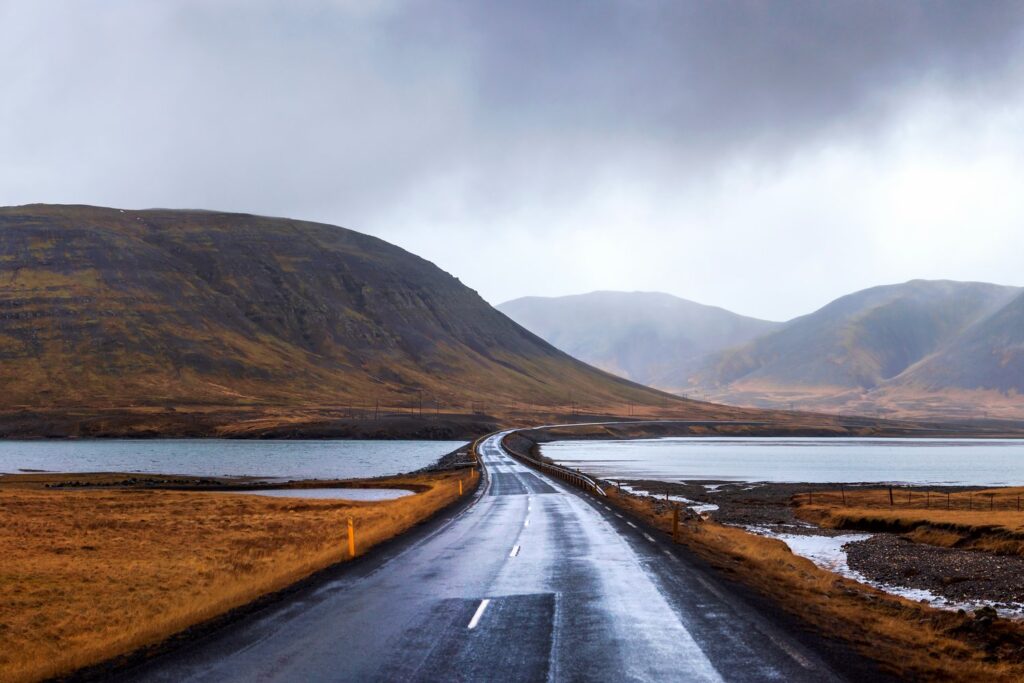
If you look at an Iceland Golden Circle map, the Golden Circle loop forms a rough triangle. These are the main legs and typical driving times without stops:
- Reykjavik to Thingvellir: about 30 miles (48 km), 45 minutes
- Thingvellir to Laugarvatn: about 17 miles (27 km), 25 minutes
- Laugarvatn to Geysir: about 20 miles (32 km), 30 minutes
- Geysir to Gullfoss: about 6 miles (10 km), 10 minutes
- Gullfoss to Kerið Crater: about 40 miles (65 km), 50 minutes
- Kerið Crater to Reykjavik: about 40 miles (65 km), 1 hour
The roads on the main loop are paved and well signposted, so Golden Circle driving is easy in summer. You can also run the loop in the opposite direction. That’s a smart move if you want to reach Gullfoss before the morning tour buses or see Thingvellir in the soft evening light.
Thingvellir National Park - Where two tectonic plates meet
Thingvellir (Þingvellir) National Park is the first stop on most Golden Circle tours and the one with the deepest history. In 930 AD, Icelandic chieftains gathered here for the first Alþingi, one of the oldest parliaments in the world. They met outdoors every summer for centuries, and the Republic of Iceland was founded here in 1944. Since 2004 the park has been a UNESCO World Heritage Site.
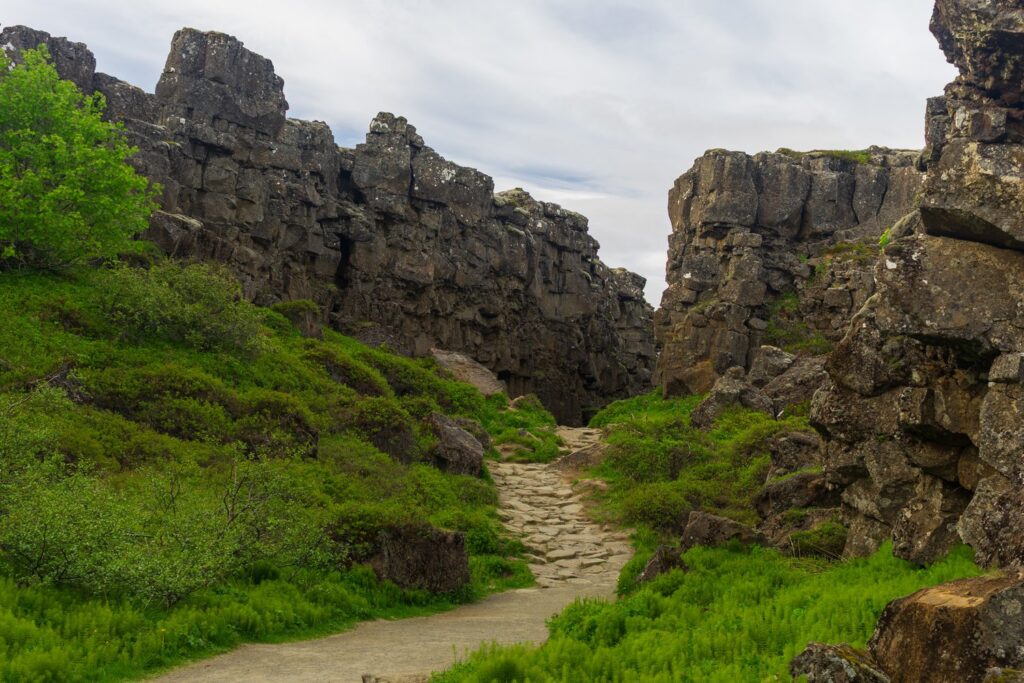
Thingvellir also sits in a rift valley between the North American and Eurasian tectonic plates. The plates drift apart by about 2 cm (0.8 in) a year, and you can see the result in long cracks and cliffs that cut across the landscape. It’s one of the few places on Earth where continental drift is visible above sea level.
Almannagjá gorge, Lögberg and Öxarárfoss
Start at the visitor center at Hakið, on top of the North American plate. A path leads down into Almannagjá, a gorge with icy cliffs on one side and a wide view over the valley on the other. Along the way, you’ll pass Lögberg (the Law Rock), where laws were once read aloud to the assembly.
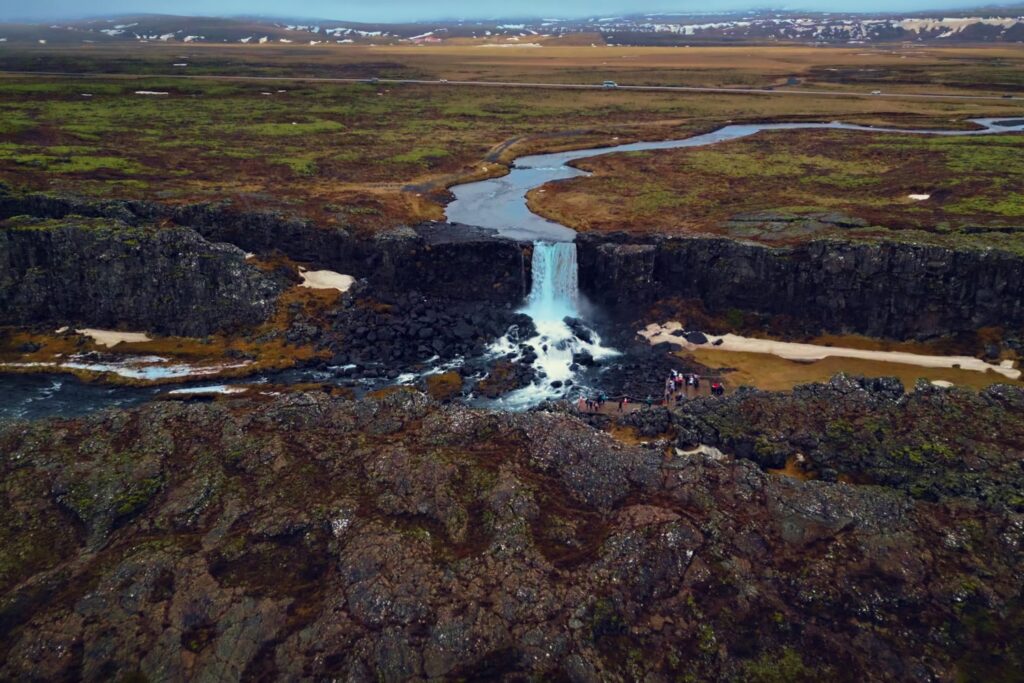
A short walk farther north takes you to Öxarárfoss, a waterfall that drops over the edge of the rift. Plan at least an hour at Thingvellir, or two if you want to walk to the waterfall and the old church. Parking is paid at all the main lots, so keep a card ready for the machines or the parking app.
Snorkeling or diving in Silfra
The most unusual way to experience the tectonic plates is to scuba dive or snorkel in Silfra, a fissure filled with glacial meltwater. The water is filtered through lava rock for decades before it reaches the fissure. Visibility often exceeds 330 feet (100 m), and the temperature stays around 36°F (2°C) all year.
You’ll wear a dry suit, so you stay mostly dry and warm enough. Snorkeling needs no diving license, but you should be a confident swimmer. Diving requires a dry suit certification. Many tours from Reykjavik combine Silfra with the rest of the Golden Circle, so you can snorkel in the morning and see Geysir and Gullfoss in the afternoon.
Laugarvatn and the Fontana geothermal baths
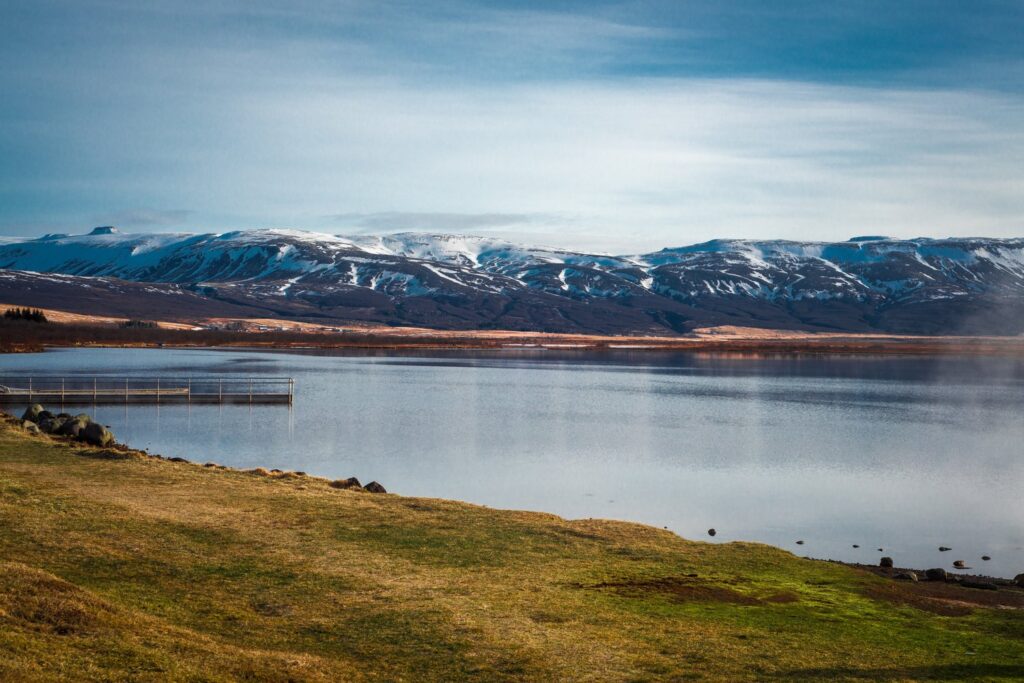
Laugarvatn is a quiet village on the lake of the same name, halfway between Thingvellir and Geysir, and a perfect place to break up the drive. Its name means “lake of hot springs,” and you can see steam rising from the shore. On the water’s edge, Laugarvatn Fontana has geothermal baths, natural steam rooms built over hot springs and a sauna.
Fontana is also famous for its rye bread. Staff bury pots of dough in the hot black sand by the lake and leave them to bake for about 24 hours. If you join the bread tour, you can watch them dig up a fresh loaf and taste it warm with Icelandic butter. It’s one of the simplest ways to see how Icelanders use geothermal energy in everyday life.
Geysir geothermal area - Strokkur and the Great Geysir
The Geysir geothermal area lies in the Haukadalur valley, and it smells of sulfur long before you see it. Paths lead past bubbling pools, steaming vents and smaller geysers. The ground here is hot, and the boiling water can scald, so stay on the marked paths and behind the ropes.
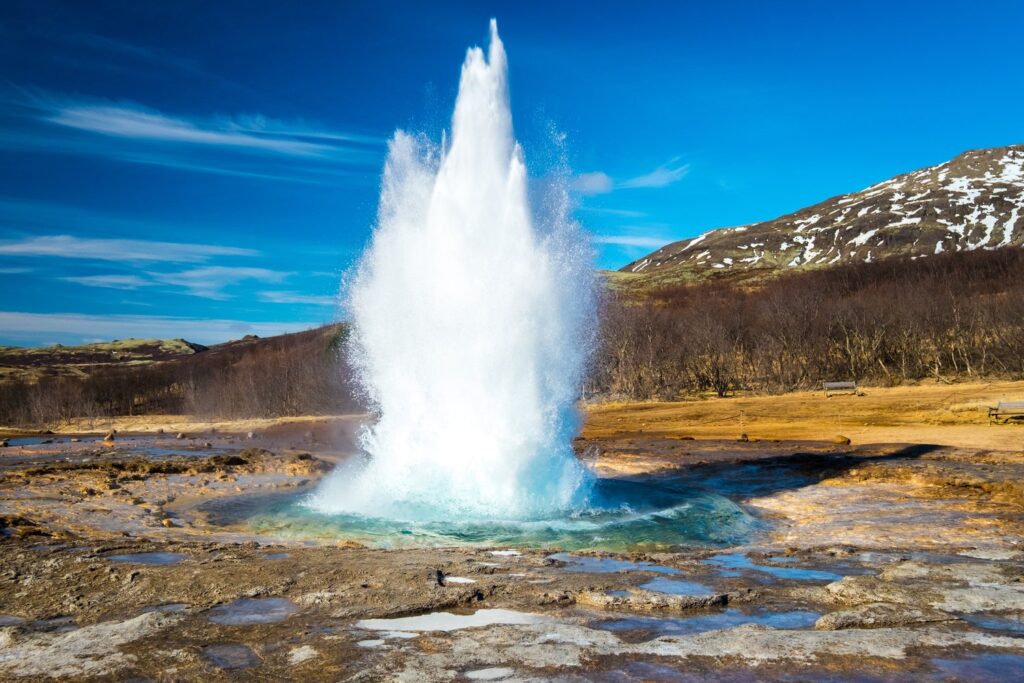
The Great Geysir was once the most powerful geyser in the area, shooting water up to 230 feet (70 m) high. Today it’s mostly quiet and erupts only rarely, often after earthquakes. The star of the show is now Strokkur, which erupts every 5 to 10 minutes. Its columns of hot water usually reach 50 to 65 feet (15 to 20 m), and sometimes up to 130 feet (40 m).
FUN FACT: The English word “geyser” comes from Geysir, the first geyser known to Europeans.
Stand upwind and wait for the water in the pool to turn into a blue dome. A second later it bursts upward with a loud hiss. Give yourself 45 minutes to an hour here. Across the road, the Geysir Center has a restaurant, a café, restrooms and a large free parking lot.
Gullfoss waterfall - The golden falls of the Hvítá
Gullfoss waterfall is the most dramatic stop on the Golden Circle. The glacial river Hvítá plunges down two steps, about 36 feet (11 m) and 69 feet (21 m), into a narrow canyon. On sunny days the spray turns into rainbows, and the water gets a golden tint that gives the “golden falls” their name. The river is fed by Langjökull, Iceland’s second-largest glacier.
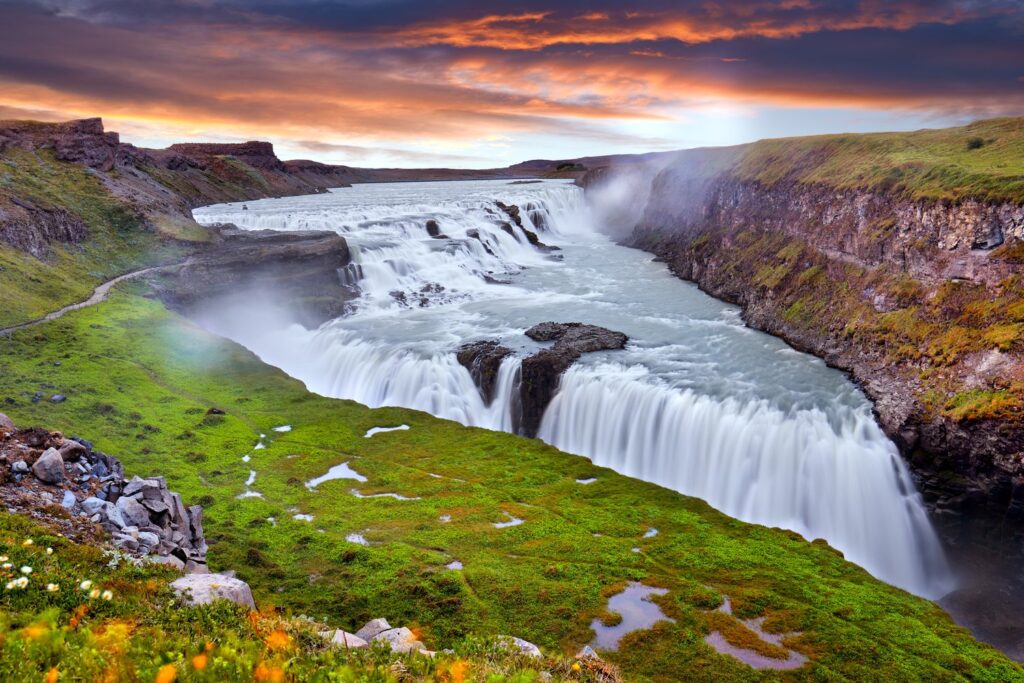
Two paths lead to the falls. The upper path has the classic panorama, while the lower one takes you close enough to feel the spray. Bring a waterproof jacket. In winter, parts of the lower path may close because of ice, but the upper viewpoint stays open. There’s a stone memorial to Sigríður Tómasdóttir, a farmer’s daughter who fought in the early 20th century to keep the falls from being used for a power plant.
Past Gullfoss, Route 35 turns into the Kjölur highland road, a gravel F-road that’s closed for most of the year. Unless you have a 4×4 and the road is officially open, Gullfoss is your turning point.
Golden Circle attractions beyond the big three
Thingvellir, Geysir and Gullfoss are the main highlights, but the countryside around them has many more stops. If you have your own car, pick two or three of these to make your day more personal.
Kerið Crater
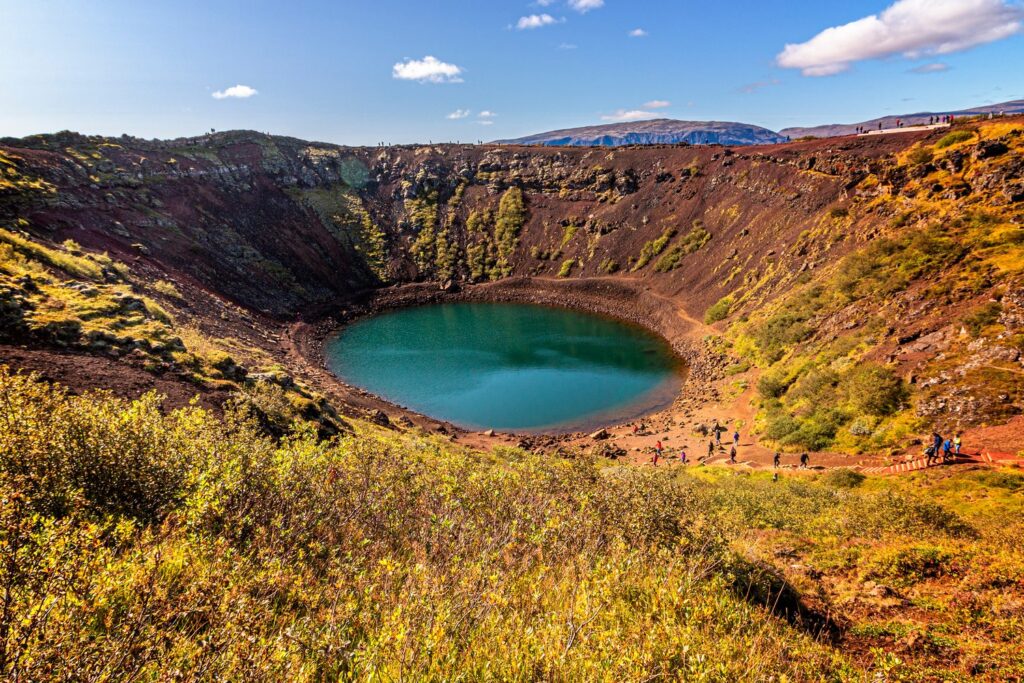
Kerið Crater is a volcanic crater with red and black walls and a blue-green lake at the bottom. Estimates of its age range from about 3,000 to 6,500 years. A trail runs around the rim and another leads down to the water, and the whole visit takes about 30 minutes. Kerið sits on Route 35, about 10 miles (16 km) north of Selfoss, so it fits easily on the way back to Reykjavik. The crater is on private land and charges a small entrance fee.
Friðheimar tomato farm
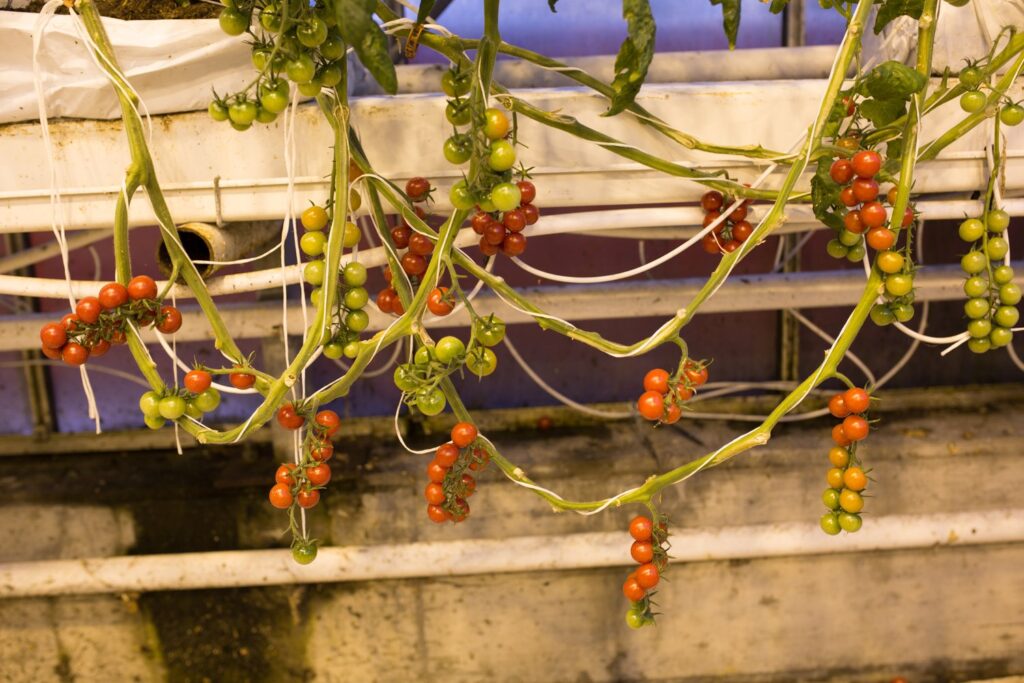
Friðheimar grows tomatoes all year in greenhouses heated with geothermal energy and lit with special lamps through the dark winter. You eat lunch among the vines, and the menu is built around tomatoes: fresh tomato soup with homemade bread, pasta and even desserts made with green tomatoes. The farm also breeds Icelandic horses. Book a table in advance, especially in summer, because tour groups fill it up fast.
Secret Lagoon in Flúðir
The Secret Lagoon (Gamla Laugin) in the village of Flúðir is Iceland’s oldest swimming pool, built in 1891. It’s a natural hot spring pool surrounded by small bubbling vents, and one of them, Litli Geysir, erupts every few minutes. The water stays at about 100°F (38 to 40°C). It’s smaller and simpler than the Blue Lagoon, but it feels more local and fits neatly into a Golden Circle day.
Skálholt, Faxi waterfall and Efstidalur farm
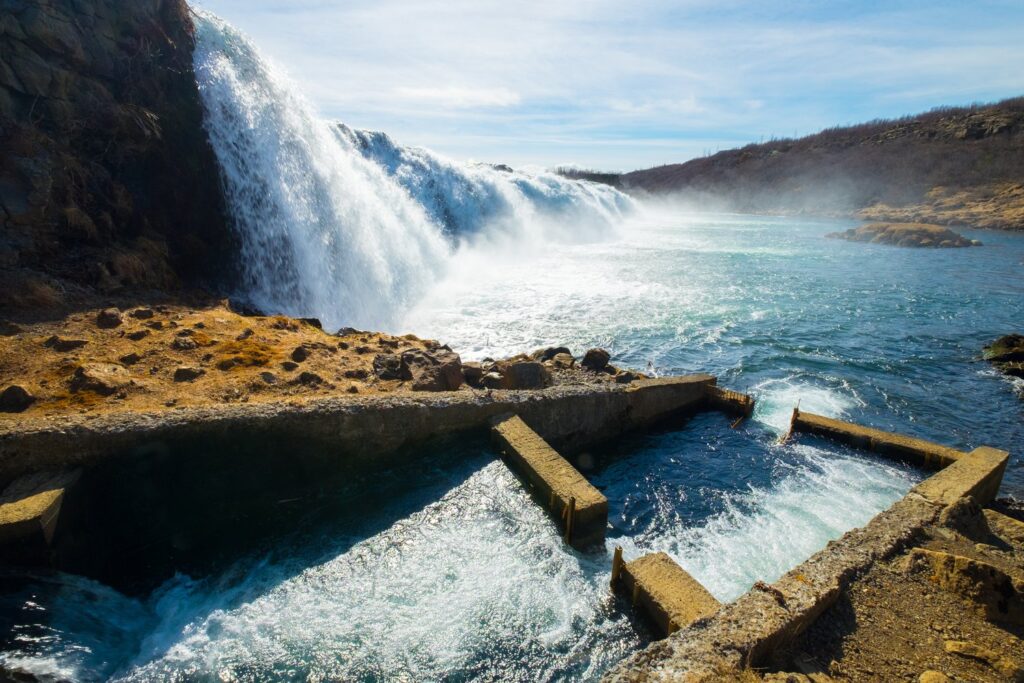
Skálholt was Iceland’s religious and cultural center for about 700 years, and its modern cathedral stands on a site where bishops lived from the 11th century. Not far away, Faxi is a wide, low waterfall on the Tungufljót river, with a salmon ladder and almost no crowds.
Near Laugarvatn, Efstidalur is a family dairy farm with a restaurant and an ice cream bar. You can watch the cows through a glass wall while you eat ice cream made from their milk. It’s a fun stop if you travel with kids or just want a sweet break between Thingvellir and Geysir.
Hveragerði and Reykjadalur hot springs
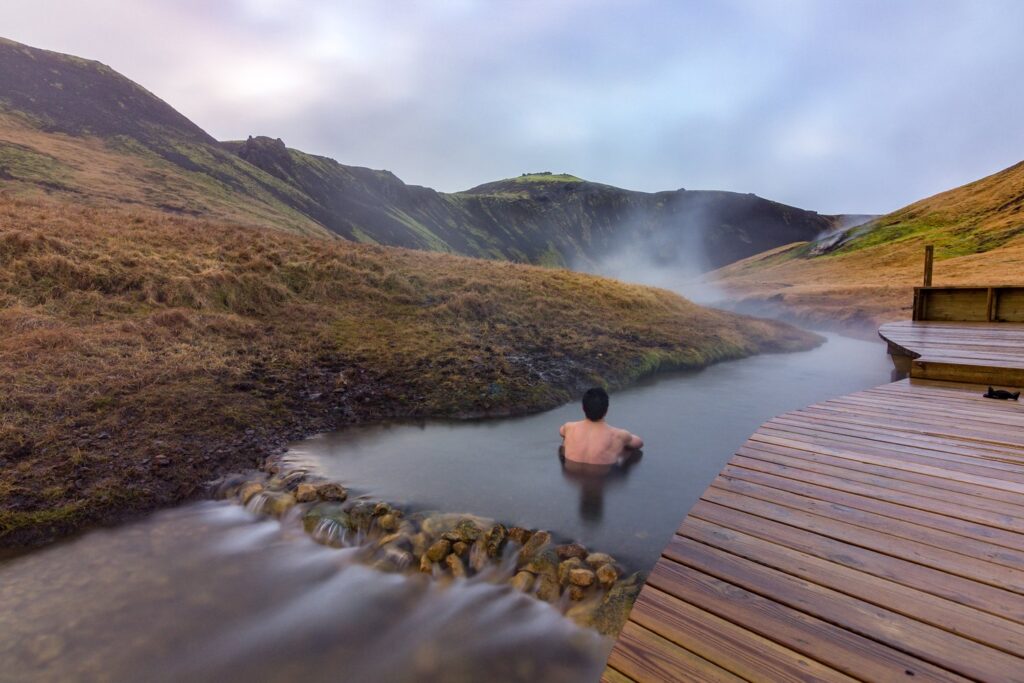
The town of Hveragerði lies on the Ring Road, about 40 minutes from Reykjavik, and its whole area steams with geothermal activity. From the parking lot above town, a trail of about 1.8 miles (3 km) leads up to Reykjadalur, the “Steam Valley.” There, a warm river flows through the hills, and you can bathe in it from wooden platforms. Allow three to four hours for the hike and the soak, so it works best on a second day or a long summer evening.
Langjökull Glacier, snowmobiles and horseback riding
Langjökull Glacier rises northeast of Gullfoss, in the southern uplands. You can’t drive onto it in a regular car, but a snowmobile tour takes you up in a super jeep or monster truck to the ice. Snowmobiling on Langjökull runs year round, and in good weather you can see far across the interior.
Horseback riding is another popular add-on. Many farms near the Golden Circle offer one- or two-hour rides on Icelandic horses, a small, sturdy breed with a smooth extra gait called the tölt. You don’t need riding experience for most of these rides, and it’s a great way to see Iceland’s countryside at a slower pace.
Golden Circle itinerary - A one-day plan
You can see the Golden Circle in Iceland in one day and still have time for a proper lunch. This Golden Circle itinerary works for a self-drive day in summer and adds a few extra stops to the classic route:
- 8:30 a.m. - Leave Reykjavik and drive to Thingvellir National Park.
- 9:15 a.m. - Walk through Almannagjá to Öxarárfoss, or start a Silfra snorkeling tour.
- 11:30 a.m. - Coffee or ice cream at Efstidalur, or a short soak at Laugarvatn Fontana.
- 12:30 p.m. - Watch Strokkur erupt at the Geysir geothermal area.
- 1:45 p.m. - Gullfoss waterfall from both viewpoints.
- 3:00 p.m. - Late lunch with tomato soup at Friðheimar.
- 4:30 p.m. - Bathe at the Secret Lagoon in Flúðir.
- 6:30 p.m. - Walk the rim of Kerið Crater on the way back.
- 8:00 p.m. - Back in Reykjavik.
In winter, daylight lasts only four to five hours in December, so cut the plan down to the three main stops and Kerið. Start at first light and keep the drive back for the dark.
Staying overnight on the Golden Circle
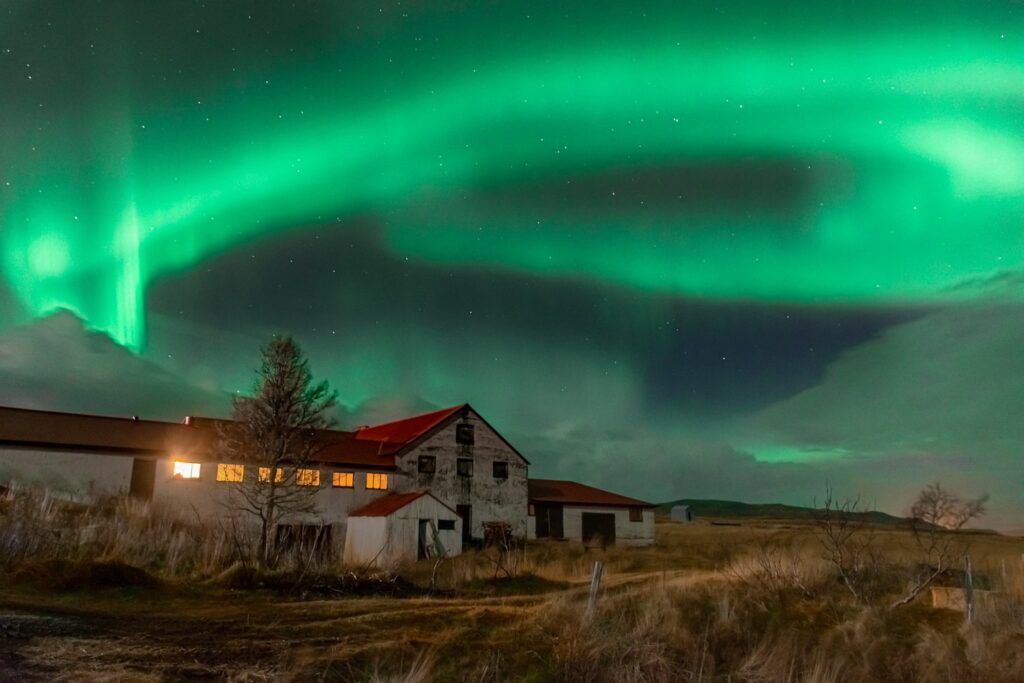
If you have more time, stay overnight in the area instead of driving back to the city. You can arrive at Gullfoss and Geysir early in the morning or late in the evening, when the parking lots are almost empty. In winter, a hotel in the countryside also gives you a much better chance to see the northern lights, far from the glow of Reykjavik.
With two days exploring the region, you can add Reykjadalur, a glacier trip on Langjökull or the waterfalls of the South Coast. Many travelers use the Golden Circle as the first day of a longer road trip around the island.
Self-drive or a Golden Circle tour?
Exploring the Golden Circle by car is easy and gives you the most freedom. You can stop wherever you like and explore at your own pace. Renting a car in Reykjavik or at Keflavík Airport is simple, and for families and groups a self drive tour is usually the most economical option. Camper vans are popular in summer, too.
From November to March, think carefully before you drive. Snow, ice and strong wind can close roads at short notice, and daylight is short. If you do drive in winter, rent a 4×4 with winter tires and check road conditions and the weather forecast every morning. Never stop on the road to take photos, because there’s rarely a safe shoulder.
Golden Circle tours are the stress-free alternative. Many tours leave Reykjavik every morning with hotel pickup, and you can pick a large bus, a small group minibus or a private guide. Some combine the loop with Kerið Crater, a soak in a hot spring, horseback riding or a snowmobile ride on the glacier. Others add the Blue Lagoon at the end of the day. In winter, evening tours follow the northern lights once it gets dark.
Best time to drive the Golden Circle
The Golden Circle is a year-round destination, but each season feels very different. In the summer months, June to August, you get up to 21 hours of daylight and the mildest weather. Daytime temperatures usually range from 50°F to 59°F (10°C to 15°C). June often has the best weather, and May has good chances of sunshine before the summer crowds arrive.
Fall brings golden and red colors to the hills from September to October, plus fewer people at Gullfoss and Geysir. From late September, the long nights also bring the first chances to see the aurora borealis. Winter turns the waterfalls into ice sculptures and covers the lava fields with snow. It’s beautiful, but you’ll need flexible plans and warm layers. In spring, the days get long fast and the first lambs and foals appear on the farms.
Whatever the season, start early or late in the day. Most Golden Circle tours reach Thingvellir between 9 a.m. and 10 a.m. and Gullfoss around midday. If you plan your day around them, you’ll enjoy the main attractions with far fewer people.
Where to eat on the Golden Circle
Food is a big part of a Golden Circle day, and the region has some of the best farm to table restaurants in Iceland. Friðheimar is the best-known option, with its tomato soup served in the greenhouse. Efstidalur serves burgers made from beef raised on the farm, and its homemade ice cream is a favorite with kids.
At Laugarvatn, Lindin Restaurant serves fresh fish, lamb and reindeer burgers with views of the lake. Geysir Glima, at the Geysir Center, has a buffet with soups and Icelandic dishes, which is handy when you’re short on time. In Flúðir, Flúðasveppir Farmers Bistro grows mushrooms on site and serves them in soups and salads.
If you want to try traditional Icelandic cuisine, look for lamb soup (kjötsúpa), smoked trout and the dark, sweet rye bread from Laugarvatn. Gas stations along the route also sell hot dogs, sandwiches and coffee. Food in Iceland is expensive, so a picnic from a Reykjavik supermarket is a good way to save money.
Hotels on the Golden Circle
Staying in the countryside lets you see the main sights at quiet hours and look for the northern lights from your door. These three hotels cover different budgets and different parts of the loop.
💰 Héradsskólinn Historic Guesthouse
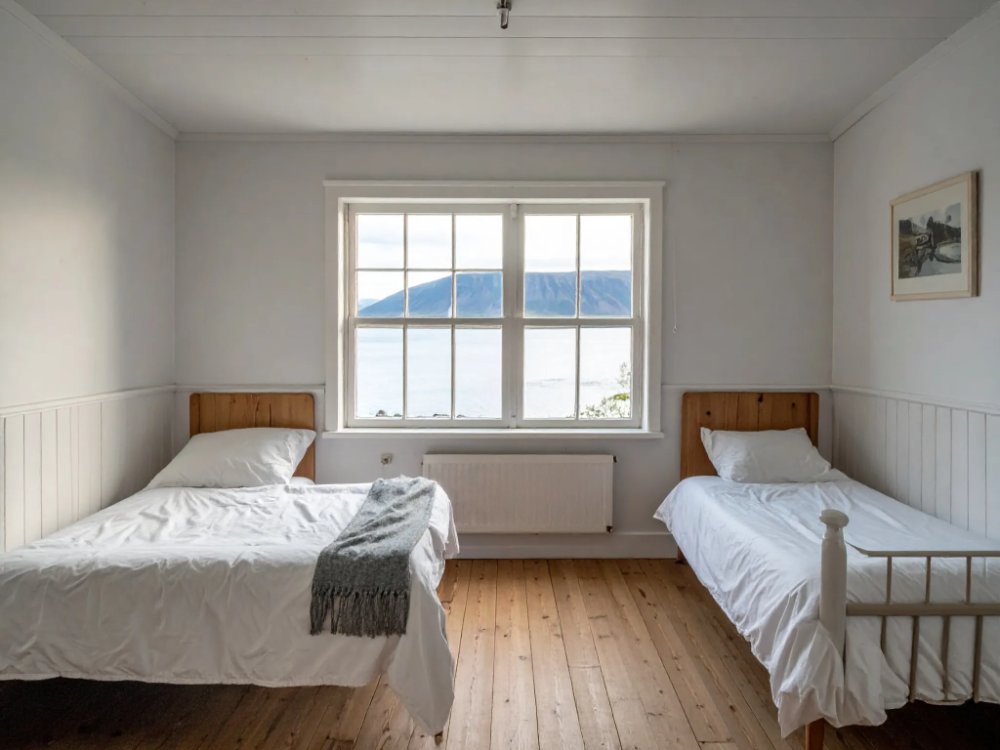
This guesthouse fills a former school building from the 1920s on the shore of Lake Laugarvatn. Rooms are bright and simple, with private or shared bathrooms, and many look out over the lake or the mountains. There’s a bistro, a café and a bar downstairs, plus a pool table and a TV lounge. It’s a great value base halfway between Thingvellir and Geysir, and the Fontana baths are a short walk away.
🏨 Litli Geysir Hotel
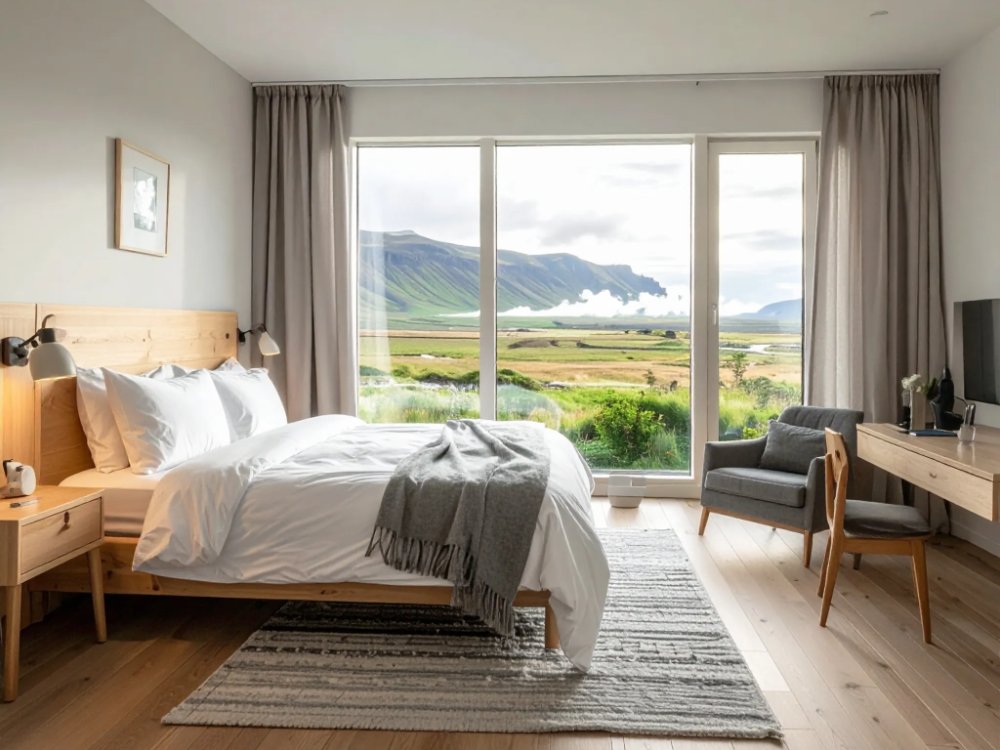
Litli Geysir stands on Route 35 in the Haukadalur valley, only about 650 feet (200 m) from the Geysir geothermal area. You can walk over to Strokkur before breakfast, long before the first tour buses arrive. Rooms have private bathrooms and flat-screen TVs, and the hotel has its own restaurant and free parking. The staff can also help you book snowmobile tours, horseback riding or river rafting nearby.
💎 ION Adventure Hotel, Nesjavellir, a Member of Design Hotels
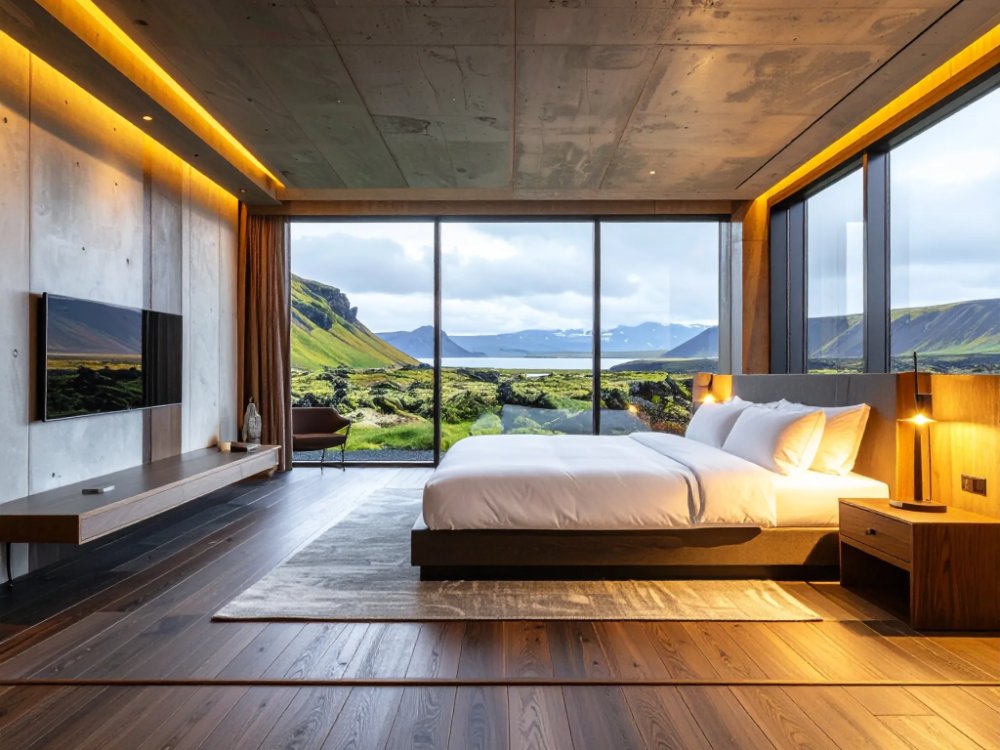
This design hotel sits on the slopes of the Hengill volcano, about 11 miles (18 km) from Thingvellir National Park and 45 minutes from Reykjavik. Its sleek, modern rooms have big windows, and some face Lake Thingvallavatn. The restaurant serves Nordic dishes, and the panoramic bar is a favorite spot for watching the northern lights. Book a session at the spa and sauna in advance, then end your Golden Circle day in the warmth of the sauna.
Golden Circle FAQ
How long does it take to drive the Golden Circle?
The drive itself takes about three hours without stops. With time at Thingvellir, Geysir and Gullfoss, plan for six to seven hours. If you add Kerið Crater, lunch at a farm and a hot spring, it becomes a full day of nine to ten hours.
Is the Blue Lagoon part of the Golden Circle?
No, the Blue Lagoon lies on the Reykjanes Peninsula, southwest of Reykjavik, and not on the Golden Circle route. You can combine them on one long day, and some tours do exactly that. Most travelers visit the Blue Lagoon in Iceland on their arrival or departure day, because it’s close to Keflavík Airport.
Is the Golden Circle worth it?
Yes, especially on a first trip to Iceland. In one day you see continental drift, an erupting geyser and one of Iceland’s most famous waterfalls, all within a short drive of Reykjavik. It’s busy, but early starts and a few extra stops make it feel much less crowded.
Can you drive the Golden Circle in winter?
Yes, the main roads are kept open in winter, but conditions can change fast. Rent a 4×4 with winter tires, check the road and weather reports every morning and drive only in daylight if you’re not used to snow. If that sounds stressful, a guided tour is the safer choice.
Do they accept US dollars on the Golden Circle?
Not usually. Prices are in Icelandic krónur, and almost every hotel, restaurant, gas station and parking machine takes credit and debit cards. You’ll rarely need cash, but a card with a PIN is useful at unstaffed gas pumps.

