What do a French geologist, a tropical sea that vanished more than 200 million years ago and a pink glow at sunset have in common? You’ll meet all three on your first morning in these mountains.
The Dolomites are the most dramatic corner of the Italian Alps: pale limestone towers that shoot straight out of green pastures, turquoise lakes, cable cars that lift you into the scenery in minutes and villages where you hear German, Italian and an old local language called Ladin in the same café. This mountain range in northeastern Italy is a UNESCO World Heritage Site, a top ski destination in winter and, from June to October, one of the best places in Europe for hiking.
In this article, you’ll find everything you need for a first Dolomites trip: where the mountains are, the things to do in the Dolomites that really deserve your time, the best hiking trails for different levels, when to go, how many days you need, a sample Dolomites itinerary and the smartest places to stay. If this is part of a bigger trip, our guide on how to plan a trip to Europe covers the budget, documents and route basics.
💰 Hotel Montana - Simple, cozy rooms on a quiet street in the center of Cortina, near the Faloria cable car.
🏨 Hotel Menardi - A family-run villa hotel with balconies, a garden and a small spa on the edge of Cortina.
💎 ADLER Dolomiti - A spa resort with indoor and outdoor pools in the car-free center of Ortisei.
Where are the Dolomites in Italy?
The Dolomites sit in the northeastern corner of Italy, between the Austrian border and the Venetian plain. They spread across three regions: South Tyrol (Alto Adige), Trentino and Veneto, with a small part in Friuli. Geologists count them as part of the Southern Limestone Alps. Bolzano is the closest big city, and Venice is about two hours away by car.
The northern side, South Tyrol, belonged to Austria until the end of World War I. That’s why many places have two or even three names: Lago di Braies is also Pragser Wildsee, and Ortisei is St. Ulrich. In valleys like Val Gardena, Val Badia and Val di Fassa, people still speak Ladin, and you’ll see it on road signs and school buildings.
In 2009, UNESCO added the Dolomites to its list of World Heritage Sites. The protected area covers nine separate mountain groups and about 350,000 acres (142,000 ha), with 18 peaks rising above 9,840 feet (3,000 m). The highest is Marmolada at 10,968 feet (3,343 m), home to the largest glacier in the range.
What makes the Dolomites so special?
These mountains were once the floor of a warm tropical sea. Ancient coral reefs and the shells of countless sea creatures turned into dolomite rock, a pale, magnesium-rich limestone. When the Alps rose, those reefs were pushed thousands of feet above sea level, which explains the strange shapes: sheer vertical walls, needles and towers instead of the rounded summits you see elsewhere in the Alps.
The pale rock also catches the light in a way that granite never does. At sunrise and sunset, the peaks often glow pink, orange and deep red. Locals call it enrosadira, and it’s one of the reasons the Dolomites are nicknamed the Pale Mountains.
FUN FACT: The Dolomites take their name from Déodat de Dolomieu, a French geologist who first described the region’s unusual rock in the late 18th century.
Are the Italian Alps the same as the Dolomites?
Not exactly. The Dolomites are one part of the Italian Alps, so every Dolomite peak is an Alpine peak, but not the other way around. Lake Como, the Aosta Valley and the Matterhorn’s Italian side all belong to the Alps but sit far to the west. If you’re comparing the two, the Dolomites have lower, rockier peaks, gentler valleys and a denser network of lifts and mountain huts, which makes the classic Dolomites scenery easy to reach even without serious climbing skills.
Things to do in the Dolomites - The highlights for a first trip
The Dolomites are big, and the famous peaks are spread over several valleys connected by winding mountain roads. Most first-timers split the trip between the western Dolomites (Val Gardena, Alpe di Siusi, Val di Funes) and the eastern Dolomites around Cortina d’Ampezzo, where you’ll find Tre Cime di Lavaredo and the most photographed lakes.
Seceda and Val Gardena
If you’ve seen one picture of the Dolomites, it was probably Seceda: a grassy ridge that ends in a row of jagged spikes, with a sharp drop on one side and rolling pastures on the other. The good news is that you don’t need to be a mountaineer to stand there. A two-stage cable car ride from Ortisei takes you to about 8,260 feet (2,519 m), and the famous view is a short walk from the top cable car station.
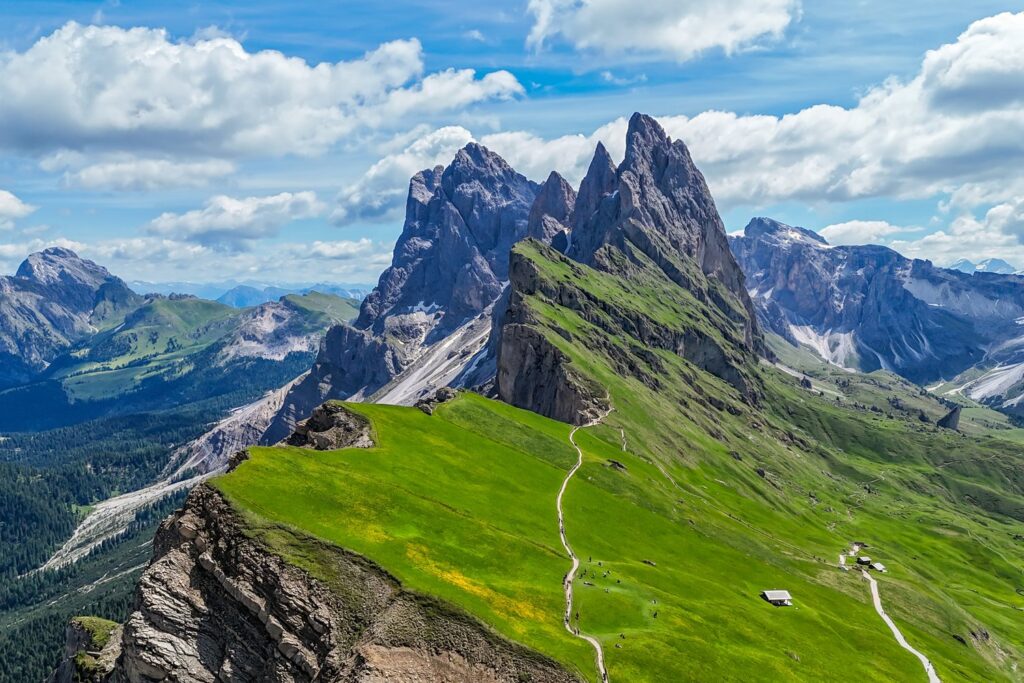
Plan at least half a day. From the top, you can walk down through meadows and past mountain huts toward Col Raiser and ride another gondola down to Santa Cristina. Go early in the morning, because by late morning in peak summer the lines for the cable car and the viewpoint get long.
Ortisei itself is a lovely base. The pedestrian center is full of woodcarving shops, a craft the valley has kept alive for centuries, and the main lifts to Seceda and to Alpe di Siusi leave right from town. See available places to stay in Ortisei
Alpe di Siusi (Seiser Alm)
Alpe di Siusi is the largest high-altitude alpine meadow in Europe, about 22 square miles (56 km²) of rolling pastures, wooden barns and mountain huts with the Sassolungo and Sciliar massifs behind them. It’s the gentlest place in the Dolomites for a walk, and it works well for families and for anyone who wants big views with little elevation gain.
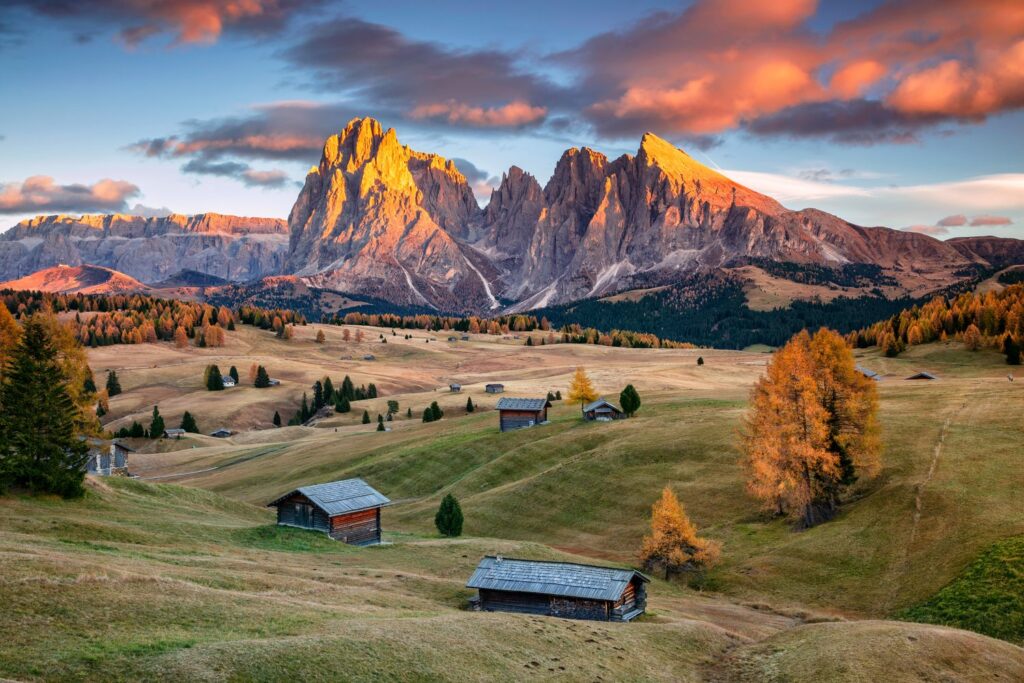
You can get up by cable car from Siusi (Seis) or by gondola from Ortisei. Private cars aren’t allowed on the plateau road between 9 a.m. and 5 p.m. in the main seasons, unless you’re staying at a hotel up there, and parking at the top has to be reserved online. Once you’re up, easy trails lead between huts serving hot food, and the sunrise from the meadows near Compatsch is one of the best in the region.
Tre Cime di Lavaredo
The three towers of Tre Cime di Lavaredo are the symbol of the Dolomites, and the loop around them is the most famous hike in the range. The full loop is about 6 miles (10 km) and takes three to four hours. It starts at Rifugio Auronzo, so most of the elevation gain is done by car, which makes it doable for most reasonably fit hikers.
The catch is getting there. The road to Rifugio Auronzo is a toll road open from late spring to fall, and you now need to book your parking slot online in advance. Without a booking, you’ll be turned around at the gate. The alternative is a bus from Lago di Misurina or a guided day trip, which takes the stress out of the logistics.
Walk the loop counterclockwise and stop at Rifugio Locatelli for the classic view of the north faces. Along the way, you’ll pass World War I trenches and tunnels, because the front line between Italy and Austria-Hungary ran right through these peaks.
Lago di Braies
Lago di Braies is the lake from a thousand Instagram feeds: emerald water, a wooden boathouse with rowboats and the Seekofel wall rising straight from the far shore. An easy, mostly flat trail circles the lake in about an hour. It’s also the official start of the Alta Via 1, a multi-day hut-to-hut trek that crosses the Dolomites to the south.
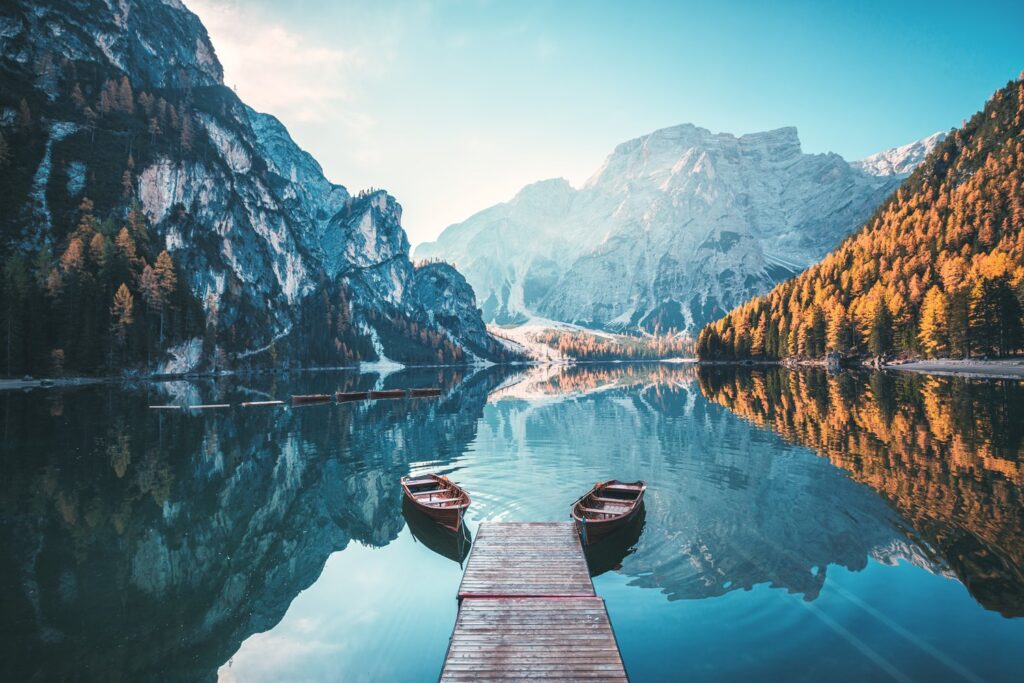
It’s also one of the most crowded spots in the Dolomites. In recent summers, from early July to mid-September, the access road has been closed to cars between 9 a.m. and 4 p.m. unless you’ve reserved parking, so book a parking slot or arrive before 9 a.m. Sunrise is the best time anyway, when the water is still and the boats are tied up.
Lago di Sorapis, Lago di Misurina and Lago di Carezza
Lake Sorapis is the prize at the end of one of the most popular hikes near Cortina. The milky turquoise water sits below the Sorapis massif, and you reach it on trail 215 from Passo Tre Croci. Plan about four hours for the whole hike, round trip. The trail is mostly moderate, but a few narrow, exposed sections have metal cables, so it’s not ideal if you’re afraid of heights.
Lago di Misurina is the opposite: a lake you can drive to, with a promenade, cafés and Tre Cime peeking over the hills. Farther west, near Bolzano, Lago di Carezza (Karersee) mirrors the Latemar peaks. It’s tiny, and you can only see it from a path around the shore, but on a calm morning the colors look almost unreal.
Val di Funes
Val di Funes is the quiet valley that gives you the most famous postcard in South Tyrol: the little church of Santa Maddalena, or the chapel of San Giovanni in Ranui, with the jagged Odle (Geisler) peaks behind it. Both viewpoints are a short walk from the village, and the valley stays calm even in peak season.
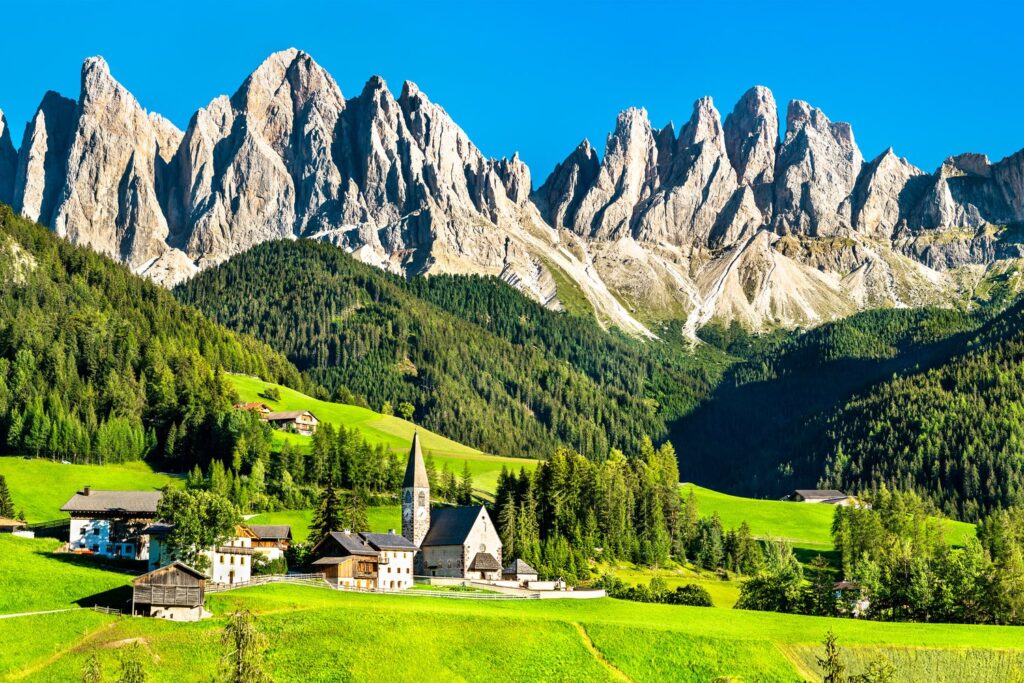
For a longer walk, the Adolf Munkel Trail runs right under the Odle walls through larch and pine forest. The loop from the Zannes parking area is about 6 miles (9 km), with moderate climbs and two huts for lunch. It’s one of the best half-day hikes for families and for travelers who prefer forest trails to high ridges.
Cortina d’Ampezzo
Cortina d’Ampezzo is called the Queen of the Dolomites. It’s the most glamorous town in the region, with designer shops, old hotels and a car-free main street, and it co-hosted the 2026 Winter Olympics with Milan. For a first trip, it’s a practical base for the eastern Dolomites, because Tre Cime, Lake Sorapis, Lago di Braies and the Cinque Torri are all within an hour’s drive.
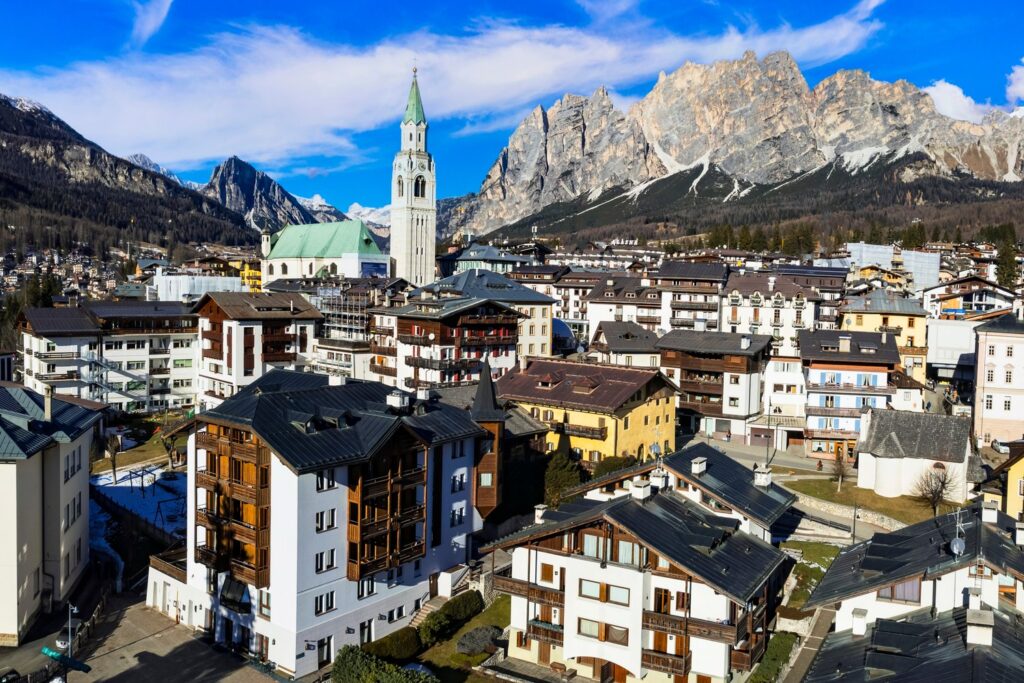
From town, cable cars climb to Faloria, Tofana and Cinque Torri, where an open-air museum lets you walk through restored World War I trenches. Up at Lagazuoi, a cable car from Passo Falzarego takes you to a mountain hut with one of the widest panoramas in the Dolomites, and old wartime tunnels lead down through the mountain. See available places to stay in Cortina d’Ampezzo
The great mountain passes
Driving the passes is a highlight in itself. Passo Giau, Passo Sella, Passo Gardena and Passo Pordoi climb above 7,000 feet (about 2,100-2,240 m) in tight switchbacks, and each one has a café, a cable car or a short trail at the top. Linking multiple passes in one day gives you some of the best views of the whole trip, but leave plenty of time: the roads are narrow, busy with cyclists and motorcyclists in summer, and they ask for a careful driver.
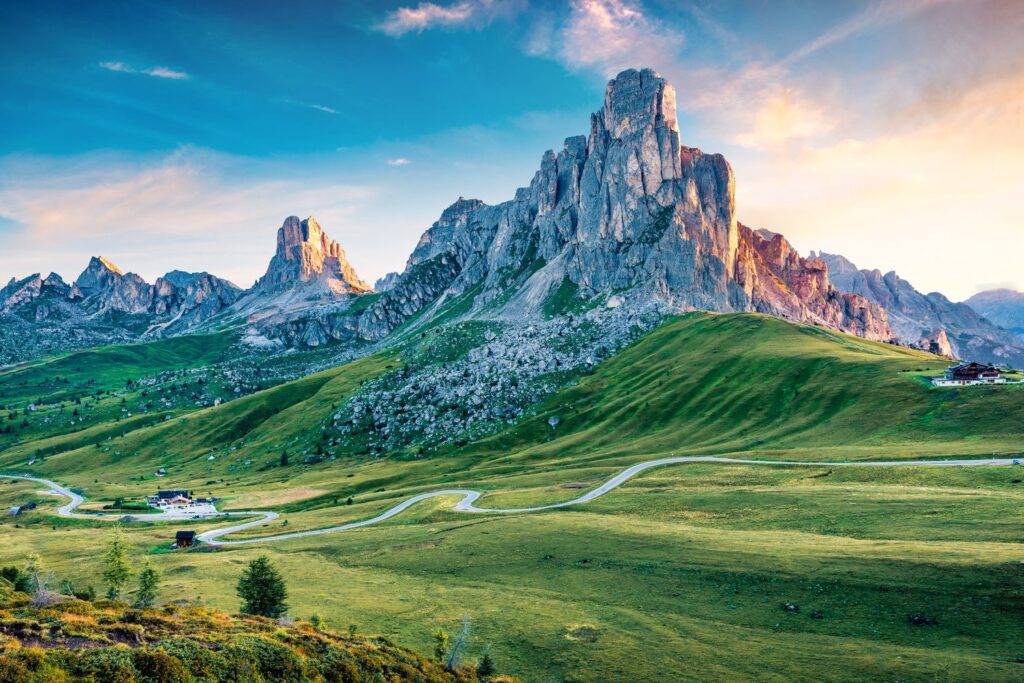
In winter, the same passes form the Sella Ronda, a ski circuit around the Sella massif that you can do in one day on skis, using a single Dolomiti Superski pass for about 750 miles (1,200 km) of slopes.
Bolzano and the Ötzi museum
Bolzano, the capital of South Tyrol, is a pleasant mix of Italian and Austrian life, with arcaded streets, a busy fruit market and wine bars serving local Lagrein. Its top sight is the South Tyrol Museum of Archaeology, home of Ötzi, the 5,300-year-old Iceman found in a glacier on the Austrian border. It’s a great rainy-day plan and an easy stop if you arrive by train.
In winter, Bolzano, Bressanone and Merano hold some of the best Christmas markets in Italy, which pair well with a few days of skiing or winter walks.
Hiking in the Dolomites - Trails for every level
Hiking in the Dolomites is easier to plan than in most mountain ranges. The hiking trails are well marked with red and white signs and numbers, lifts cut out the steepest climbs and you’re rarely more than two hours from a mountain hut. These huts, called rifugi, serve hot food, local beer and strudel, and many of them rent beds for the night.
For beginners and families, the best choices are Alpe di Siusi, the Adolf Munkel Trail, the lake loops at Braies and Misurina and the walk from Seceda toward Col Raiser. For a first real challenge, try the Tre Cime loop or Lake Sorapis. Experienced hikers can tackle a section of a hut-to-hut route like the Alta Via 1 or try a via ferrata, a climbing route equipped with steel cables and ladders. Many via ferrata routes follow paths built during World War I. Never try one without a harness and helmet, and hire a guide if it’s your first time.
A few rules make every hike safer. Start early, because summer storms usually build in the afternoon. Check the opening dates of lifts and huts before you set out, carry layers even on hot days and download offline maps. In peak summer, popular rifugi fill up months ahead, so book overnight stays as soon as your dates are set.
Best time to visit the Dolomites
The best time to visit the Dolomites depends on what you want to do. The Dolomites hiking season runs from mid-June to late September, when most lifts and mountain huts are open. Peak season runs from July to the end of August, when the weather is warmest, the days are longest and the crowds are biggest. In June, lingering snow can still block high trails and passes, so check conditions before you go.
September is the sweet spot for many travelers. The crowds thin once Italian school vacations end, temperatures drop to pleasant hiking weather and the light gets softer. By early October, the larches turn gold, but many lifts and huts close for the season, and early snow is possible at higher elevations. In late September and early October, some villages celebrate the Almabtrieb, when farmers bring decorated cows down from the summer pastures.
Winter, from December to March, belongs to skiers and snowshoers, with reliable snow, sunny days and cozy villages. Spring, from April to early June, is the quietest time, but it’s also the trickiest: many hotels and lifts are closed, trails are muddy and snow lingers up high. For a season-by-season look at the continent, see our guide to the best time to visit Europe.
How many days do you need? A Dolomites itinerary
Give the Dolomites at least three full days, but five to seven days is ideal for a first trip. The highlights are far apart, the roads are slow and the weather can force you to swap plans, so a few spare days make the whole trip calmer. Stay in two bases rather than changing hotels every night: one in the west (Val Gardena or Alta Badia) and one in the east (Cortina or the Puster Valley).
A 5-day Dolomites itinerary
Day 1: Drive or take the train to Ortisei, ride the gondola up to Alpe di Siusi and walk between huts until sunset.
Day 2: Start early at Seceda, walk down to Col Raiser and spend the afternoon in Val di Funes, with the Santa Maddalena viewpoint at golden hour.
Day 3: Drive east over Passo Gardena and Passo Falzarego, ride the cable car to Lagazuoi and continue to Cortina d’Ampezzo.
Day 4: Hike the Tre Cime loop with a reserved parking slot, then relax at Lago di Misurina in the afternoon.
Day 5: Catch sunrise at Lago di Braies, then hike to Lake Sorapis or explore the Cinque Torri if you still have energy.
With seven days, add Lago di Carezza, a day in Bolzano and a slower day with no driving at all. With only three days, pick one base and one side of the range, so you can enjoy the mountains instead of the car.
How to get to the Dolomites and around
Most travelers from the US fly into Venice Marco Polo, which is about two hours by car from Cortina. Innsbruck, Verona and Milan also work. Innsbruck is especially handy for South Tyrol, while Milan is a three- to four-hour drive. If you’re coming from Rome, the fastest option is a high-speed train to Verona or Bolzano.
The train is a good way to reach the edges of the region. Direct trains run to Bolzano, Bressanone and Brunico, and train and bus tickets are easy to compare and book online. If you’re crossing Europe by rail, our Eurail pass guide explains when a pass pays off. From the train stations, local buses reach most valleys, and many hotels in South Tyrol give guests a card that covers local buses.
Still, a rental car gives you the most freedom on a Dolomites trip, especially for sunrise starts and for linking the passes. Having your own car also means parking rules matter: Tre Cime, Lago di Braies and Alpe di Siusi now limit private cars in summer, and free parking at trailheads is rare. Book the reservations as soon as they open, and keep a backup plan for each day.
Where to stay in the Dolomites
Choosing the right base saves hours of driving. These are the best areas for a first trip:
Val Gardena (Ortisei, Santa Cristina, Selva) - The best all-round base for the western Dolomites, with lifts to Seceda and Alpe di Siusi right from town.
Alta Badia (Corvara, La Villa, San Cassiano) - Quiet villages close to several passes. The Alta Badia region is also known for upscale hotels and Michelin-starred restaurants.
Cortina d’Ampezzo - The most convenient base for Tre Cime, Lake Sorapis, Lago di Braies and the Lagazuoi area, with the most choice of shops and restaurants.
Val di Fassa and San Martino di Castrozza - Good value in the southern Dolomites, near Lago di Carezza and the Pale di San Martino.
Bolzano - A smart choice if you’re traveling without a car and want a city with frequent trains and buses into the valleys.
Whichever area you choose, book early for July, August and the Christmas holidays, because the best places sell out months ahead. When booking accommodations, check for free parking and half board: many mountain hotels include dinner, which helps a lot in small villages with few restaurants.
Is a Dolomites trip expensive?
The Dolomites aren’t a budget destination, especially in peak summer and in Cortina. Lift tickets, toll roads and parking reservations add up fast. You can still keep costs reasonable: travel in June or September, stay in a valley village instead of a famous resort, choose half board, picnic on some days and eat your main meal at a mountain hut, where portions are big. For daily budgets and saving tips across the continent, see our Europe trip planning guide.
Hotels in the Dolomites
Most first-timers split their stay between Cortina d’Ampezzo and Val Gardena. Here are three hotels for different budgets in those two bases.
💰 Hotel Montana
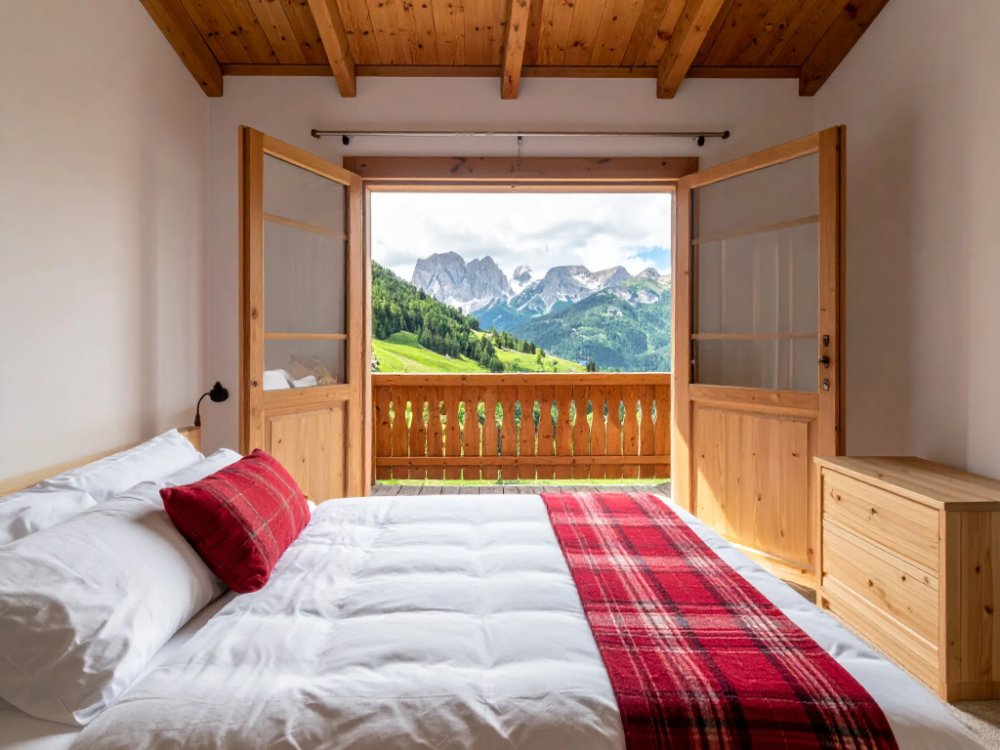
This small, family-feel hotel sits on a quiet, traffic-free street right in the center of Cortina d’Ampezzo. The Faloria cable car is about 650 feet (200 m) away, and the free town bus stops just outside. Rooms are simple and cozy, and the generous breakfast includes gluten-free options on request. It’s a smart choice if you want Cortina’s location without paying for its famous luxury hotels.
🏨 Hotel Menardi
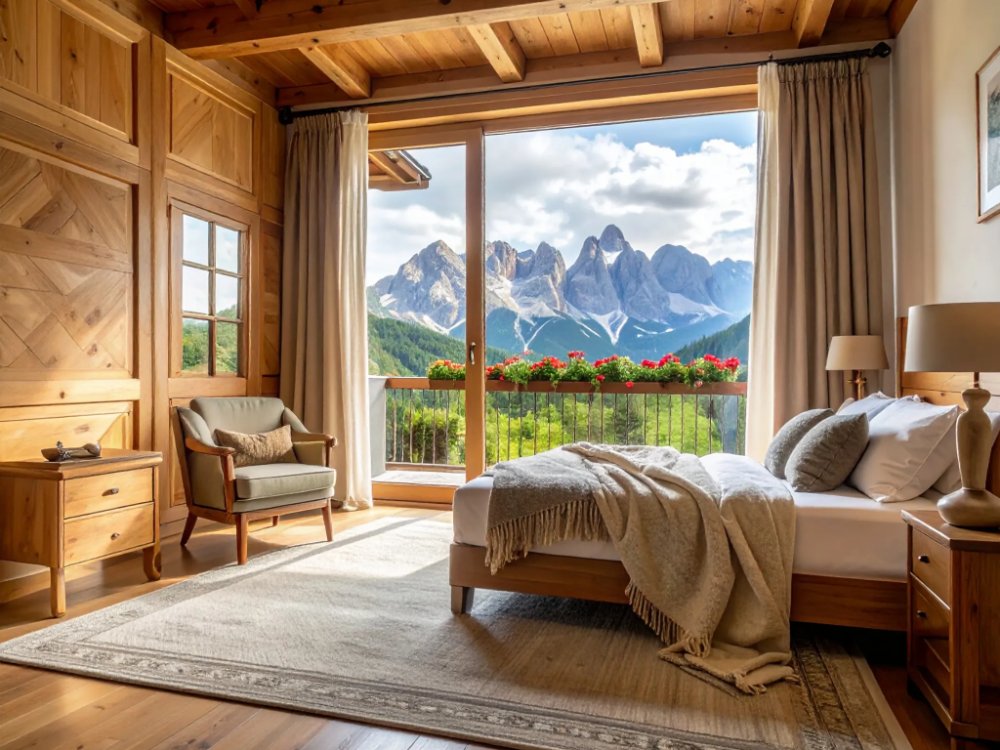
This family-run hotel in an old villa with a newer annex sits in a large garden on the northern edge of Cortina, a short walk from the center. Most rooms have balconies, and the restaurant serves regional and Italian dishes with a good wine list. After a long hike, you can relax in the wellness area with a sauna, hot tub and Turkish bath. The Dolomiti cycling path passes right by, and the ski bus stops at the door.
💎 ADLER Dolomiti
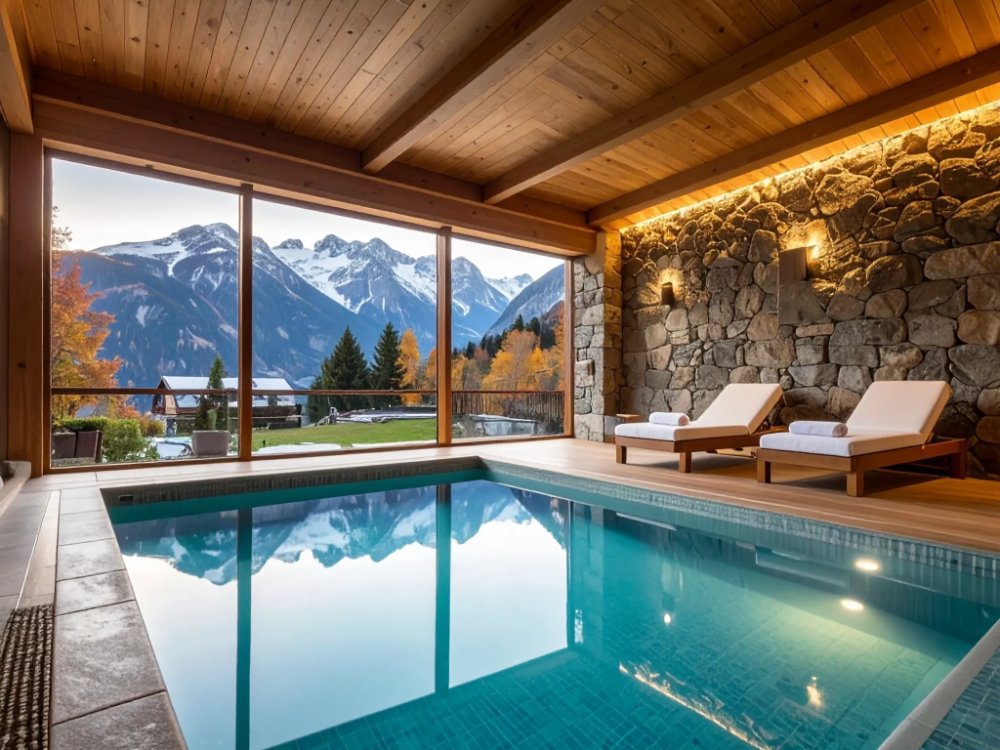
This landmark spa resort stands in a private park in the car-free center of Ortisei, about 330 feet (100 m) from the gondola to Alpe di Siusi. Guests get free access to indoor and outdoor pools, saunas and hot tubs, plus free bike rental and a playground for kids. Spacious rooms are finished in warm wood, and the restaurant serves Italian and South Tyrolean dishes. It’s the place to book if you want to end every hiking day with a swim and a long dinner.
Dolomites FAQ
What is the closest city to the Dolomites?
Bolzano is the closest city to the Dolomites. It sits at the western edge of the range, with direct trains from Verona and Innsbruck and buses into Val Gardena, Val di Funes and the Alpe di Siusi area. Belluno and Trento are also close, while Venice is the nearest major international airport, about two hours by car from Cortina.
Is Lake Como in the Dolomites?
No. Lake Como lies in Lombardy, near Milan, about a four-hour drive west of the Dolomites. Both are in the Italian Alps, so you can combine them on one trip, but plan at least a full travel day between them. The lakes in the Dolomites are much smaller, such as Lago di Braies, Lago di Misurina and Lago di Carezza.
Can you hike the Dolomites as a beginner?
Yes. Cable cars and gondolas lift you to high trails without a long climb, and walks like Alpe di Siusi, the Lago di Braies loop and the Seceda ridge are easy for most people. The Tre Cime loop is a good next step. Leave via ferrata routes and long hut-to-hut treks for later, or go with a certified mountain guide.
What is the difference between the Alps and the Dolomites?
The Dolomites are a part of the Alps, but they look very different. Many Alpine giants are made of granite or gneiss and carry large glaciers, while the Dolomites are pale dolomite rock formed from ancient coral reefs. That gives them vertical walls, towers and the pink glow at sunset that other Alpine ranges don’t have.
Can you visit the Dolomites on a day trip from Venice?
Yes, but it’s a long day. A guided day trip from Venice usually covers Cortina, Lago di Braies or Tre Cime in about ten hours, with three to four hours spent on the road. It’s a good taste of the mountains if your schedule is tight, but even two nights in Cortina or Val Gardena will show you much more.

