Save the tower for your first evening, not your first morning. After dark, it sparkles for five minutes at the top of every hour, and the daytime crowds have already gone home.
Paris rewards a good plan more than almost any other city in Europe. Look at a Paris map and you’ll see the major sights spread across both banks of the Seine, and a day that zigzags between them can easily lose two hours to the metro. This Paris itinerary groups the classics by neighborhood, so each day stays in one part of the map and you spend your time looking up at monuments, not down at a transit app. It’s built for a first trip to Paris and works best for travelers who are happy to walk 6 to 9 miles (10 to 15 km) a day. If you’re still putting the bigger trip together, start with our step-by-step guide on how to plan a trip to Europe.
Below you’ll find a day by day plan for 3 days in Paris, followed by shorter and longer versions: what to keep if you only have two days, and how to stretch the route to four or five days with Versailles, Giverny or Normandy. At the end there are practical notes on the Paris metro, food, the best time to go and where to stay.
💰 Hotel Louvre Bons Enfants - good-value hotel opposite the Louvre and the Tuileries
🏨 Relais du Louvre - charming four-star hotel between the Louvre and Notre-Dame
💎 Grand Hôtel du Palais Royal - luxury hotel with a spa next to the Palais-Royal gardens
Is 3 days in Paris enough?
Three days in Paris is enough to see the major attractions at a comfortable pace: the Eiffel Tower, the Louvre, Notre-Dame, Sainte-Chapelle, the Musée d’Orsay, the Latin Quarter and Montmartre. You won’t see everything, and nobody does. The city has more than a hundred museums, and locals spend a lifetime discovering new corners of it. What three days give you is the classic Parisian experience: the iconic landmarks, a Seine river cruise, a few long café breaks and at least one sunset from a hill.
The trick is to book timed tickets before you fly. The Eiffel Tower summit, the Louvre and Sainte-Chapelle regularly sell out from spring to fall, and a timed entry ticket turns a two-hour wait into a short line at security. Plan your days around closing days too. The Louvre is closed on Tuesdays and the Musée d’Orsay on Mondays, so check which weekday each day of this three day Paris itinerary falls on.
Paris itinerary day 1 - Eiffel Tower, a Seine river cruise and the Champs-Élysées
Day one covers the west of central Paris, where the city’s most iconic landmarks stand. You’ll go up the Eiffel Tower, see it from the river, then walk to the Arc de Triomphe and finish on the Champs-Élysées. It’s a good first day after a long flight, because the pace is gentle and most of it happens outdoors.
Eiffel Tower - summit or second floor?
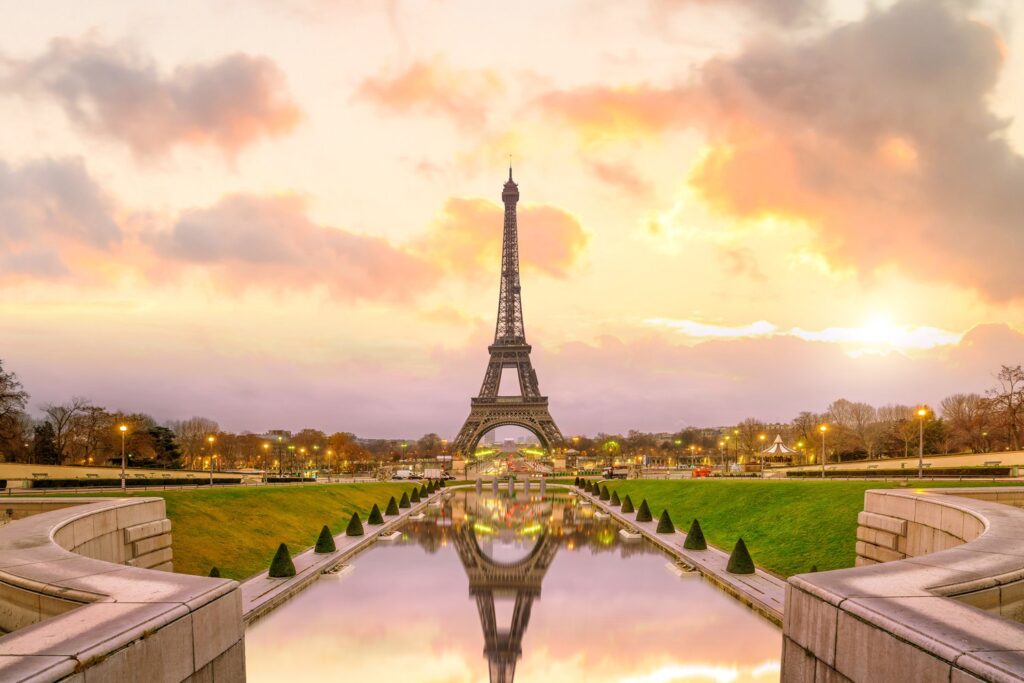
The Eiffel Tower has two levels open to visitors above the first floor: the second floor at 377 feet (115 m) and the summit at 906 feet (276 m). The second floor gives the best view of the rooftops, because you’re still close enough to pick out the Louvre, the Seine bridges and the golden dome of Les Invalides. The summit is all about the feeling of standing above the entire city. You can buy Eiffel Tower tickets for either, but book a time slot early, as summit tickets go first. A morning slot right after opening or an evening slot about an hour before sunset are the most pleasant times to go up.
FUN FACT: The Eiffel Tower was built for the 1889 World’s Fair and was only meant to stand for 20 years.
Trocadéro and the Champ de Mars
Cross the Pont d’Iéna to the Trocadéro gardens for the classic Eiffel Tower view, with the fountains in front and the tower framed between the two wings of the Palais de Chaillot. Come back over the river and walk the length of the Champ de Mars, the long lawn behind the tower. Locals picnic here on warm evenings, so it’s a great place to sit with a baguette and cheese from the market stalls of nearby Rue Cler.
Seine river cruise from the foot of the tower
A Seine river cruise is the easiest way to see the city’s architecture in one go. Most boats leave from the quays next to the Eiffel Tower, and a standard sightseeing cruise lasts about an hour. You’ll float past the Grand Palais, the Musée d’Orsay, the Louvre, Notre-Dame and the islands of the Seine, which is a great preview of the next two days. Sunset and night cruises are the most romantic, especially when the tower lights up behind you.
Arc de Triomphe and the Champs-Élysées
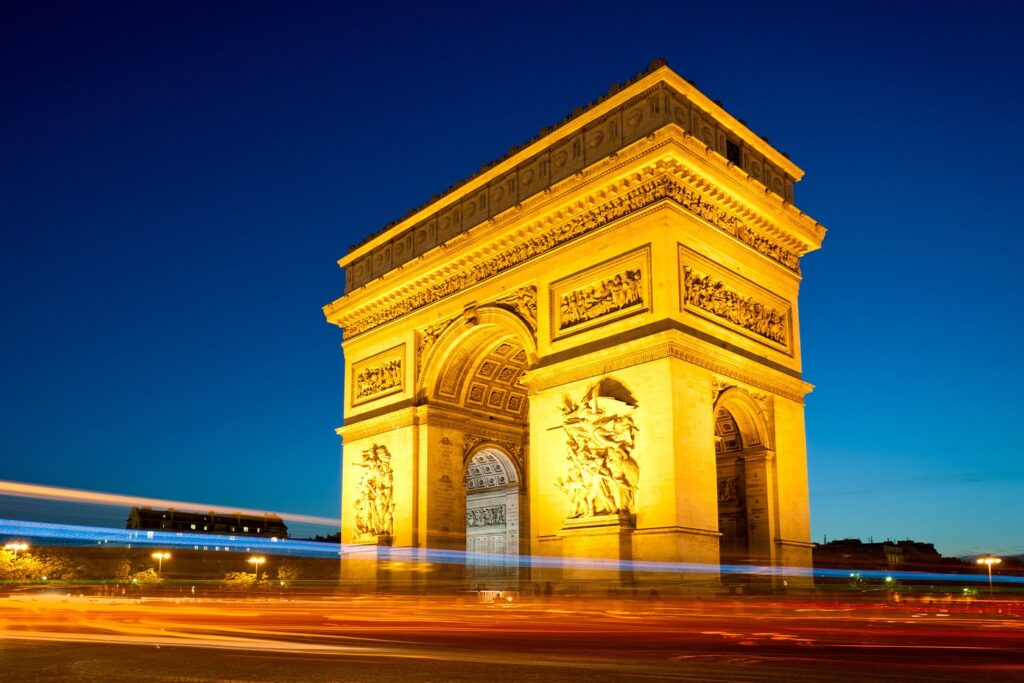
From the river, take the metro or walk about 30 minutes up Avenue Marceau to the Arc de Triomphe. Napoleon commissioned it in 1806 to honor his armies, and the Tomb of the Unknown Soldier lies beneath it. Climb the 284 steps to the rooftop terrace for one of the best Eiffel Tower views in Paris and a look at the twelve avenues that radiate from the Place Charles de Gaulle like spokes. Then stroll down the Champs-Élysées toward Place de la Concorde. Shops and cafés line the avenue all the way, and it looks its best at dusk, when the lights come on.
Paris itinerary day 2 - The Louvre, Île de la Cité and Le Marais
Day two is the heart of historic Paris. You’ll start in the world’s largest art museum, walk through the royal gardens and cross to the island where the city began. The evening belongs to Le Marais, one of the most atmospheric neighborhoods in town.
The Louvre - how to see the Mona Lisa without the crush
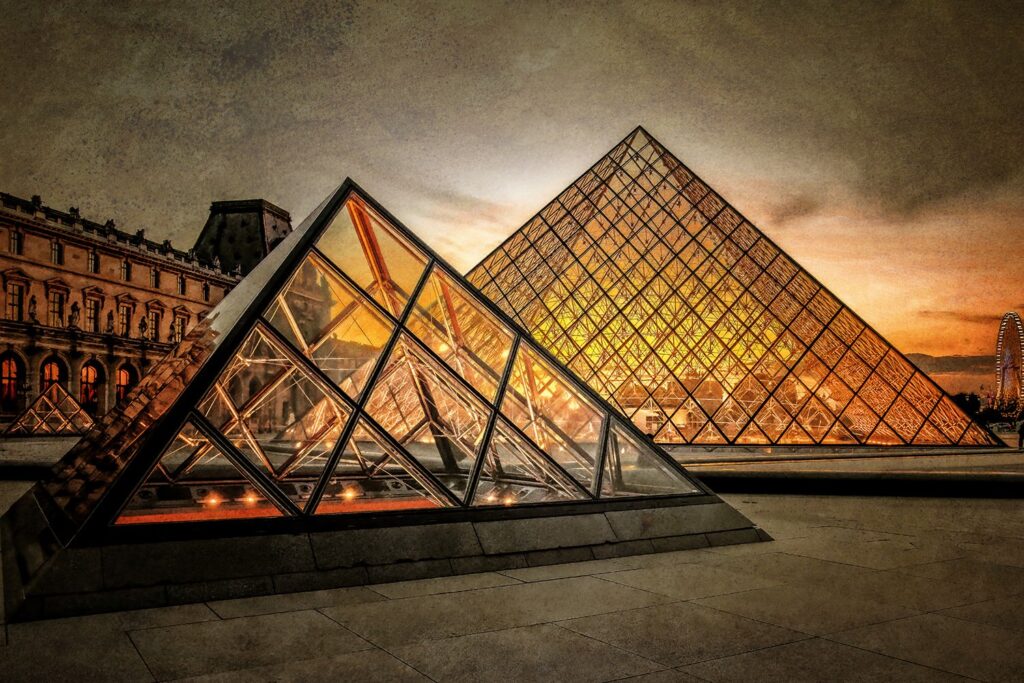
The Louvre is the largest art museum in the world, with around 35,000 works on display in a former royal palace. You could spend a week inside, so pick a route before you go. The essentials for a first visit are the Mona Lisa, the Venus de Milo, the Winged Victory of Samothrace and the Napoleon III Apartments. Book a timed entry ticket and arrive for opening at 9 a.m., then head straight to the Mona Lisa before the tour groups arrive. On Wednesdays and Fridays the museum stays open until 9 p.m., and the galleries are noticeably quieter in the evening. A guided tour is worth it on a first visit, because a guide knows the shortcuts through the maze of wings.
Jardin des Tuileries, Place de la Concorde and the Palais-Royal
Walk out of the Louvre into the Jardin des Tuileries, the formal garden laid out for the former royal palace of the Tuileries. Grab one of the green metal chairs around the ponds and rest your feet. At the far end, Place de la Concorde was the site of the guillotine during the French Revolution, and Louis XVI and Marie Antoinette were executed there. Today an Egyptian obelisk stands in the middle. If you’d rather see something quieter, the Jardin du Palais Royal is just a short walk north of the Louvre, with its arcades, rows of lime trees and the striped Buren columns.
Notre-Dame Cathedral and Sainte-Chapelle
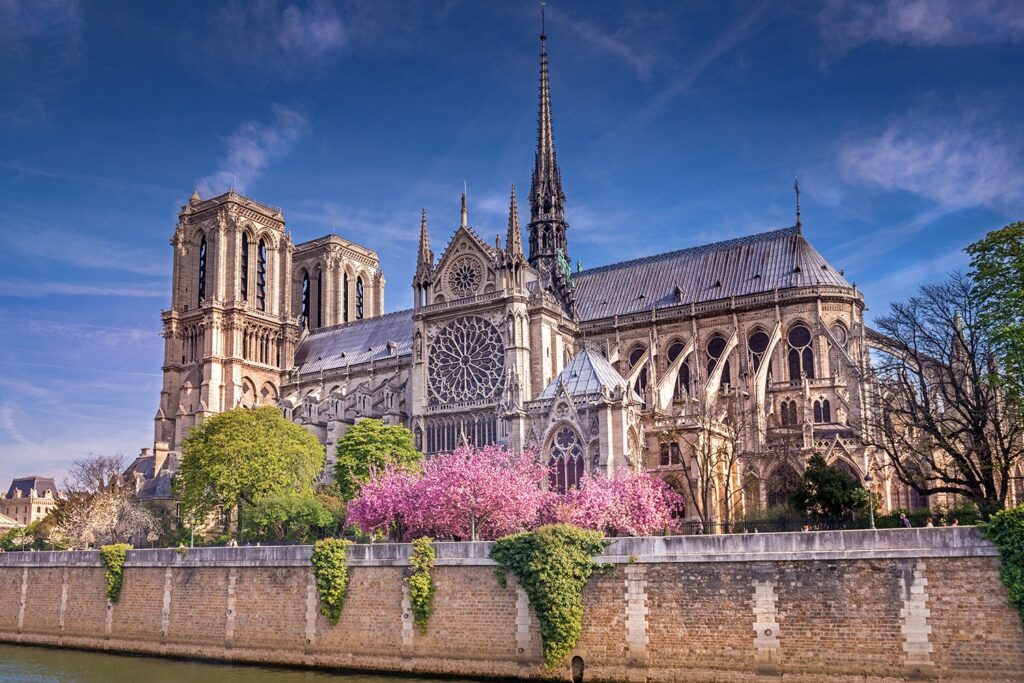
Walk along the Seine River to Île de la Cité, the island where Paris began more than 2,000 years ago. Notre-Dame Cathedral reopened in December 2024 after five years of restoration following the 2019 fire, and the bright, cleaned stone of the interior surprises almost everyone. Entry to the cathedral is free. Book a free time slot online a day or two ahead, because visitors without one wait in a separate line. Climbing the towers requires a separate timed ticket.
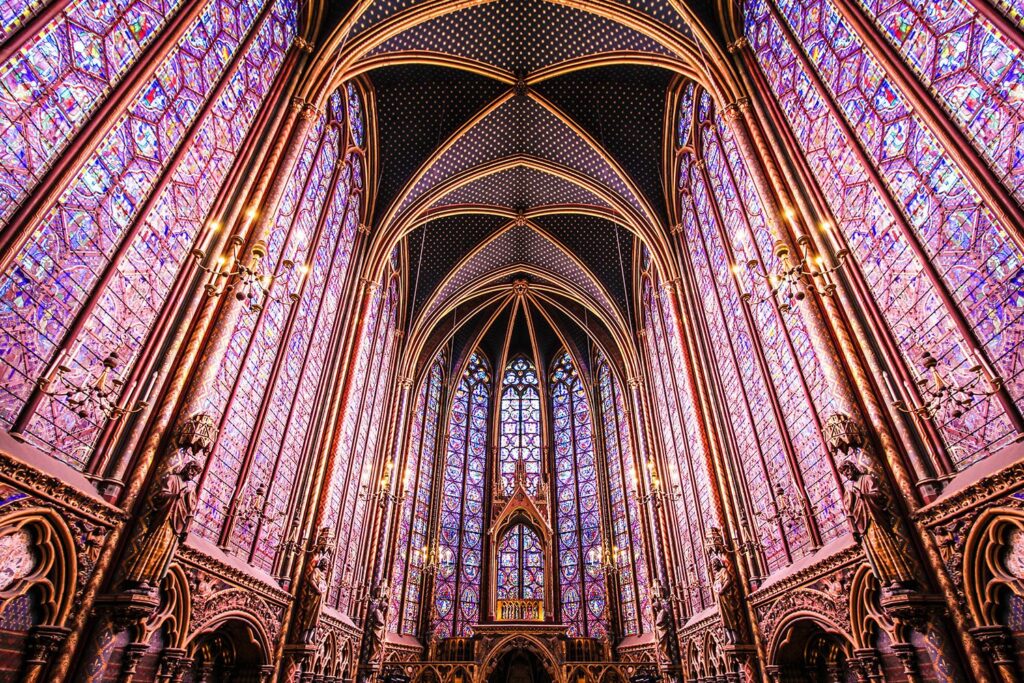
A few minutes away, inside the walls of the Palais de Justice, Sainte-Chapelle is one of the most beautiful Gothic chapels in the world. Its upper chapel is almost entirely made of stained glass, with windows about 50 feet (15 m) tall that tell over a thousand Bible stories. Come on a sunny morning or early afternoon, when the light turns the whole room blue, red and gold. Next door, the Conciergerie was a prison during the French Revolution, where Marie Antoinette spent her last weeks.
Île Saint-Louis and an evening in Le Marais
Cross the footbridge behind Notre-Dame to Île Saint-Louis, a quiet island of 17th-century mansions and narrow streets. Stop at Berthillon for a scoop of its famous ice cream, then cross the bridge to Le Marais. This old aristocratic district is full of boutiques, art galleries and small museums, including the Musée Picasso. Don’t miss Place des Vosges, the oldest planned square in Paris, with its red-brick arcades. Stay for dinner: Le Marais has some of the best casual food in the city, from falafel on Rue des Rosiers to classic bistros.
Paris itinerary day 3 - Musée d’Orsay, Saint-Germain-des-Prés and Montmartre
The last day of this Paris itinerary crosses to the Left Bank for Impressionist art, cafés and gardens, and finishes with sunset on the hill of Montmartre. It’s a mix of art, people-watching and walking, and a good way to say goodbye to the city.
Musée d’Orsay - Van Gogh, Monet and a former train station
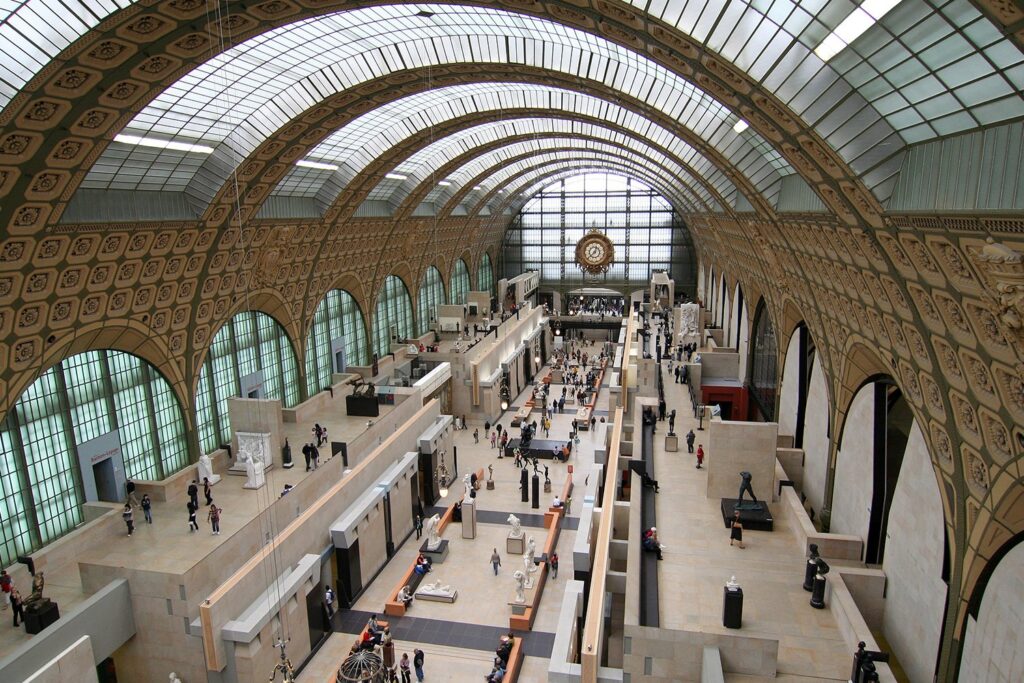
The Musée d’Orsay fills a former train station built for the 1900 World’s Fair, and the building is half the experience. The museum holds the world’s most impressive collection of Impressionist and Post-Impressionist art: Monet, Renoir, Degas, Cézanne, Gauguin and Van Gogh. Head to the fifth floor first for the Impressionist galleries and the view through the giant station clock toward Montmartre. Plan two to three hours. The museum is closed on Mondays and stays open late on Thursdays.
Saint-Germain-des-Prés and the Latin Quarter
Walk east into Saint-Germain-des-Prés, the neighborhood of writers, philosophers and jazz clubs. Café de Flore and Les Deux Magots still sit side by side on the boulevard. Have a coffee on the terrace and watch the street go by, which is a very Parisian way to spend half an hour. The church of Saint-Germain-des-Prés, one of the oldest in Paris, stands right across the street.
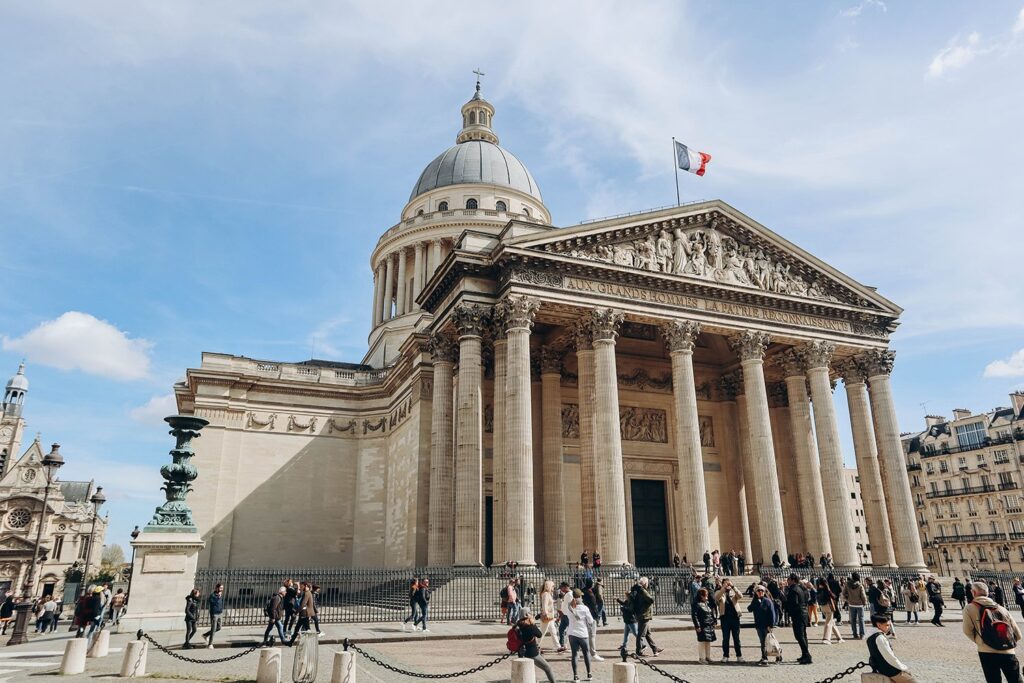
From here it’s a short walk to the Latin Quarter, the student district around the Sorbonne. Its narrow streets are lined with bookshops and cheap bistros. Stop at the Shakespeare and Company bookstore, famous for its English-language books, across the river from Notre-Dame, then climb toward the Panthéon. This domed temple holds the tombs of Voltaire, Victor Hugo and Marie Curie, and a copy of Foucault’s pendulum swings beneath the dome.
Luxembourg Gardens (Jardin du Luxembourg)
The Jardin du Luxembourg is the favorite park of many Parisians, and it’s easy to see why. Around the Luxembourg Palace, home of the French Senate, you’ll find tree-lined paths, the Medici Fountain and a large pond where children sail little wooden boats. It’s the perfect place for a late lunch break before the last part of the day.
Montmartre and Sacré-Cœur at sunset
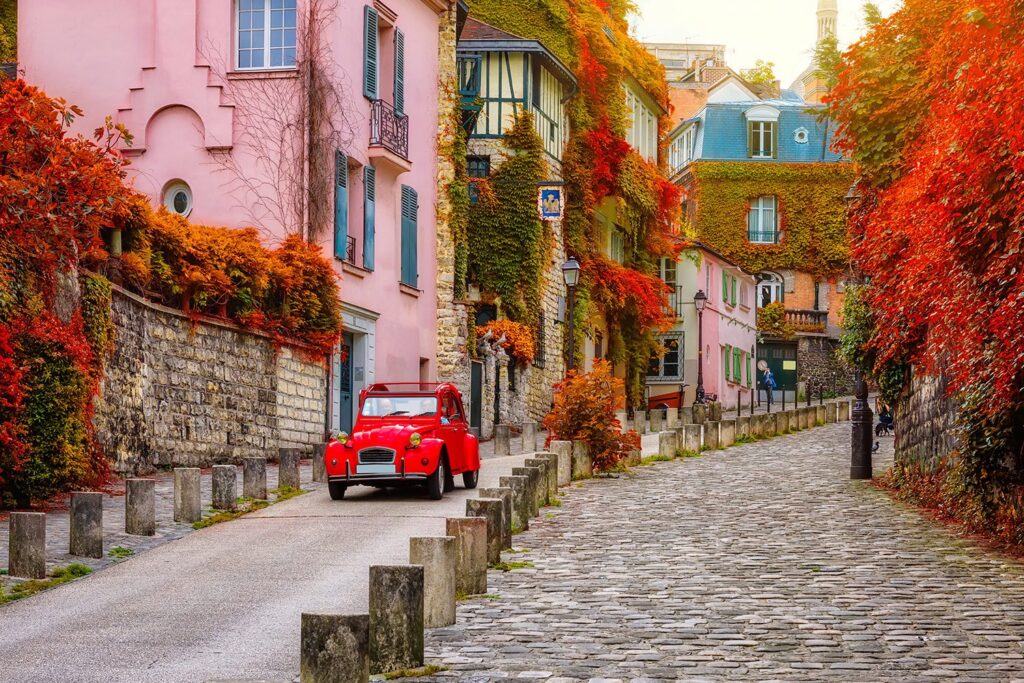
In the late afternoon, take the metro north to Montmartre and get off at Anvers metro station, at the foot of the hill. This hilltop village was home to artists like Picasso, Renoir and Van Gogh, and its cobbled lanes, vineyard and old windmills still feel far from the grand boulevards below. It’s the best area in the city for a walking tour, with or without a guide. Wander around Place du Tertre, where street artists paint portraits, then walk to the Basilica of Sacré-Cœur. The steps in front of the white basilica are one of the best sunset spots in Paris, with the whole city spread out at your feet. Entry to the basilica is free. If your legs are tired, the funicular takes you up the hill with a regular metro ticket. Finish with dinner in one of the small restaurants on the slopes, or walk down to the Moulin Rouge at the foot of the hill.
Only 2 days in Paris? What to keep
If you only have two days in Paris, merge the three days above and skip the long museum visits. On the first day, see the Eiffel Tower, take a Seine river cruise and walk up the Champs-Élysées to the Arc de Triomphe. On the second day, start with the Louvre at opening, walk through the Jardin des Tuileries to Notre-Dame and Sainte-Chapelle, and finish with sunset in Montmartre. You’ll miss the Musée d’Orsay and the Left Bank, but you’ll see the major attractions most people picture when they think of Paris.
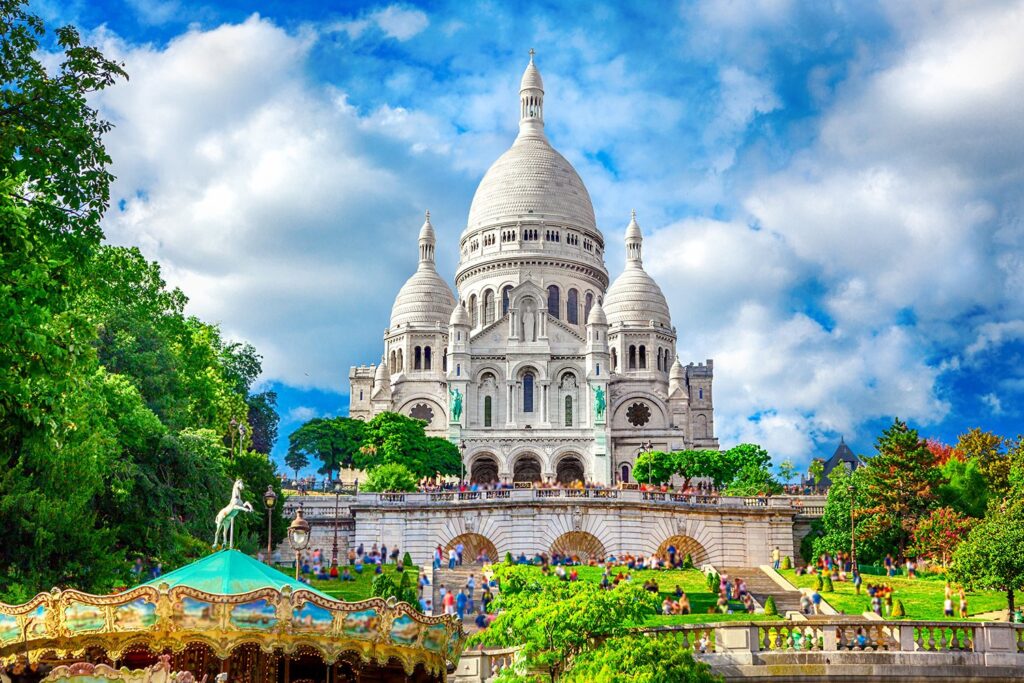
Paris in 2 days works best if you stay central and use the metro for the longer hops, for example from Île de la Cité to Montmartre. Two days also leave little room for lines, so book your Eiffel Tower and Louvre tickets in advance.
Paris itinerary: 4 days with a day trip to Versailles
With a fourth day, the obvious choice is the Palace of Versailles. Louis XIV turned his father’s hunting lodge into the most lavish palace in Europe, and it was the royal residence until the French Revolution. The palace has more than 2,000 rooms. The highlights are the Hall of Mirrors, the King’s and Queen’s State Apartments and the huge formal gardens. Spend the afternoon in the gardens and at Marie Antoinette’s estate, the Trianon palaces and her little hamlet.
Versailles is about 45 minutes from central Paris on the RER C train to Versailles Château Rive Gauche. The palace is closed on Mondays and very busy on Tuesdays and weekends, so aim for Wednesday, Thursday or Friday and book a timed entry ticket. On weekends from spring to fall, the gardens host musical fountain shows. A guided tour with round-trip transport is the easiest option if you’d rather not deal with trains and ticket times.
Itinerary for 5 days in Paris - Slow down and see more
Five days in Paris give you time to slow down. A longer Paris itinerary also lets you see the city at your own pace. Use the extra day either for a second day trip or for the neighborhoods and museums that a short trip skips.
More of the city
Spend a slow morning in Le Marais, then visit the Musée de l’Orangerie in the Jardin des Tuileries to see Monet’s huge Water Lilies, painted to wrap around two oval rooms. Note that the Orangerie is closed on Tuesdays. In the afternoon, walk through the Paris Catacombs, where the bones of millions of Parisians line the old quarry tunnels, or visit the Opéra Garnier and its grand foyer. Shoppers can finish at the Galeries Lafayette, whose rooftop terrace has a free view over the opera house.
Day trips from Paris
Giverny, the village where Monet painted his water lilies, is the most popular day trip in spring and summer. His house and gardens are open from spring to fall. Further away, a long day takes you to Mont-Saint-Michel or to the Normandy beaches of D-Day, where most organized tours visit Omaha Beach and the American Cemetery. If you’d rather explore Normandy at your own pace, direct trains from Gare Saint-Lazare run to Caen and Bayeux, and you can compare times and book seats on Omio. From there, a rental car makes it easy to see the beaches and villages in a day or two.
Where to eat in Paris
French food is part of the reason to visit Paris, and you don’t need a Michelin star to eat well. Start the day like a local, with a croissant or pain au chocolat and a coffee at the counter of a neighborhood café. Paris also has a growing scene of specialty coffee shops if you miss a proper flat white. For lunch, look for a bistro with a short handwritten menu and a formule (a set menu with a starter and main or a main and dessert). Classic dishes to try are steak frites, onion soup, duck confit, croque-monsieur and a cheese plate with a glass of wine.
Some of the best food streets are Rue Cler near the Eiffel Tower, Rue Montorgueil near Les Halles and Rue des Rosiers in Le Marais. For a special meal, Le Train Bleu at the Gare de Lyon serves classic French dishes under painted ceilings. Always greet the staff with a “Bonjour” when you walk in. Service is included in the bill, so tips are small, as our guide to tipping in Europe explains. A food tour is a great way to taste cheese, wine and pastries with a local guide on your first evening.
Getting around Paris - metro, walking and the airport
Central Paris is compact, and walking is the best way to experience it. Many famous landmarks are just a short walk from each other, and you’ll discover the city’s best details on foot. For longer distances, the Paris metro is fast, frequent and easy to use, with stations every few blocks. Paper tickets are being phased out, so load tickets onto a Navigo Easy card or buy them in the Bonjour RATP app on your phone. Contactless bank cards work on most city buses, but not yet at metro gates. Google Maps shows metro routes in real time.
From Charles de Gaulle Airport, the RER B train runs to Gare du Nord, Châtelet and Saint-Michel in about 35 to 50 minutes. Taxis charge a flat fare to central Paris, which is useful if you arrive late or with a lot of luggage. You won’t need a car in the city center, where parking is hard and expensive. If Paris is one stop on a longer European trip, trains connect it to London, Brussels, Amsterdam and the south of France, and our Eurail pass guide shows when a rail pass pays off. US travelers should also read our guide to ETIAS for Americans before booking.
Best time to visit Paris
The best time to visit Paris is May, June or September. Days are long and mild, the parks are green and café terraces are full. April and October are also lovely, with fewer tourists. July and August bring the biggest crowds and occasional heat waves, and some small restaurants close for vacation in August. Winter is cold and gray, but museums are quieter, hotels are cheaper and the Christmas lights on the Champs-Élysées and the decorated department stores are a real treat. To compare Paris with other cities season by season, see our guide to the best time to visit Europe.
Whatever the season of your Paris trip, book your hotel early, because central Paris fills up fast around trade fairs, holidays and big events.
Where to stay in Paris
For a short trip, stay in the 1st arrondissement, around the Louvre and the Palais-Royal. From here you can walk to the Louvre, the Seine, Île de la Cité and Le Marais, and metro line 1 takes you to the Champs-Élysées in a few minutes. These three hotels are all within a short walk of the Louvre.
💰 Hotel Louvre Bons Enfants
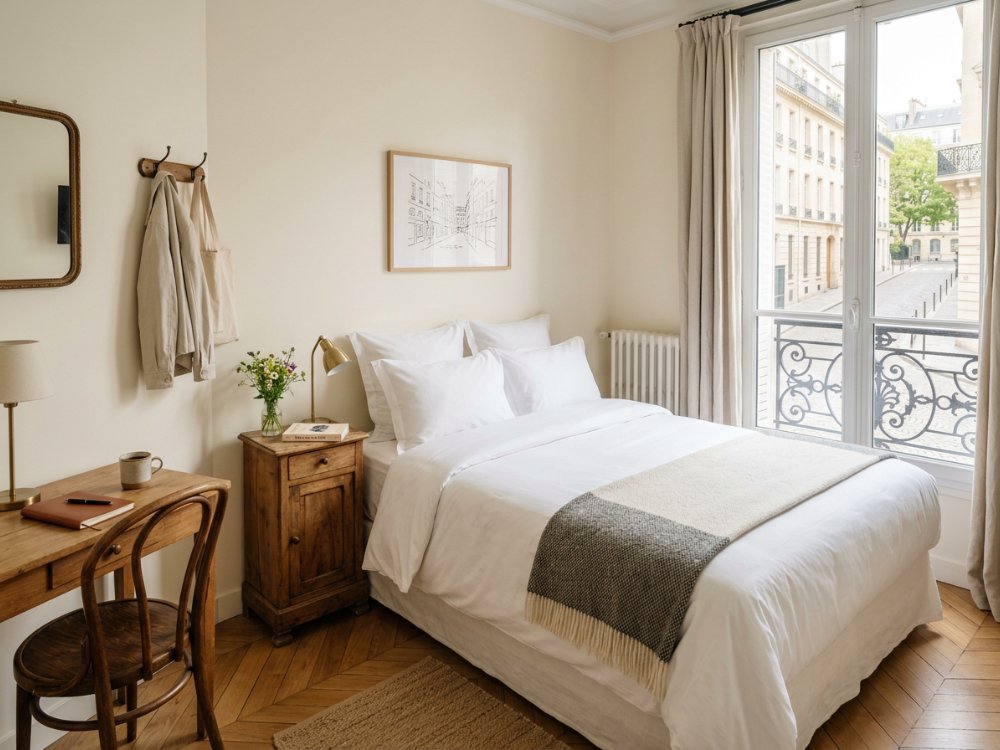
A good-value hotel on a quiet street opposite the Louvre and the Jardin des Tuileries, a few steps from the Palais-Royal. The rooms are bright and modern, with air conditioning and a safe, and the reception is open 24 hours. A continental buffet breakfast is served every morning, and you can have it brought to your room. It’s a smart base if you want a central address without paying luxury prices.
🏨 Relais du Louvre
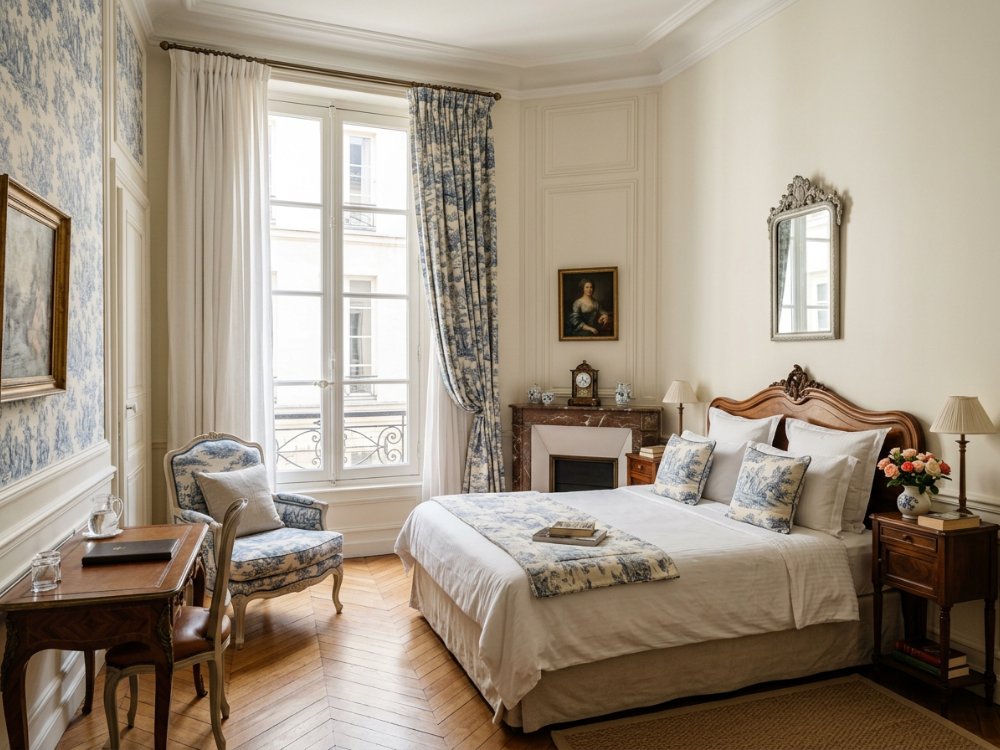
A small four-star hotel with just 21 rooms in an 18th-century building between the Louvre and Notre-Dame. The interiors bring back the charm of old Paris with a quiet, understated elegance, and some rooms look out over the Louvre. Each room has a minibar and a bathroom with a tub or shower. It suits couples who want character and a location where both banks of the Seine are within walking distance.
💎 Grand Hôtel du Palais Royal
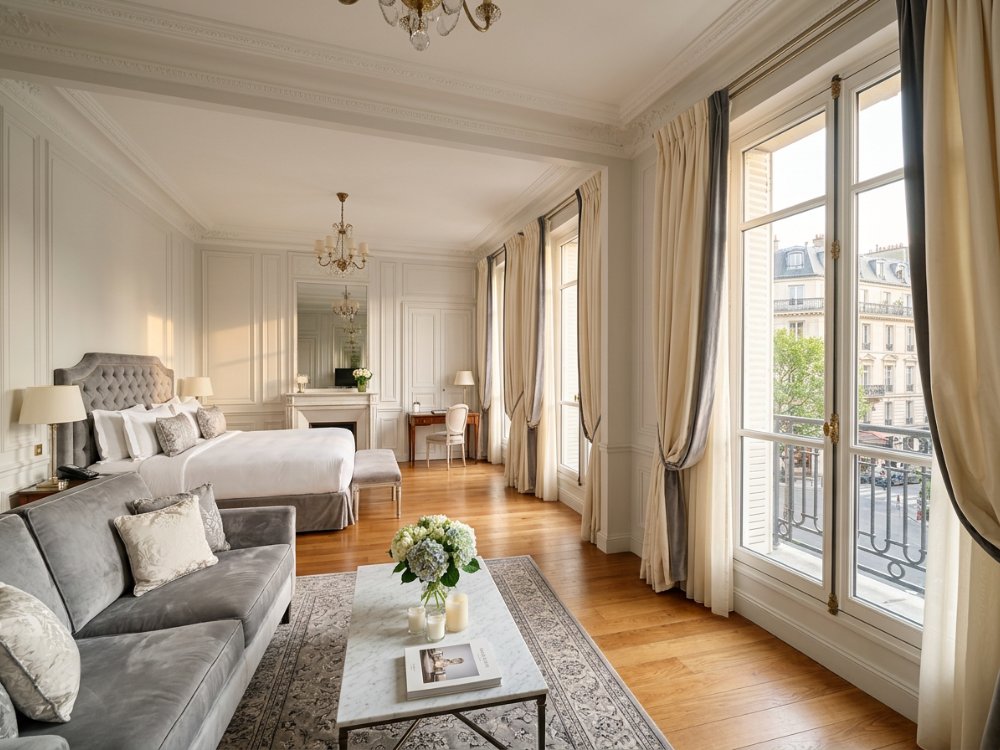
A luxury hotel in an 18th-century building right next to the Jardin du Palais Royal, about 650 feet (200 m) from the Louvre and the Tuileries. Works of art decorate the interiors, and there’s a spa, an à la carte restaurant and a 24-hour reception. Some rooms and suites have balconies overlooking the gardens or the rooftops. Choose it for a special trip, when you want to end every day of sightseeing in real comfort.
Paris itinerary FAQ
Is 3 days in Paris too short?
No, three days is enough for a first visit. You can see the Eiffel Tower, the Louvre, Notre-Dame, the Musée d’Orsay and Montmartre at a comfortable pace if you group sights by neighborhood and book timed tickets in advance. You’ll leave with a list for next time, which is a good thing.
How many days do you need in Paris?
Four or five days in Paris is ideal. Three days cover the major sights, a fourth day adds Versailles and a fifth gives you time for Giverny, the Catacombs or simply a slow day in the cafés of Le Marais. Two days are enough for a first taste, but the pace is fast.
What should I book in advance for Paris?
Book the Eiffel Tower, the Louvre and Sainte-Chapelle first, as they sell out most often. A free Notre-Dame time slot and a Versailles ticket are also worth reserving. Seine cruises and the Arc de Triomphe are usually easier to book at short notice.
Is the Paris Museum Pass worth it on a 3-day trip?
It can be, if you plan to visit at least four or five paid sights, such as the Louvre, the Musée d’Orsay, Sainte-Chapelle, the Arc de Triomphe and Versailles. The pass doesn’t cover the Eiffel Tower or Seine cruises, and you still need to reserve time slots at the busiest museums.
Which days are museums closed in Paris?
The Louvre and the Musée de l’Orangerie are closed on Tuesdays. The Musée d’Orsay and the Palace of Versailles are closed on Mondays. Plan your Louvre day and your Orsay day so they don’t fall on those weekdays.

